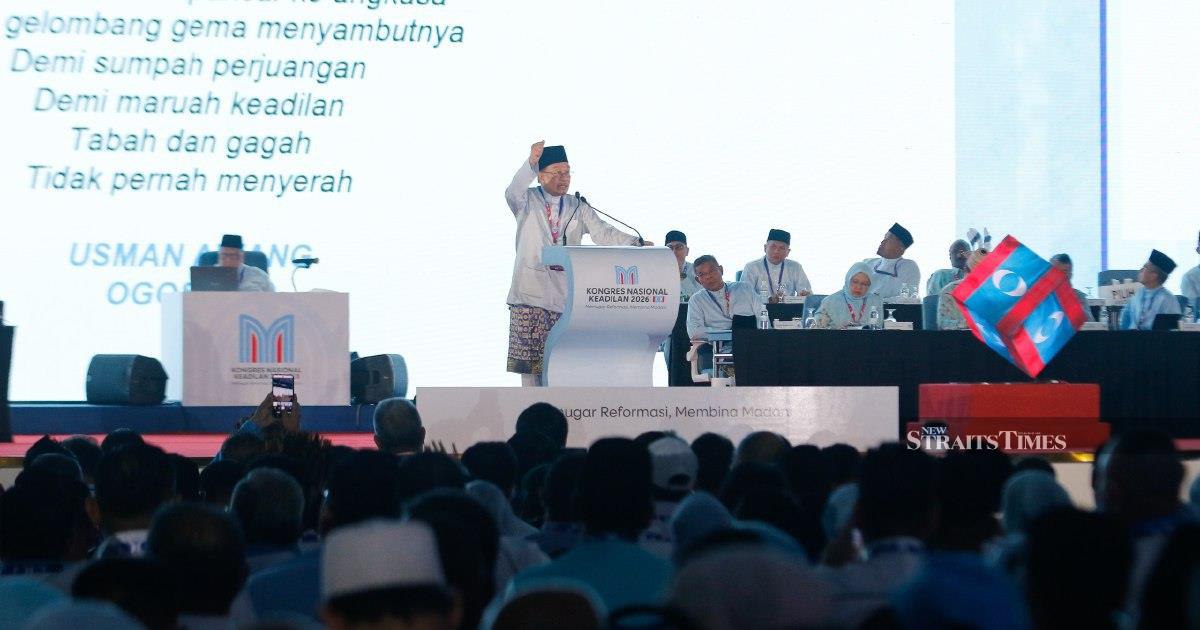
PKR president Datuk Seri Anwar Ibrahim declared at Ayer Keroh that Malaysia's government intends to intensify its push for systemic reforms, marking a fresh commitment to transformative policies that have long been central to the coalition's political messaging.
The announcement reflects a strategic recalibration within the ruling coalition's priorities, with an emphasis on accelerating initiatives that were previously pursued at a measured pace. This shift in tempo comes as the government navigates complex economic and political terrain, seeking to demonstrate tangible progress on commitments made to voters who have grown increasingly impatient for substantive change.
For Malaysian observers, the significance of Anwar's statement lies not merely in the declaration itself but in what it suggests about the coalition's internal dynamics. The emphasis on stepping up efforts implies that earlier phases of reform implementation may have faced bottlenecks—whether through bureaucratic resistance, competing fiscal priorities, or the need to build consensus within a government comprising multiple parties with divergent interests.
The reform agenda that Malaysia's government has pursued encompasses multiple pillars, including institutional accountability, anti-corruption measures, and governance improvements. Each domain presents distinct implementation challenges, requiring coordination across federal agencies and state governments. Accelerating this work will demand more decisive leadership and resource allocation than has been evident in recent years.
For Southeast Asia's largest economy, institutional reforms carry implications that extend beyond domestic politics. International investors, rating agencies, and development partners frequently cite governance quality and transparency as factors influencing their confidence in Malaysia's long-term prospects. Demonstrating meaningful progress on these fronts could strengthen the country's competitive positioning within the region.
The timing of Anwar's remarks also deserves examination. Malaysia faces a narrowing window for economic policy adjustments before the next general election cycle, during which the government will be constrained by electoral conventions and campaign considerations. Concentrating reform efforts now suggests a pragmatic appreciation that later implementation becomes progressively more difficult as political calendars tighten.
Within the broader Southeast Asian context, Malaysia's reform trajectory carries relevance for the region. As a middle-income nation with relatively developed institutions, Malaysia's experience with systemic change offers lessons for neighbouring countries pursuing similar objectives. Conversely, stalled or inconsistent reforms risk undermining confidence among regional counterparts and the international community.
The specifics of which reforms will receive accelerated attention remain to be clarified through subsequent policy announcements and budgetary allocations. The government's track record suggests that translating high-level commitments into sustained implementation remains challenging, given the complexity of institutional change and the political constituencies affected by different reform proposals.
For Malaysian citizens, the practical impact will depend substantially on execution. Reform agendas can languish without dedicated funding, clear timelines, and political protection from sectarian interests. Anwar's public commitment, however, does establish an expectation against which government performance can be measured—a useful accountability mechanism in Malaysia's political system.
The coalition government's coalition structure—comprising PKR, DAP, Amanah, and other parties with distinct constituencies—means that achieving consensus on reform priorities involves negotiation and compromise. Accelerating reform requires not only political will but also agreement among coalition partners on sequencing and resource deployment. This internal coordination challenge should not be underestimated.
Internally, Malaysia's civil service and judiciary will play crucial roles in implementing reforms at the operational level. Their capacity, willingness, and institutional culture determine whether high-level directives translate into meaningful change. Building pressure from political leadership can help overcome institutional inertia, particularly where entrenched interests resist transparency and accountability measures.
Anwar's statement arrives amid broader regional developments affecting Malaysia's governance trajectory. As the regional economic landscape shifts and international scrutiny on governance intensifies, the stakes for effective institutional reform have become more consequential. Countries that successfully navigate reform cycles typically emerge with strengthened institutional foundations and improved policy outcomes.
Moving forward, observers should monitor not only rhetorical commitments but also concrete indicators—legislative progress, budgetary commitments, leadership appointments, and measurable outcomes across key reform domains. The distance between announcement and achievement in Malaysia's recent political history suggests that sustained attention to implementation mechanisms will be essential for the government to realise its accelerated reform objectives.

