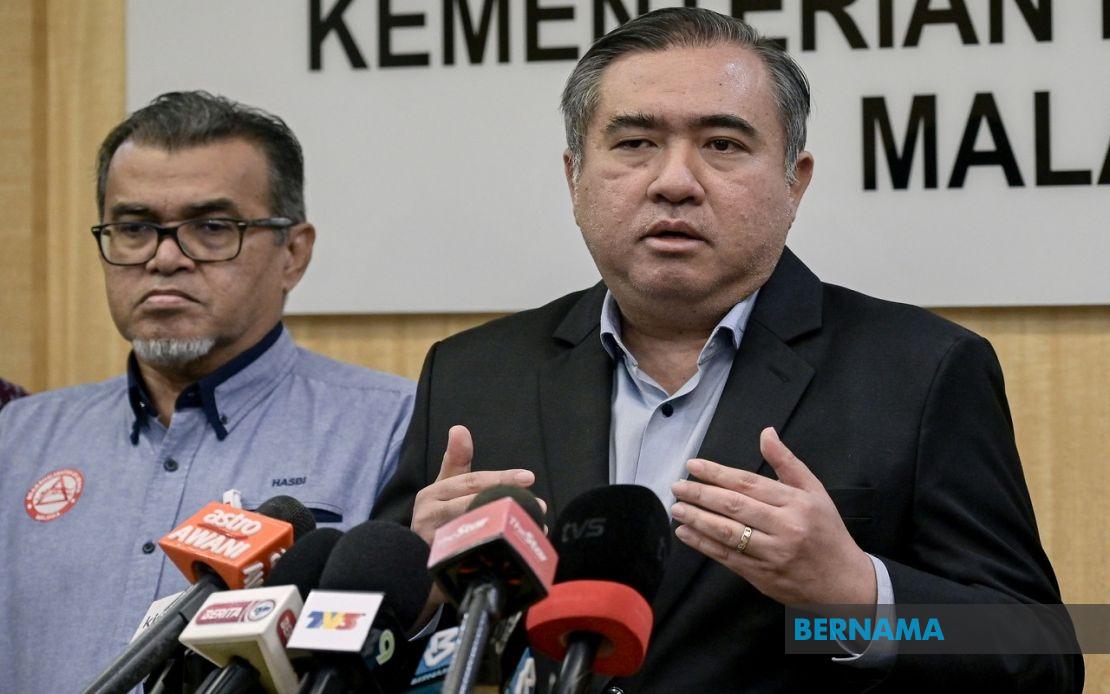
Transport Minister Anthony Loke has drawn a clear distinction between government oversight and corporate autonomy in Malaysia's port sector, responding to international scrutiny over recent executive leadership changes at one of the nation's largest port operators. Speaking at a media briefing in Putrajaya on Wednesday, Loke emphasised that while the government maintains strict requirements on shareholding patterns, it deliberately refrains from dictating internal management decisions at strategic port facilities.
The minister's comments were prompted by international media reports highlighting the appointment of Sultan Ahmed Sulayem, former chairman and chief executive of global port operator DP World, to the executive chairman position at MMC Ports Holdings Bhd. This transition followed the sudden resignation of group chief executive officer Azman Shah Mohd Yusof, an announcement that triggered questions about potential shifts in operational control and ownership within Malaysia's critical port infrastructure. Such transitions at major port operators invariably attract scrutiny given the strategic importance of these facilities to Malaysia's international trade and supply chain resilience.
At the heart of Loke's statement lies a fundamental policy principle: any entity holding a port concession or managing a strategic national asset must retain Malaysian majority ownership of at least 51 per cent. This threshold represents a non-negotiable baseline for the government, ensuring that ultimate control and primary financial interest in these vital facilities remain vested in Malaysian hands. The minister stressed that this ownership requirement forms the cornerstone of the government's regulatory framework, distinguishing between what it actively polices and what it deliberately leaves to corporate discretion.
What the government explicitly does not regulate, according to Loke, is the nationality or background of management personnel appointed to lead these operations. The Port of Tanjung Pelepas serves as a concrete example of this permissive stance: despite being a strategically important facility, it operates under a foreign national chief executive officer. This pragmatic approach reflects a recognition that port operations have become increasingly sophisticated, requiring specialised expertise that may transcend nationality. By remaining neutral on management appointments, the government avoids creating barriers to talent acquisition while maintaining its core oversight function through ownership structure.
The distinction between shareholding notification and management appointment authority highlights the government's carefully calibrated regulatory philosophy. Any alterations in ownership percentages or changes in the identity of major shareholders must be formally communicated to the government, including through the Public-Private Partnership Unit, or UKAS. This requirement ensures transparency and allows authorities to verify compliance with the 51 per cent Malaysian ownership threshold. However, the appointment of executives, regardless of their national origin or previous employment history, falls squarely within corporate governance and internal decision-making, domains where government involvement would be considered inappropriate interference.
Regarding the specific situation at MMC Ports Holdings Bhd, Loke confirmed that the ministry had not yet received notification of any changes to the company's shareholding structure. This absence of formal notification suggests either that ownership patterns remain unchanged, or that such changes may still be pending regulatory disclosure. The minister's carefully worded response indicates that the government is monitoring the situation but will not act preemptively on the basis of media reports alone. This measured approach reflects a professional understanding that journalism, even from reputable international outlets, does not always capture the full complexity of corporate transactions.
The timing and context of this clarification carry particular significance for Malaysia's port sector, which has undergone substantial consolidation and modernisation over the past decade. Port operators in Malaysia, whether domestic or foreign-owned, operate within an increasingly competitive regional environment where Singapore, Thailand, and Indonesia are expanding their own capabilities. The government's willingness to accommodate foreign management expertise while maintaining Malaysian ownership control represents a pragmatic strategy to retain competitiveness without surrendering strategic control. This balancing act acknowledges that operational excellence and international best practices cannot always be imported wholesale; they often require leaders with deep experience in global port operations.
For investors and operators in Malaysia's maritime sector, Loke's clarification establishes reassuring boundaries. The government has signalled that it will not create obstacles to attracting world-class management talent, nor will it second-guess corporate governance decisions made within the bounds of proper ownership structures. Simultaneously, for Malaysian stakeholders and policymakers concerned with national strategic assets, the firm insistence on majority Malaysian ownership provides assurance that fundamental control remains domestically rooted. This framework attempts to resolve the tension between globalisation and national interest that increasingly characterises policy discussions across Southeast Asia.
The broader implications extend beyond individual port operators to encompass Malaysia's approach to foreign direct investment and strategic infrastructure management more generally. By maintaining this principle—foreign executives welcome, but Malaysian ownership indispensable—the government sends a message that it seeks to be business-friendly without compromising on nationalist fundamentals. This stance differentiates Malaysia from some regional competitors that either impose more restrictive foreign participation rules or conversely allow foreign entities greater ownership latitude, potentially compromising long-term control of critical infrastructure.
Loke's remarks also reflect implicit confidence in Malaysia's institutional frameworks and regulatory mechanisms. The government evidently believes that Malaysian-majority shareholding, combined with adequate board representation and formal governance structures, provides sufficient oversight without requiring government intervention in day-to-day management. This deference to corporate structures and market mechanisms, provided they operate within the ownership parameters the government has established, suggests a mature regulatory approach that distinguishes between strategic control and operational management.
As Malaysia continues developing its maritime and logistics sectors as economic pillars, the principles articulated by Loke will likely inform similar policy discussions regarding airports, shipping companies, and logistics providers. The framework he described—strict ownership requirements coupled with permissive management autonomy—offers a template for balancing national interests with operational excellence and competitive positioning in globally integrated markets. For Malaysian stakeholders watching these developments, the key takeaway is that the government maintains clear red lines on ownership but respects corporate decision-making within those boundaries.

