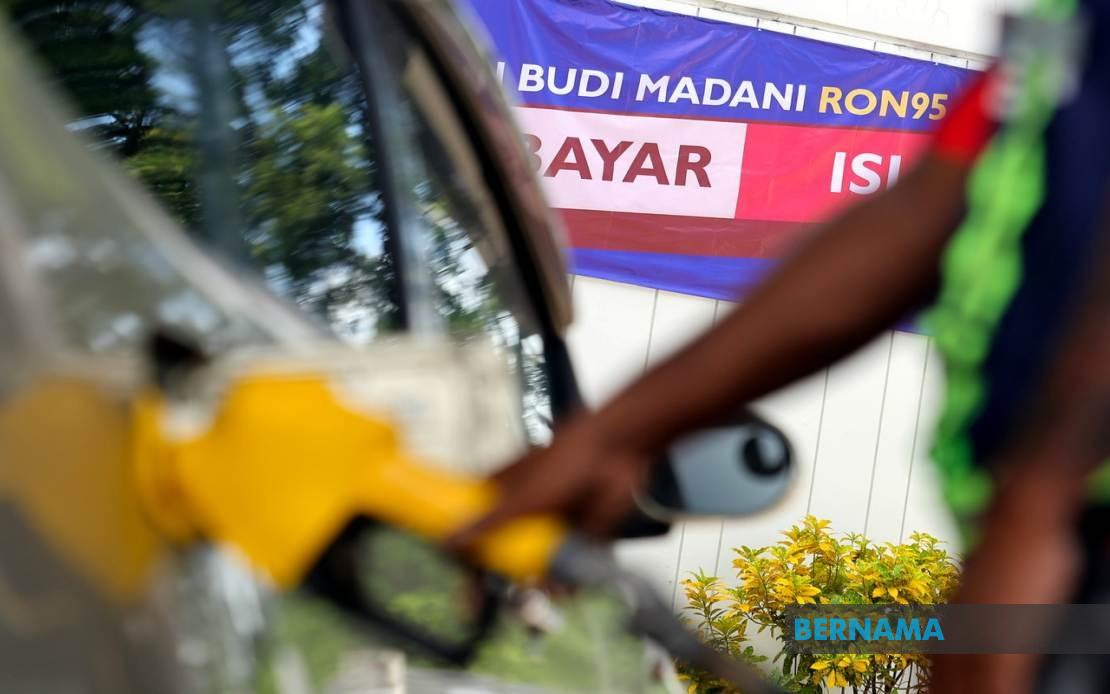
The Malaysian government has reversed a planned reduction in fuel subsidies, announcing that the monthly quota under the BUDI MADANI RON95 programme will return to 300 litres, a decision that will extend financial relief to approximately 16 million users who depend on subsidised fuel. Prime Minister Datuk Seri Anwar Ibrahim unveiled the policy shift during his National Day address at the Putrajaya International Convention Centre on August 30, signalling the administration's commitment to maintaining fuel accessibility for ordinary Malaysians even as global energy markets remain volatile.
The restoration of the 300-litre monthly allowance represents a significant policy reversal from a decision announced just months earlier. In March 2026, the government had indicated that the BUDI95 quota would be trimmed from 300 litres to 200 litres per month beginning April 1, citing geopolitical tensions in West Asia as the rationale for tightening subsidies. The reduction was framed as a necessary adjustment to government expenditure in an environment of elevated crude oil prices and regional instability. However, the government has now chosen to absorb the additional fiscal burden associated with maintaining the higher quota level, reflecting either changed macroeconomic circumstances or a political reassessment of the subsidy programme's importance.
Beyond the core RON95 programme, the government has also expanded support for diesel users. More than half a million eligible owners of diesel-powered pick-up trucks and jeeps will now have access to up to 400 litres of Budi Diesel on a monthly basis. This extension demonstrates that the fuel subsidy restoration is not limited to passenger vehicles but extends to commercial and agricultural sectors that rely on diesel-powered utilities. The distinction underscores how fuel policy in Malaysia encompasses multiple economic constituencies, from urban commuters to rural and small-scale commercial operators whose livelihoods depend on accessible energy costs.
The BUDI MADANI programme, which targets lower-income and middle-income households through a targeted subsidy mechanism, has become a cornerstone of Malaysia's approach to managing the distributional consequences of global energy price volatility. By capping subsidies at specific monthly quotas rather than providing universal price controls, the programme aims to balance fiscal sustainability with social protection. The 300-litre monthly allowance at RM1.99 per litre represents a concrete ceiling on government spending while still providing meaningful relief for families managing transportation and household energy budgets.
The decision to restore quotas comes amid broader economic considerations facing Malaysia's federal finances. Energy subsidies constitute a substantial line item in the government budget, and decisions about their scale carry implications for spending available for other priorities such as healthcare, education, and infrastructure. The reversal of the planned reduction suggests that the government has determined the political and social costs of deeper subsidy cuts outweigh fiscal concerns, at least in the current policy cycle. This reflects ongoing tension between orthodox fiscal management and the political necessity of maintaining cost-of-living support during periods of economic uncertainty.
For Malaysian consumers and small businesses, the restoration offers tangible relief in monthly household expenses. Transportation costs form a significant portion of household budgets, particularly in regions where public transport infrastructure remains limited and private vehicle ownership is essential for economic participation. By maintaining the 300-litre threshold, the government enables routine commuting, commercial delivery operations, and family logistics without forcing difficult choices between fuel consumption and other necessities. For transport operators and agricultural workers relying on diesel, the expanded allocation to 400 litres provides similarly valuable operational flexibility.
The timing of the announcement—during the National Day address—carries symbolic weight, positioning fuel subsidy maintenance as part of the government's broader social contract with citizens. National addresses typically frame governmental priorities and philosophical commitments, and the inclusion of fuel policy signals that protecting household purchasing power remains a central government concern. This framing may also be intended to counter narratives about austerity or withdrawal of state support, positioning instead a government responsive to citizens' economic pressures.
Regionally, Malaysia's subsidy policy decisions have implications for energy market dynamics across Southeast Asia. As the region's major oil producer and exporter, Malaysia's domestic fuel pricing and subsidy architecture can influence broader regional energy conversations and serve as a reference point for other governments managing similar policy tensions. The decision to maintain rather than reduce subsidies may suggest that among regional policymakers, the political viability of significant subsidy reductions remains limited, even when fiscal pressures mount.
Looking forward, the restoration of BUDI95 quotas to 300 litres creates a baseline expectation among the public that this level of support will be sustained. Future attempts to reduce quotas may face heightened resistance given that the government has now demonstrated its capacity to protect this benefit. This dynamic can constrain future fiscal flexibility, potentially requiring the government to seek revenue increases or spending cuts in other areas rather than returning to fuel subsidy reductions as an adjustment mechanism during budget pressures.
The announcement also reflects evolving assessments of West Asian geopolitical conditions that initially prompted the March reduction announcement. If crude oil prices have stabilised or if government revenue from petroleum operations has recovered, the fiscal justification for maintaining higher subsidy quotas becomes more straightforward. Alternatively, changed political calculations may simply have elevated the perceived cost of implementing the reduction, making reversal the preferred option regardless of underlying energy market conditions. Without detailed fiscal projections, the public reasoning behind the policy shift remains partially opaque, though the outcome is unambiguous: Malaysian fuel subsidy users retain access to the more generous quota level.

