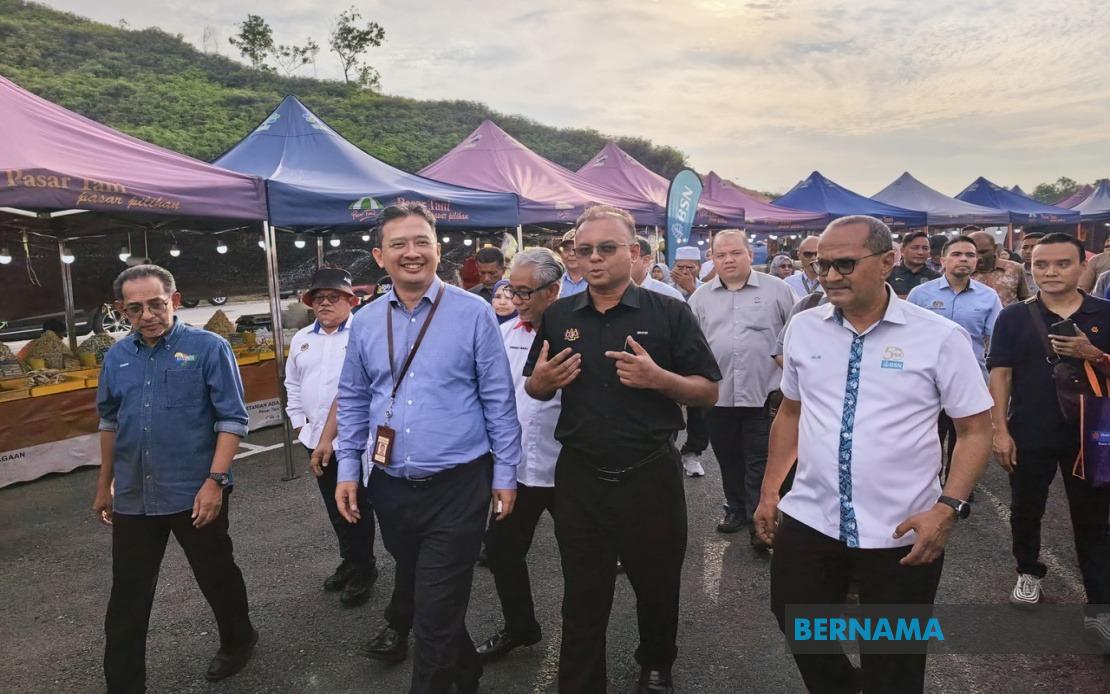
The Malaysian government is stepping up its nationwide push to make small traders and entrepreneurs aware of more than RM5 billion in micro-financing support available through various state agencies. Treasury Secretary-General Tan Sri Johan Mahmood Merican indicated that despite the substantial funds on offer, knowledge of these facilities remains limited among eligible beneficiaries, necessitating a coordinated ground-level campaign to reach traders where they operate.
Johan made these remarks during a visit to the Putrajaya Pasar Tani farmers' market, where the government convened representatives from multiple lending institutions to engage directly with traders. He stressed that all relevant agencies would be mobilised to intensify outreach, recognising that physical presence in trading communities is essential to bridging the awareness gap. The programme brought together more than 124 traders at the market visit, reflecting an initial effort to reach smaller business operators who may lack formal banking connections or detailed knowledge of available credit schemes.
The RM5 billion micro-credit portfolio spans six key institutions designated by Prime Minister Datuk Seri Anwar Ibrahim's administration. These include Agrobank, Bank Simpanan Nasional, Bank Rakyat, TEKUN Nasional, Amanah Ikhtiar Malaysia, and Majlis Amanah Rakyat. Each organisation brings distinct expertise and lending approaches tailored to different segments of the micro-entrepreneur ecosystem, from agricultural producers to urban-based hawkers and small retailers. The diversified range of providers suggests the government recognises that one-size-fits-all financing solutions prove insufficient for Malaysia's heterogeneous micro-enterprise sector.
During his engagement with traders at the farmers' market, Johan gathered informal feedback indicating that a substantial majority had previously accessed financing from at least one of these government agencies. Some traders reported securing multiple rounds of credit, suggesting that initial access had been successful enough to justify repeat borrowing. This positive anecdotal evidence indicates that when traders do connect with these facilities, the financial support generates tangible business benefits and demonstrates genuine demand for accessible credit among the target population.
Agrobank President and Chief Executive Officer Datuk Tengku Ahmad Badli Shah Raja Hussin reported encouraging metrics from the bank's engagement series at similar market venues. The institution has processed over 160 applications totalling RM6.4 million in micro-financing through these field initiatives. The strong application volume and aggregated loan value suggest that direct engagement in informal trading environments reduces barriers to access and generates substantial demand when facilities are explained in accessible, contextually relevant ways.
Tengku Ahmad Badli Shah emphasised that ground-level programmes allow Agrobank to listen directly to traders' articulated needs and customise financing explanations accordingly. Traders frequently operate with time constraints and operate outside traditional banking hours, making face-to-face engagement at markets a pragmatic approach to customer acquisition and service delivery. By meeting entrepreneurs in their own operational spaces rather than requiring them to visit bank branches, the institution removes friction from the application process and demonstrates institutional commitment to serving this market segment.
Beyond credit provision alone, participating agencies are positioning themselves as comprehensive financial service providers. Agrobank offers complementary services including financial advisory support tailored to business-specific challenges, takaful insurance protection for risk mitigation, business digitalisation assistance to enhance operational efficiency, and financial literacy programmes to strengthen long-term competitiveness. This holistic approach acknowledges that micro-entrepreneurs often lack sophisticated financial management skills and face multiple operational challenges beyond simple capital shortages.
The intensified awareness campaign carries particular significance for Malaysia's post-pandemic economic recovery strategy. Micro-enterprises constitute a substantial proportion of the informal economy and provide employment to millions of Malaysians. Enhanced access to formal credit at reasonable terms enables these businesses to invest in inventory, equipment, and operational improvements that drive productivity growth. For policy makers, translating government-backed financing facilities into actual uptake among eligible beneficiaries represents a critical mechanism for inclusive economic growth and poverty reduction.
The initiative also reflects recognition that information asymmetries constrain financial inclusion. Many eligible micro-entrepreneurs remain unaware that such facilities exist, misunderstand eligibility criteria, or harbour misconceptions about application procedures and repayment obligations. Systematic ground-level campaigns directly addressing these information gaps can significantly expand the proportion of target populations accessing available support. This represents a departure from passive, office-based lending models toward proactive outreach incorporating personalised explanation and simplified application procedures.
Ministry of Agriculture and Food Security Secretary-General Datuk Seri Isham Ishak addressed complementary policy concerns regarding price stability in farmers' markets. He directed traders and consumers toward the SISDA portal operated by the Federal Agricultural Marketing Authority, which tracks price movements across commodities and provides real-time supply-side monitoring. This information infrastructure enables authorities to identify emerging price pressures and coordinate supply interventions before sharp increases materialise. The portal functions as an early warning system allowing coordinated policy responses to potential inflationary episodes in essential food categories.
The convergence of micro-financing promotion with farmers' market engagement reflects broader policy thinking linking financial inclusion to agricultural productivity and food security. Many farmers operate with inadequate working capital, constraining their ability to adopt improved practices or expand production volumes. Enhanced access to tailored agricultural financing through Agrobank and similar institutions enables productivity improvements that increase domestic food supply and moderate price pressure on consumers. This integrated approach recognises that financial inclusion, agricultural development, and food security objectives reinforce each other rather than operating in isolation.
Moving forward, the government's success in this awareness campaign will depend on sustained coordination across multiple agencies, investment in ongoing ground-level engagement, and willingness to simplify application procedures based on trader feedback. Malaysian micro-entrepreneurs have demonstrated appetite for formal credit when facilities are genuinely accessible and responsive to their operational realities. Translating the RM5 billion commitment into substantially higher uptake rates will require persistence beyond initial market visits and genuine institutional commitment to serving this economically vital but historically underserved market segment.

