The Malaysian government has committed to enhancing its targeted fuel subsidy framework in Sabah and Sarawak, signalling a willingness to adjust policy implementation based on concerns raised by residents and local stakeholders. Datuk Mustapha Sakmud, Minister in the Prime Minister's Department overseeing both eastern Malaysian states, indicated that ongoing consultation mechanisms would guide refinements to ensure the initiative delivers intended benefits without disrupting livelihoods, particularly for those in isolated communities where fuel access has traditionally posed logistical challenges.
The BUDI Diesel programme, which commenced on July 1 nationally, represents a significant shift in how Malaysia approaches fuel subsidisation. Rather than blanket price controls, the scheme targets eligible private diesel vehicle owners with a monthly allocation of 200 litres at the subsidised rate of RM2.10 per litre. Owners of sports utility vehicles and pickup trucks meeting specific criteria can apply for an additional 100-litre monthly entitlement, a structure designed to balance fiscal sustainability with accessibility for essential users.
For Sabah and Sarawak, such nuanced subsidy mechanisms carry particular weight given geographical realities that distinguish these states from peninsular Malaysia. Rural communities across both territories depend heavily on diesel-powered transport for commerce, agriculture, and basic services. The interior regions lack comprehensive public transportation networks, making personal vehicle ownership not a luxury but a necessity for economic participation and access to government services. Initial feedback suggests implementation has created friction points that policymakers must address to maintain public confidence.
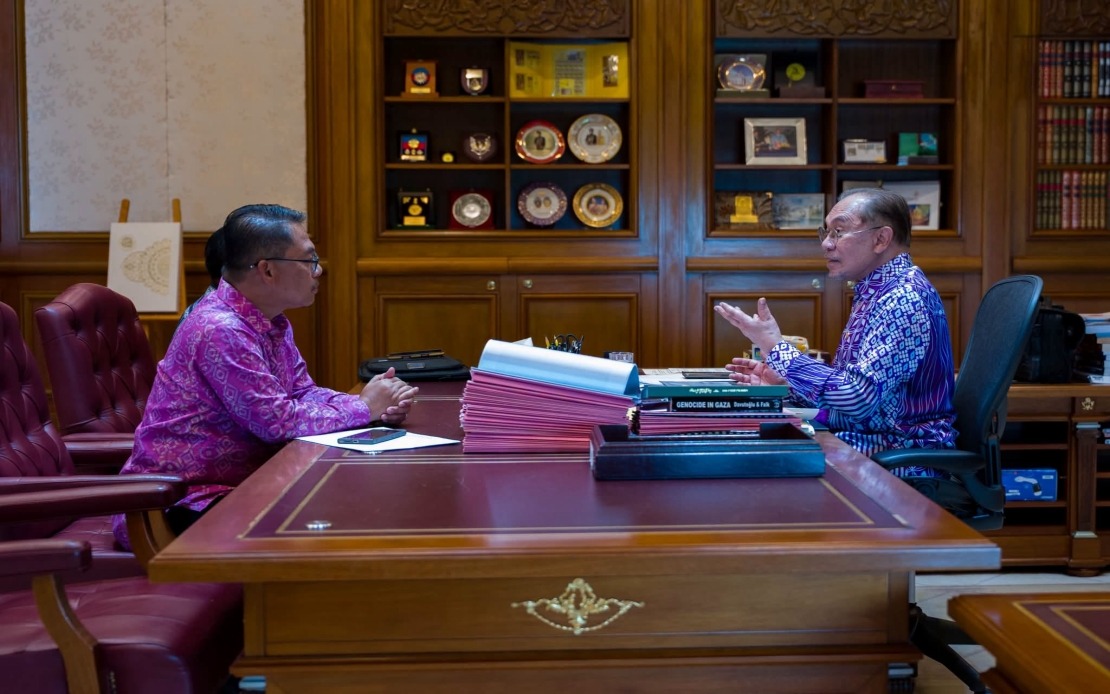
Prime Minister Datuk Seri Anwar Ibrahim's direct engagement with affected communities underscores the administration's recognition that policy acceptance depends on demonstrating responsiveness to lived experience. By personally receiving accounts of implementation difficulties in Sabah, the Prime Minister signalled that grievances would not be relegated to bureaucratic channels alone. This approach reflects the MADANI Government's stated commitment to participatory governance and acknowledges that technical policy design, however sound in theory, requires grounding in practical reality.
The ongoing stakeholder consultations involving state governments, federal agencies, and community representatives represent the mechanism through which refinements will be operationalised. These discussions create forums where specific challenges—whether administrative bottlenecks in quota management, complications in vehicle eligibility verification, or supply chain issues affecting fuel availability in remote areas—can be systematically identified and resolved. The involvement of both state and federal authorities is particularly important, as implementation ultimately depends on coordinated action across multiple jurisdictions and agencies.
For rural residents in Sabah and Sarawak, the subsidy programme's integrity is inseparable from concerns about quality of life preservation. Transport costs constitute a substantial portion of household budgets in these regions, where distances between settlements and service centres can span hundreds of kilometres. Any subsidy mechanism that fails to adequately serve rural populations risks exacerbating regional inequality and weakening economic opportunities in areas already facing infrastructure constraints. This context explains why the government's commitment to listening and adapting carries genuine significance beyond rhetorical posturing.
The BUDI Diesel scheme's design reflects broader policy evolution in how emerging markets approach subsidy distribution in an era of constrained fiscal space. Rather than universal price controls that benefit all consumers regardless of need, targeted mechanisms aim to concentrate support on those most dependent on specific commodities. The quota system introduces rationing elements that encourage efficiency while controlling fiscal outlay. However, targeted schemes inevitably create boundary issues—who qualifies, what documentation suffices, how are disputes resolved—that generate friction during implementation.
Malaysia's experience with subsidy reform over recent years demonstrates both the necessity and the difficulty of such transitions. Previous iterations of fuel and electricity subsidies created inefficient consumption patterns, substantial budgetary drains, and benefits poorly aligned with vulnerable populations. Yet policy reform in these areas consistently encounters resistance rooted in legitimate concerns about transitional impacts. The government's willingness to refine BUDI Diesel based on grassroots input suggests acknowledgment of these lessons and commitment to managing reform in ways that preserve political and social cohesion.
For Southeast Asian observers, Malaysia's approach offers a case study in how democracies attempt to reconcile fiscal discipline with welfare concerns during subsidy restructuring. The region's development trajectory increasingly requires governments to modernise social protection systems while managing public expectations shaped by decades of universal subsidy provision. How Malaysia implements BUDI Diesel—and whether refinements genuinely address community concerns—will influence policy conversations across the region regarding sustainable approaches to fuel and energy support.
The timeframe for visible refinements remains unspecified, though the government's framing suggests adjustments will emerge from ongoing discussions rather than through lengthy policy review cycles. This suggests a pragmatic, iterative approach where implementation experience directly informs adjustments. Such flexibility can enhance policy effectiveness, though it requires robust feedback mechanisms to ensure that concerns from all communities—including those less politically organised or vocal—receive appropriate weight in decision-making processes.
Looking forward, the success of targeted subsidy schemes in Sabah and Sarawak depends substantially on whether implementation mechanics prove user-friendly and accessible to eligible populations. Many rural residents may struggle with complex application procedures, digital verification systems, or documentation requirements that urban counterparts navigate more readily. Refinements addressing these practical dimensions—simplifying verification, establishing clear appeals processes, ensuring fuel availability at distribution points—may prove as important as adjusting subsidy quantum in determining whether the policy achieves its intended equity objectives.

