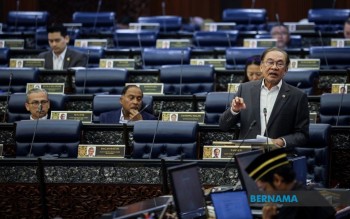
The Malaysian government has extended a significant olive branch to the nation's business community, particularly micro, small and medium enterprises struggling with mounting compliance obligations. Prime Minister Datuk Seri Anwar Ibrahim, speaking in his capacity as Finance Minister during parliamentary question time, unveiled the e-Invoice Voluntary Declaration Programme, which will remain open until December 31, 2027. This initiative represents an unusual departure from standard tax administration practice by permitting businesses to voluntarily update, review and amend their e-Invoice records without facing any penalties from the Inland Revenue Board of Malaysia, a concession Anwar himself acknowledged as unconventional in income tax enforcement.
The timing of this announcement reflects growing apprehension within Malaysia's entrepreneurial sector regarding the administrative and financial costs associated with digital tax compliance. Responding to a parliamentary question from Lee Chuan How, the member for Ipoh Timor, Anwar framed the measure as part of the MADANI government's broader commitment to supporting business survival amid an uncertain global economic landscape. The query specifically highlighted concerns about how the administration plans to address the challenges confronting entrepreneurs, with particular emphasis on whether federal assistance would emerge to buffer MSMEs against contemporary headwinds.
The amnesty programme signals recognition from Putrajaya that blanket enforcement of e-Invoice requirements has created genuine friction within Malaysia's business ecosystem. Rather than maintaining rigid compliance mechanisms, the government has opted for a graduated approach that acknowledges the real constraints facing smaller operators. The absence of monetary penalties for voluntary corrections removes a significant disincentive that would otherwise discourage businesses from proactively auditing their digital tax records. This represents a pragmatic acknowledgment that perfect compliance on first submission remains aspirational for many enterprises navigating unfamiliar digital infrastructure.
Complementing the amnesty initiative, the government has simultaneously approved an acceleration of available tax incentives specifically designed to encourage e-Invoice adoption. Businesses implementing the digital invoicing system will now enjoy full capital allowance claims within a single financial year for all qualifying expenses incurred during their transition to electronic documentation. This compressed depreciation schedule translates into immediate cash flow relief for businesses shouldering upfront investments in compliance infrastructure, system upgrades and staff training. By frontloading deductions rather than spreading them across multiple years, the government substantially improves the financial position of early adopters.
These parallel initiatives must be understood within the context of Malaysia's recent expansion of e-Invoice exemption thresholds. In December 2025, the government raised the revenue ceiling for exemption from RM500,000 to RM1 million, effectively removing more than one million taxpayers from the requirement to implement electronic invoicing. This progressive elevation of exemption levels demonstrates a calibrated approach to digitalization, acknowledging that universal simultaneous implementation imposes unreasonable costs on the smallest operators. The cumulative effect of raising exemption thresholds, introducing amnesty provisions, and accelerating capital allowances creates a three-tiered support structure for businesses at different stages of digital maturity.
For Malaysia's MSME community, which comprises roughly 98 percent of all registered businesses and contributes significantly to employment and economic output, such measures carry substantial practical implications. Many small business operators lack dedicated finance and compliance personnel, meaning e-Invoice implementation falls upon owner-managers already stretched across multiple operational functions. The voluntary declaration window removes the prospect of punitive consequences for honest mistakes, calculation errors or system glitches during this transition period. This approach acknowledges that compliance capacity varies dramatically across the business population, and that regulatory rigidity produces counterproductive outcomes.
The broader policy context reveals Putrajaya's awareness that excessive compliance burdens can inadvertently drive businesses toward the informal economy or discourages entrepreneurial formalization. Southeast Asian competitors have observed mixed results from aggressive digitalization initiatives implemented without adequate transition support. By contrast, Malaysia's graduated approach permits businesses to achieve digital compliance according to their operational readiness rather than artificial deadlines. This flexibility extends the runway for achieving systematic participation in e-Invoice systems while maintaining broad policy objectives around tax transparency and revenue administration efficiency.
International tax administration experts increasingly recognize that voluntary compliance regimes, when appropriately designed, often generate superior long-term outcomes compared to coercive enforcement models. Malaysia's declaration programme aligns with this evidence by emphasizing carrot-based incentives over stick-based penalties. The combination of penalty amnesty, accelerated tax deductions, and expanded exemption thresholds creates a coherent incentive structure encouraging business cooperation with digital tax administration. Businesses contemplating participation gain confidence that good-faith errors will not trigger punitive consequences.
The programme also reflects implicit recognition that Malaysia's tax administration system must evolve to accommodate the nation's digital economy transition. As businesses increasingly conduct transactions through digital channels, traditional invoicing methodologies become outdated. However, forcing instantaneous universal adoption generates resistance and implementation failures. The phased approach with extended deadlines permits administrators to progressively enhance system capacity, provide targeted training, and resolve emerging technical challenges without overwhelming compliance personnel across government revenue agencies.
Looking forward, this initiative establishes important precedent regarding how Malaysia's tax authorities will balance revenue administration objectives against business support imperatives. The decision to permit voluntary corrections without penalties, while maintaining enforcement against deliberate evasion, demonstrates administrative sophistication in distinguishing between genuine compliance challenges and intentional non-compliance. This distinction proves critical for maintaining public confidence in tax systems that must simultaneously enforce obligations and respect legitimate business constraints.
For Malaysian enterprises, particularly MSMEs operating with compressed margins and limited administrative infrastructure, these measures provide meaningful relief during the critical digitalization transition period. The extended timeline, penalty amnesty, and accelerated deductions collectively reduce the financial and organizational burden of achieving e-Invoice compliance. As businesses grow increasingly comfortable with digital tax administration systems, adoption accelerates naturally, ultimately achieving the government's policy objectives through cooperation rather than coercion. This calibrated approach may ultimately prove more effective at achieving comprehensive digital tax compliance than rigid enforcement timelines.

