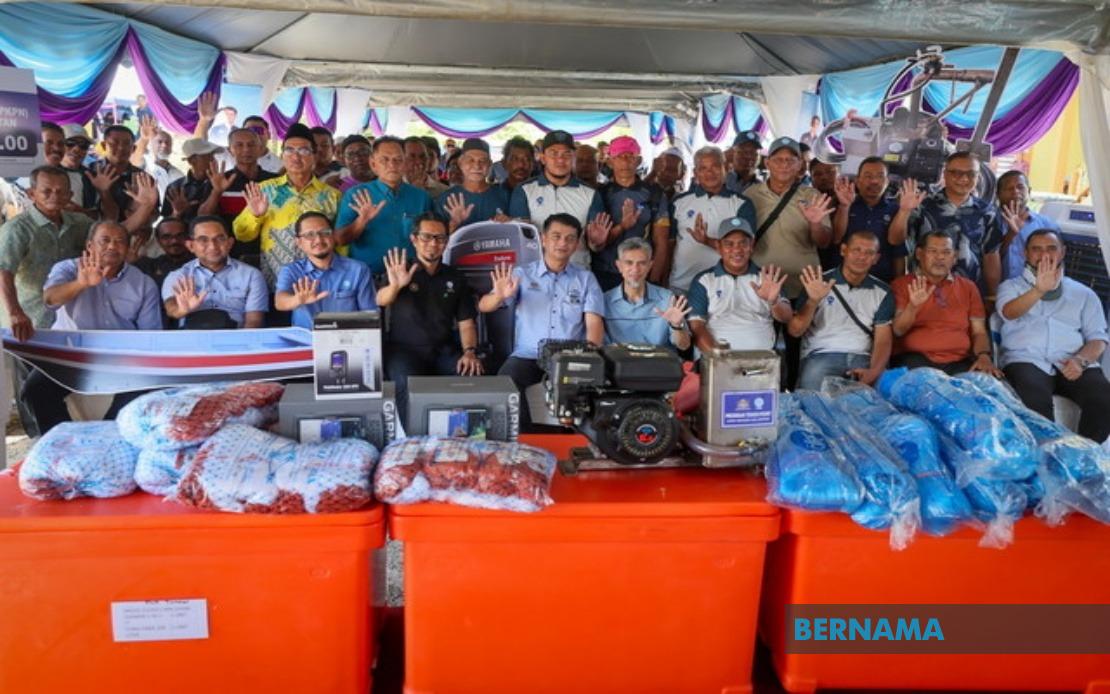
The Malaysian government is channelling RM10 million in 2024 toward the Special Fishermen Housing Project (PKPN), a comprehensive initiative designed to enhance the quality of life and economic circumstances of the country's fishing community. Muhammad Faiz Fadzil, chairman of the Fisheries Development Authority of Malaysia (LKIM), disclosed the programme structure during an agency engagement session in Tumpat, Kelantan, emphasising the dual-track approach that addresses both immediate housing needs and longer-term economic sustainability within the sector.
The RM10 million allocation divides into two distinct operational streams managed by LKIM. The larger portion, exceeding RM6.8 million, targets the restoration and renovation of existing homes belonging to qualifying fishermen across all states, while just over RM3.1 million supports the construction of 36 purpose-built new residences. This bifurcated strategy reflects recognition that the fishing community faces distinct challenges—some require structural improvements to ageing family dwellings, while others lack adequate housing entirely. By supporting both repair and construction simultaneously, the programme attempts to address the diversity of housing conditions prevalent in coastal communities.
Progress on the repair component has advanced substantially, having reached 80 percent completion as of early July. Muhammad Faiz indicated that full completion of all renovation work should materialise by August or September, though new house construction faces a more protracted timeline extending through the remainder of the year. The delay in new housing development stems partly from complications surrounding land ownership and inheritance matters, administrative obstacles that frequently impede infrastructure projects in Malaysian coastal regions where traditional land tenure systems intersect with modern property law.
The financial parameters governing the programme reveal considerable regional variation, reflecting Malaysia's commitment to addressing geographic economic disparities. Fishermen in Peninsular Malaysia receive allocations of RM84,000 per new housing unit, while those in Sabah and Sarawak benefit from higher allocations reaching RM95,000—acknowledging both the greater construction costs in East Malaysia and the structural challenges of developing housing infrastructure in more remote areas. For renovation work, individual fishermen's households receive up to RM20,000 for repairs. In Kelantan specifically, the state allocation totals RM388,000, positioning the state as a significant beneficiary of the national programme.
Yet the housing initiative, while materially important, represents merely one component of a broader recalibration of Malaysia's fisheries policy. LKIM leadership has begun aggressively promoting aquaculture expansion as a strategic counterweight to declining wild fish stocks and escalating operational expenses in conventional fishing. Muhammad Faiz articulated a fundamental shift in official thinking, warning that conventional fishing alone cannot sustain the sector's future prosperity, particularly given persistent cost pressures—especially escalating fuel expenses—that erode fishing industry profitability despite continued government fuel subsidies.
The government has established an ambitious 2030 target whereby aquaculture should generate 40 percent of the nation's total fish production, representing a substantial reorientation from current reliance on wild-capture fisheries. This strategic pivot reflects global trends in seafood sourcing and responds to scientific evidence of oceanic resource depletion, challenges particularly acute in Southeast Asian waters where fishing pressure remains intense. By transitioning fishermen toward controlled aquaculture environments, policymakers hope to stabilise livelihoods while reducing pressure on natural marine ecosystems.
To facilitate this sectoral transformation, LKIM has allocated RM400,000 specifically to Kelantan's State Fishermen's Association (PENEKA) for tank-based prawn farming operations, a pilot programme intended for replication across other maritime states. This initiative demonstrates a deliberate strategy to guide existing fishermen—rather than replace them—toward intensive aquaculture methodologies that require less physical capital and operational risk than open-water fishing. The association-based approach leverages existing institutional structures and community trust, potentially accelerating adoption rates compared to purely governmental implementation.
The aquaculture push carries profound implications for Malaysian fishermen, particularly those in states like Kelantan, Terengganu, and Sabah where fishing communities form substantial portions of rural populations. While aquaculture offers genuine income diversification opportunities, the transition requires investment capital, technical training, and psychological adjustment from communities with generational fishing traditions. Younger fishermen may prove more adaptable to tank-farming methodologies, but ensuring equitable access to aquaculture opportunities across age and skills demographics remains a significant policy implementation challenge.
From a regional perspective, Malaysia's dual strategy—combining targeted housing improvements with sector transformation—mirrors approaches adopted by other Southeast Asian fishing nations confronting similar resource depletion and economic pressures. Thailand, Vietnam, and Indonesia have pursued comparable aquaculture expansion programmes, creating regional competitive dynamics around fish production and export markets. Malaysia's 2030 target of 40 percent aquaculture production represents an ambitious commitment that, if realised, would significantly reshape the nation's food security profile and position in regional seafood supply chains.
The RM10 million housing allocation, while representing substantial commitment, must be contextualised within the broader economic needs of Malaysia's fishing community. With tens of thousands of fishing households nationwide, per-unit expenditures averaging below RM30,000 for repairs and RM84,000 for new construction suggest that annual housing needs substantially exceed available funding. This implies future years must sustain comparable or increased allocations if the nation intends comprehensive housing improvements across the fishing sector, raising questions about budgetary sustainability and political prioritisation of maritime community welfare relative to competing infrastructure demands.
The government's promotion of aquaculture fundamentally addresses supply-side challenges confronting Malaysia's fishing industry, yet demand-side factors warrant consideration alongside production diversification. Market access, price competitiveness, and consumer preferences for wild-caught versus farmed seafood all influence whether aquaculture expansion translates into genuine income improvements for participating fishermen. Successful sector transformation requires coordinated attention to both production capacity and market development, particularly as regional aquaculture competition intensifies.
Ultimately, the RM10 million housing programme and aquaculture initiatives represent governmental acknowledgment that conventional fishing alone cannot sustain the sector's socioeconomic viability. By simultaneously improving fishermen's living conditions and incentivising economic diversification, policymakers attempt to address both immediate welfare concerns and structural sectoral challenges. Whether these parallel interventions achieve their objectives depends substantially on implementation effectiveness, fishermen's receptiveness to aquaculture opportunities, and sustained governmental commitment to supporting the fishing community through a transformative economic transition.

