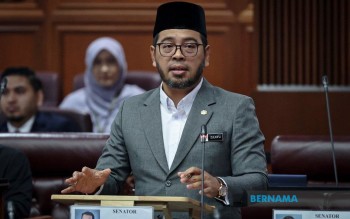
The Malaysian government has undertaken a substantial financial rescue of Lembaga Tabung Haji (TH), committing more than RM10 billion to address a critical insolvency crisis that threatened the pilgrimage savings institution's survival. Minister in the Prime Minister's Department (Religious Affairs) Dr Zulkifli Hasan clarified to Parliament that the intervention represents a restructuring initiative designed to restore TH's financial stability and long-term sustainability, not to convert the institution into a government asset or privatize its holdings.
The bailout became necessary following a pronounced financial deterioration at TH, where the gap between assets and liabilities had swelled beyond RM10 billion by the final quarter of 2018. This accumulation of losses created an urgent situation demanding immediate intervention within a compressed timeframe of merely three months. The scale of the deficit rendered the institution technically insolvent, leaving authorities with limited options to prevent catastrophic failure that would have compromised the savings of millions of Malaysian pilgrims and hajj intending pilgrims who had entrusted their funds to the organization.
Dr Zulkifli emphasized that the financial collapse stemmed from organizational mismanagement and embezzlement rather than structural flaws in TH's fundamental operations. The Royal Commission of Inquiry investigation into TH's condition had identified these factors as primary contributors to the institution's deterioration. By addressing these root causes through restructuring rather than liquidation, the government sought to preserve TH's core mission of facilitating hajj savings while correcting the institutional governance failures that had created the deficit.
The minister also addressed misleading claims circulating regarding asset disposition, specifically denying assertions that TH properties had been sold to non-Muslims or individuals of Chinese descent. These allegations, according to Dr Zulkifli, represented inflammatory misinformation deliberately spread by actors seeking to manufacture communal tension and exploit public concern about religious institutions for political purposes. Such false narratives can undermine confidence in government institutions and distract from substantive policy discussions regarding institutional reform.
Clarity regarding asset ownership remains important for public understanding of TH's restructuring. The assets managed under TH's framework are held by Urusharta Jamaah, which operates as a wholly-owned subsidiary of the Minister of Finance Incorporated. This institutional arrangement ensures that asset management remains within the government's fiduciary responsibility and subject to public accountability mechanisms, addressing concerns about asset security and proper stewardship of accumulated hajj savings from millions of Malaysian Muslims.
The decision to implement a comprehensive bailout rather than pursue asset sales or institutional dissolution reflects the government's commitment to preserving TH's accessibility for ordinary Malaysians planning their hajj journey. Asset liquidation would have fundamentally compromised the institution's ability to serve its constituents and could have resulted in substantial losses for depositors attempting to recover their contributions during a fire-sale environment. The restructuring approach prioritizes stakeholder protection and institutional continuity over expedient financial solutions.
TH's critical condition as of late 2018 presented authorities with consequences that extended beyond the institution itself. The potential collapse of TH would have reverberated through Malaysia's financial system and created significant hardship for millions of pilgrims who depend on TH's services for their hajj preparations. Intervention became an imperative not merely for institutional preservation but for protecting the pilgrimage aspirations and financial security of ordinary Malaysians from diverse socioeconomic backgrounds who represent the institution's core constituency.
The restructuring initiative undertaken by the Pakatan Harapan government at that time reflected recognition that TH's problems, while severe, remained remediable through financial recapitalization combined with governance reform. The bailout strategy presumed that correcting the underlying mismanagement and addressing institutional accountability deficiencies could restore TH to financial health without requiring fundamental dismantling of the organization. This approach contrasts with more extreme alternatives that might have prioritized short-term financial metrics over long-term institutional viability.
Moving forward, the significance of TH's rehabilitation extends to Malaysia's broader financial sector and regulatory environment. The institutional failures that precipitated the crisis underscore the importance of robust governance frameworks, transparent management structures, and effective oversight mechanisms within financial institutions entrusted with public deposits. TH's experience provides valuable lessons regarding the consequences of inadequate internal controls and the necessity for continuous institutional monitoring to detect and address irregularities before they accumulate into systemic threats.
For Malaysian pilgrims and their families, the government's commitment to TH's restoration provides assurance regarding the safety and accessibility of their hajj savings. The bailout represents a categorical statement that the government will not permit the collapse of institutions serving critical religious and social functions, even when such institutions face severe financial challenges. This commitment carries particular weight given hajj's centrality to Islamic practice and the personal, financial, and spiritual investment that millions of Malaysians direct toward this obligation throughout their lives.

