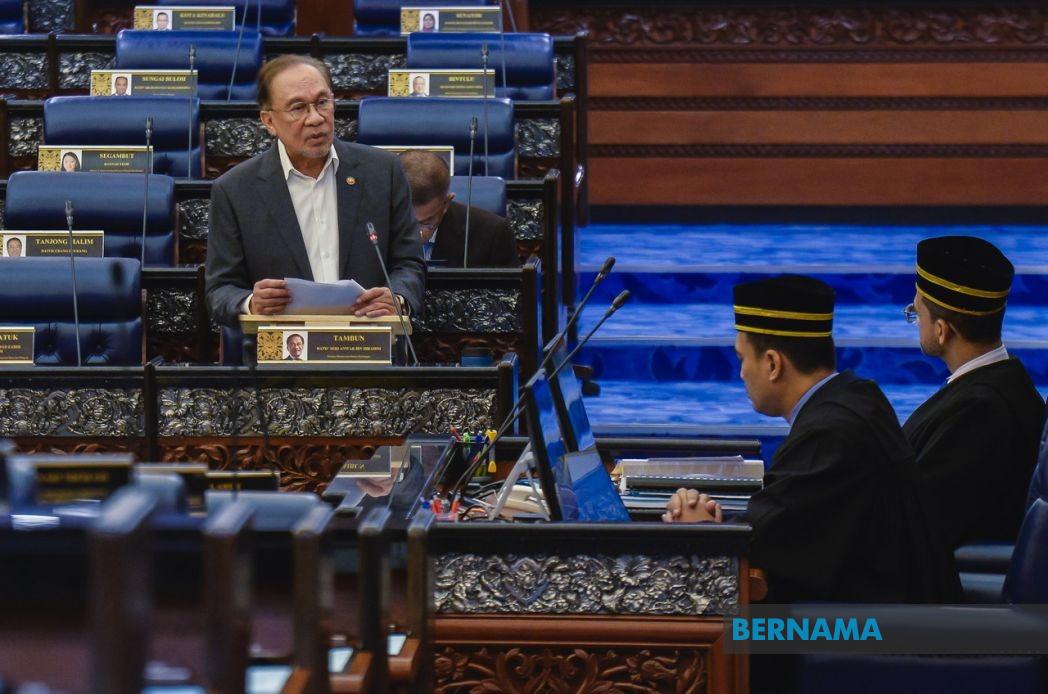
Prime Minister Datuk Seri Anwar Ibrahim moved to dispel concerns about restrictions on activities in Federal Land Development Authority settlements, clarifying during parliamentary question time that no blanket prohibition exists on programmes held in FELDA communities. His comments came in response to queries about the government's approach to events organised by state administrations within these settlements, a matter that touches on the sensitive relationship between federal and state authorities in managing rural constituencies.
The Prime Minister's remarks were notably directed at addressing what appears to be confusion or concern among stakeholders regarding the scope of the government's regulatory authority over FELDA areas. Anwar explicitly stated that state governments retain full freedom to organise their own events within FELDA settlements, provided such activities comply with electoral laws. This distinction between permissible programming and restricted campaign conduct represents a careful calibration of federal oversight, seeking to balance governance frameworks with state-level autonomy in rural development zones.
The core issue hinges on the interpretation of election regulations rather than any outright ban on community activities. Federal election laws prohibit the deployment of government machinery and resources for partisan campaign purposes, a restriction that naturally extends to FELDA infrastructure and personnel. However, Anwar underscored that this legal constraint operates at the operational level, not the conceptual level—meaning that the restriction targets how programmes are resourced and conducted, not whether they can occur at all. State leaders remain at liberty to visit FELDA settlements and engage with constituents, subject only to the requirement that they refrain from utilising federal apparatus to advance electoral objectives.
When addressing the specific case of the FELDA Settlers' Day programme scheduled for Kluang in Johor on June 20 and 21, Anwar categorically denied having issued any directive to cancel the event. This clarification assumed particular importance given potential implications for state-level planning and the perception of federal interference in rural community celebrations. The cancellation of such commemorative occasions could have signalled a broader policy shift or political messaging that proved damaging to the government's standing within FELDA constituencies, which historically represent significant voting blocs in electoral cycles.
The Prime Minister framed the government's approach to FELDA communities within a broader narrative of remedial development and improved resource allocation. In his assessment, prior administrations had neglected many FELDA settlements, leaving them underserved in terms of infrastructure investment and development initiatives. This framing positions the current administration's policies as corrective measures designed to address historical disparities rather than as new restrictions on settlement autonomy. The MADANI Government has therefore adopted what it characterises as a revitalisation agenda encompassing facility upgrades and service expansions aimed at elevating living standards within these communities.
Tangible illustrations of this commitment include the establishment of dialysis centres within FELDA settlements and the expansion of development infrastructure through federal agencies. These projects represent direct federal investment in healthcare and social services, addressing gaps that likely existed in the provision of specialist medical care in rural areas. Deputy Prime Minister Datuk Seri Dr Ahmad Zahid Hamidi emerged as a collaborative partner in this initiative, suggesting institutional commitment at the highest governmental levels to the welfare enhancement strategy for FELDA communities.
The parliamentary exchange carries implications that extend beyond FELDA administration into the broader question of federal-state relations during electoral periods. The clarifications offered by Anwar may be read as an attempt to manage political tensions arising from perceived overreach or misunderstanding regarding the scope of federal authority in these settlements. By explicitly confirming that state governments maintain prerogative over development activities such as land titling, the Prime Minister sought to reassure state administrations that the federal government does not seek to circumscribe legitimate exercise of state powers.
For Malaysian voters in FELDA constituencies, these assurances carry practical meaning regarding access to state-level services and political engagement during campaign seasons. The clarification that electoral law restrictions target resource utilisation rather than activity itself preserves space for competitive political communication whilst maintaining formal compliance with electoral frameworks. This distinction matters considerably in constituencies where multiple parties compete for influence and where rural voters expect substantive engagement from both state and federal representatives.
The government's emphasis on past neglect of FELDA settlements appears designed to establish a counternarrative to any claims that the current administration has retreated from developmental commitments to these communities. By highlighting specific investments in healthcare and infrastructure, the administration positions itself as a credible custodian of FELDA welfare interests. This rhetorical strategy becomes particularly significant in a political environment where perceptions of regional or community neglect can rapidly translate into electoral disadvantage.
The broader context of parliamentary scrutiny reflects ongoing parliamentary oversight mechanisms, with opposition figures maintaining vigilance regarding government conduct in constituencies of political consequence. The question posed by Datuk Seri Hamzah Zainudin of Perikatan Nasional suggests continuing political sensitivity around FELDA matters, indicating that these rural communities remain important focal points for inter-party competition. The government's responses therefore serve both immediate clarificatory functions and longer-term positioning ahead of future electoral contests.
Moving forward, the government's position appears to rest on a framework that permits robust community programming and state-level engagement within FELDA settlements whilst maintaining strict adherence to electoral regulations governing the use of government resources. This framework theoretically allows all political actors to pursue legitimate activities within these communities whilst preventing the conversion of government machinery into partisan campaign apparatus. The practical implementation of such distinctions may nonetheless present ongoing challenges where boundary lines between permissible political engagement and restricted campaign activity remain contested.

