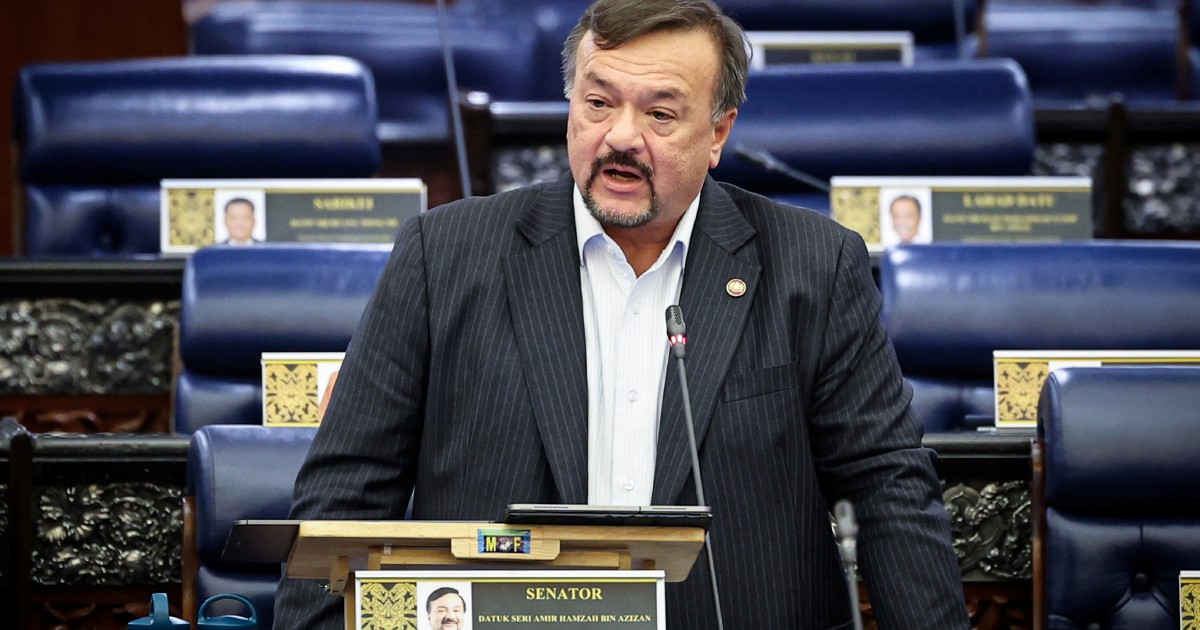
The government is considering the formation of a multi-agency task force designed to synchronise investigations into suspected misconduct at Tabung Haji, Deputy Finance Minister Datuk Seri Amir Hamzah Azizan revealed, signalling a potentially significant escalation in the authorities' handling of allegations that have shadowed Malaysia's premier Islamic pilgrimage fund.
The proposal to establish a coordinated investigative body underscores growing concern about the scale and complexity of the matters being scrutinised at Tabung Haji, which serves as the primary vehicle through which Malaysian Muslims accumulate savings for the Hajj pilgrimage. By bringing multiple government agencies under a unified framework, the authorities would be able to consolidate efforts that have heretofore operated in separate streams, reducing duplication and enhancing the effectiveness of fact-finding missions.
Tabung Haji has been embroiled in public controversy in recent years, with inquiries touching on governance, investment decisions, and the management of accumulated funds belonging to millions of depositors across the nation. The institution's significance extends beyond mere financial stewardship—it occupies a uniquely sensitive position in Malaysian society as a trusted mechanism through which ordinary citizens, many of modest means, entrust their hard-earned savings for one of Islam's five pillars. Any indication of impropriety strikes at the heart of public confidence in Islamic institutional frameworks.
The establishment of a task force would require coordination between several government departments and enforcement agencies, each bringing specialised expertise to the investigation. Such bodies typically draw personnel from the Malaysian Anti-Corruption Commission, the Commercial Crime Investigation Department, Bank Negara Malaysia, and relevant ministry divisions, creating a comprehensive investigative apparatus capable of tracing complex financial trails and examining governance lapses across multiple dimensions.
For Malaysian investors and depositors who have placed funds with Tabung Haji, the announcement carries both reassuring and concerning dimensions. The multi-agency approach suggests that the government recognises the gravity of allegations and is committed to pursuing them with rigour, potentially offering assurance that wrongdoing—if substantiated—will not go unpunished. Conversely, the need for such a formalised task force implicitly acknowledges that problems within the institution may be sufficiently intricate to exceed the capacity of routine regulatory oversight.
The financial implications for Tabung Haji's operations remain substantial. The fund manages billions of ringgit in deposits and faces ongoing questions about investment performance, liquidity, and the sustainability of promised returns to account holders. Public perception of institutional integrity directly influences depositor confidence, which in turn affects the fund's ability to attract new savings and fulfil existing obligations to pilgrims awaiting withdrawals for Hajj purposes.
Within Southeast Asia's broader landscape of Islamic financial institutions, Tabung Haji holds significant standing as an example—both positive and potentially cautionary—of how governments structure savings mechanisms aligned with religious obligations. The manner in which Malaysian authorities handle this investigation will likely be observed by regulators and Islamic financial practitioners across the region, who grapple with similar challenges of balancing institutional efficiency, governance standards, and religious credibility.
The timing of the proposal warrants consideration. Public discourse surrounding Tabung Haji has intensified periodically as media investigations and parliamentary inquiries have raised fresh questions about financial management. By formalising an inter-agency task force, the government appears to be responding to sustained public pressure and demonstrating administrative intent to resolve outstanding questions through systematic investigation rather than piecemeal departmental reviews.
For those familiar with Malaysia's institutional landscape, multi-agency task forces represent a recognised policy mechanism deployed when issues transcend the jurisdictional boundaries of single organisations. Their success depends heavily on clear mandates, adequate resourcing, and genuine interagency cooperation—conditions that are not always guaranteed despite institutional design. The coming months will reveal whether the proposed task force can deliver the coordinated, transparent investigation that stakeholders expect.
The announcement also reflects broader governance discussions within Malaysia regarding institutional accountability and public trust in entities managing citizens' resources. Tabung Haji's particular vulnerability to scrutiny stems partly from its status as a quasi-public institution with religious significance, making it subject to expectations that exceed those typically applied to purely commercial enterprises. Depositors view their participation not merely as a financial transaction but as an act of faith-based stewardship.
As the government moves forward with formal consideration of the task force proposal, key questions remain about its investigative scope, timeline, and the mechanisms through which findings will be disclosed to the public. Transparency in the investigative process will be essential to rebuilding confidence among the millions of Malaysian Muslims whose livelihoods and spiritual aspirations remain intertwined with Tabung Haji's institutional credibility and financial stability.

