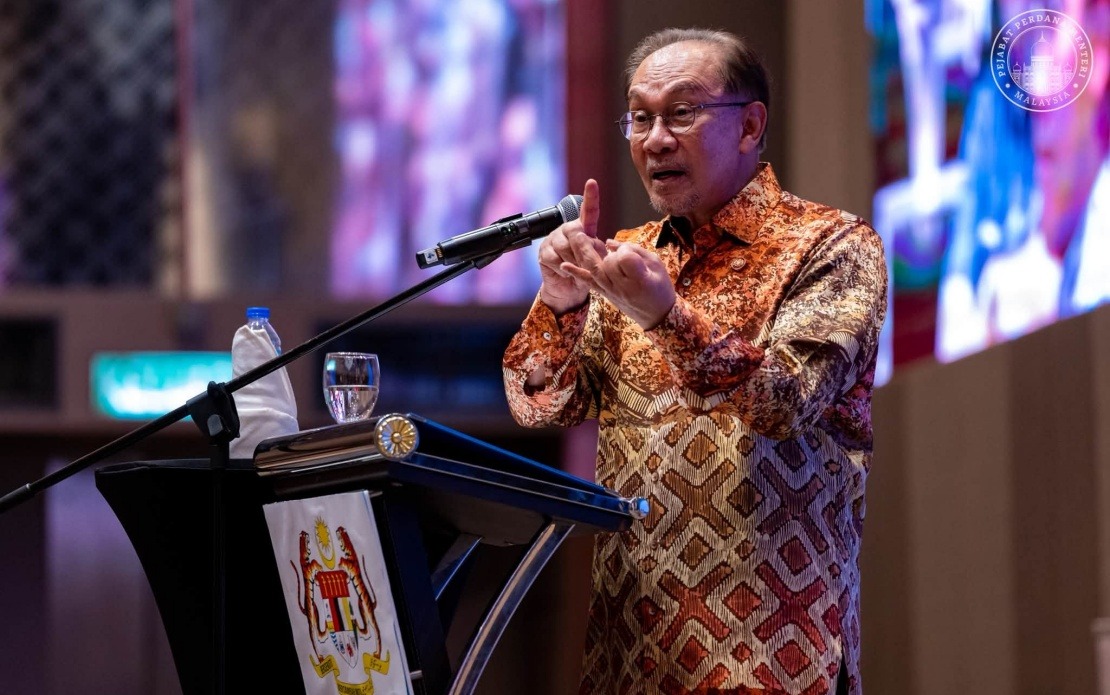
Prime Minister Datuk Seri Anwar Ibrahim has reaffirmed the government's commitment to supporting Malaysia's youth as they confront an increasingly complicated global landscape. Speaking through a social media address on Tuesday evening, he outlined the administration's determination to assist young people in addressing the multifaceted difficulties they encounter, drawing from direct engagement with youth representatives at two significant events held in Klang, Selangor.
The Prime Minister's remarks came following his participation in the "Temu Anwar" interactive session and the inauguration of the 2026 International Youth Assembly (HAMKA), occasions that provided him with a platform to hear concerns and suggestions directly from young Malaysians. This engagement reflects a growing recognition within government circles that youth voices merit substantive attention in policymaking, particularly as demographic trends show Malaysia's younger population increasingly seeking meaningful participation in national affairs.
Anwar's commentary on the contemporary youth experience carries particular resonance given accelerating social and technological change across the region. He acknowledged that today's young people inherit a world marked by ideological plurality and frequent disagreement—a reality that extends beyond Malaysia to affect youth throughout Southeast Asia. The proliferation of competing viewpoints, coupled with the speed at which information circulates, has created a distinctly different environment from that experienced by previous generations of young people navigating their formative years.
Crucially, the Prime Minister emphasized that managing these differences requires a foundation rooted in substantive knowledge, rigorous reasoning, and civil conduct. Rather than allowing discussions to devolve into sentiment-driven exchanges, group-based loyalties, or expressions of hostility, Anwar advocated for an approach emphasizing intellectual rigor and mutual respect. This framework suggests the government envisions a role in fostering environments where youth can develop critical thinking capacities and engage in constructive dialogue despite disagreement—an ambition that challenges educational and social institutions to reorient their approach to youth development.
The invocation of HAMKA's namesake holds symbolic weight in this context. The assembly draws its name from Abdul Malik Karim Amrullah, a twentieth-century Indonesian Islamic scholar, thinker, and literary figure whose intellectual contributions profoundly shaped discourse among younger generations of his era. Amrullah embodied qualities that Anwar highlighted as essential for contemporary youth: erudition combined with persuasive communication, willingness to articulate perspectives fearlessly, and intellectual flexibility in exploring ideas from multiple angles. By anchoring the modern assembly to this historical figure, organizers implicitly suggest that the challenges facing today's youth require similar intellectual courage and open-mindedness.
The reference to Amrullah's legacy also underscores the importance of knowledge as a foundation for meaningful youth engagement. The scholar's extensive written and spoken contributions demonstrated that ideas, when carefully reasoned and articulately presented, possess transformative capacity. For Malaysian policymakers seeking to influence youth perspectives on governance, national development, and social cohesion, this historical precedent suggests that investing in education, intellectual discourse, and platforms for youth expression represents a strategic necessity rather than a peripheral concern.
Anwar's framing of government support operates within explicit constraints he acknowledged. By stating the administration will assist young people "within available capacity," the Prime Minister indicated realistic recognition of budgetary and institutional limitations. This caveat distinguishes his commitment from unlimited promises, suggesting a pragmatic approach grounded in fiscal responsibility. For Malaysian youth policy, this means identifying leverage points where government resources can catalyze change through youth organizations, educational partnerships, and facilitated spaces for dialogue rather than attempting comprehensive provision across all youth needs.
The timing of these remarks reflects broader regional patterns where youth engagement has become increasingly central to political messaging. Across Southeast Asia, governments recognize that young people represent both demographic dividends and potential sources of political volatility if their aspirations remain unmet. The 2026 HAMKA assembly's international dimensions suggest Malaysian leadership sees merit in positioning the country as a convener for cross-border youth dialogue, potentially enhancing soft power while creating genuine engagement opportunities.
For Malaysian readers, particularly parents and educators, Anwar's emphasis on knowledge-based discourse carries implications beyond political rhetoric. His statements implicitly critique approaches to disagreement that rely on emotion, tribal affiliation, or disdain rather than intellectual engagement. As Malaysia navigates social fragmentation and polarization on various issues—from religious matters to economic policy—the Prime Minister's call for reasoned dialogue rooted in substantive knowledge offers a counterweight to more divisive approaches increasingly visible on social media and in casual discourse.
The structural reality facing Malaysian youth differs significantly from previous generations. Economic pressures including rising housing costs, competitive job markets requiring specialized skills, and evolving career landscapes create stressors distinct from those their parents encountered. Simultaneously, digital connectivity exposes youth to both unprecedented information access and unprecedented misinformation. Government support frameworks must account for these realities, suggesting that traditional youth programs may require fundamental reimagining to remain relevant.
Moving forward, the weight of Anwar's commitment will be measured through concrete policy implementation. Whether the government translates its rhetorical dedication into substantive programs addressing youth unemployment, mental health support, entrepreneurship development, and educational access will determine whether this engagement represents genuine commitment or political theater. The success of such initiatives depends partly on institutional capacity and partly on whether resources ultimately flow to where they can meaningfully alter trajectories for significant numbers of young Malaysians.
The international assembly format also suggests Malaysian leadership recognizes that youth challenges transcend national boundaries. Regional cooperation on issues affecting young people—from climate change to economic opportunities—reflects understanding that isolated national approaches prove insufficient. By hosting HAMKA as an international platform, Malaysia positions itself within emerging networks of youth leadership and influence extending across ASEAN, potentially yielding diplomatic and soft power dividends alongside genuine capacity-building benefits for participating youth.

