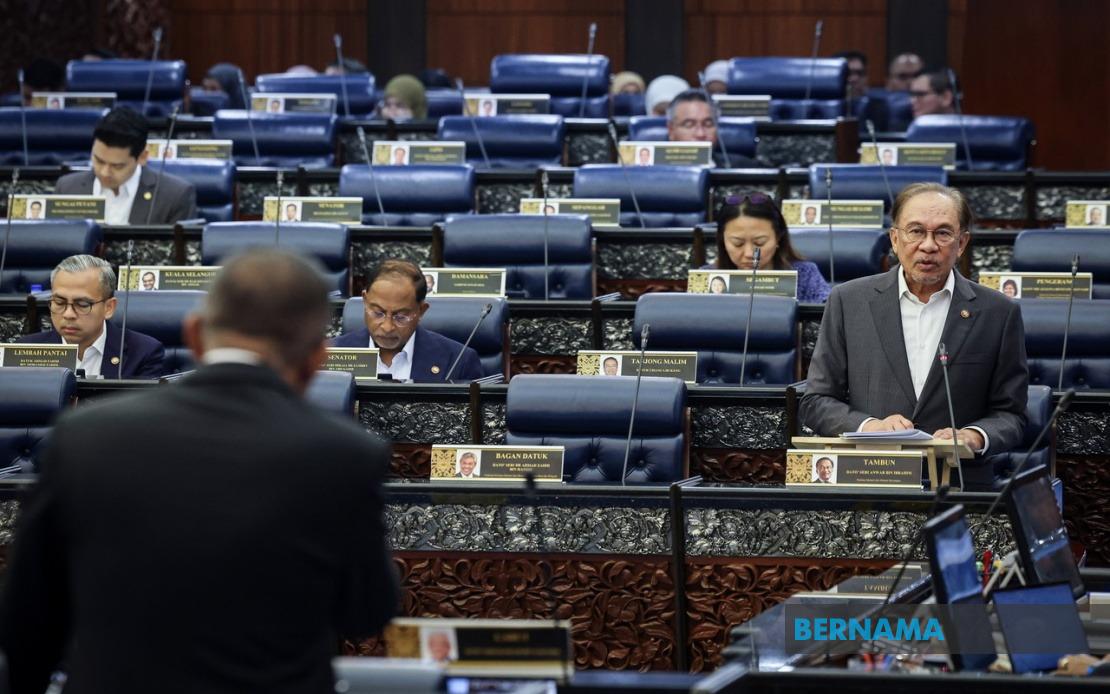
Prime Minister Datuk Seri Anwar Ibrahim announced that Syarikat Jaminan Pembiayaan Perniagaan (SJPP) has endorsed RM4.9 billion in financing facilities benefiting more than 6,000 micro, small and medium enterprises throughout the initial six months of 2026. The government-backed entity, wholly owned by the Minister of Finance (Incorporated), represents a significant commitment to strengthening the nation's entrepreneurial backbone during an increasingly complex global economic landscape.
Anwar, who doubles as Finance Minister, framed the approvals as a cornerstone initiative within the government's broader strategy to dismantle financial barriers confronting Malaysia's MSME segment. By extending greater access to working capital and reducing operational burdens, the administration aims to bolster enterprise resilience and support long-term sustainability across this critical economic tier. The announcement came during parliamentary Question Time when Anwar fielded concerns from Ipoh Timor MP Lee Chuan How regarding MADANI government awareness of sector-specific challenges facing business operators.
The RM4.9 billion deployment sits within a substantially larger financial architecture that the government has constructed to underpin MSME competitiveness. Over RM15 billion in cumulative loans and financing guarantees have been mobilised to address the acute working capital requirements that continue to constrain growth among smaller enterprises. This comprehensive funding envelope reflects recognition that capital constraints remain among the most formidable obstacles preventing MSMEs from scaling operations, investing in technology, or weathering economic downturns.
Within this expansive support framework, the administration has ringfenced RM5 billion exclusively for Bumiputera-owned businesses, acknowledging the distinct development imperatives within Malaysia's plural economy. This targeted allocation underscores the government's commitment to ensuring that enterprise support benefits reach across Malaysia's diverse entrepreneurial communities and advance inclusive economic participation. The Bumiputera earmarking represents both a policy recognition and a practical acknowledgment that business ownership concentration reflects historical patterns requiring deliberate corrective measures.
The timing of these financing approvals carries particular significance as MSMEs navigate unprecedented global headwinds. Trade tensions, supply chain volatility, and currency fluctuations have amplified operational uncertainty, compelling many smaller enterprises to exercise heightened caution regarding expansion or capital investment decisions. Against this backdrop, government-backed financing guarantees function as critical circuit-breakers, reducing perceived risk for conventional lenders and unlocking credit access that might otherwise remain unavailable to businesses lacking substantial collateral or established track records.
SJPP's role as a guarantor rather than direct lender remains pivotal to the ecosystem's functionality. By absorbing portions of lending risk, the entity enables commercial banks and financial institutions to expand lending volumes while maintaining prudent underwriting standards. This structure has proven particularly effective in reaching enterprises situated in the risk-spectrum segments where conventional lending criteria would otherwise prove prohibitively restrictive. The guarantee model thus operates as financial plumbing, channelling institutional capital toward entrepreneurs who represent genuine economic contributors but lack the balance sheet credentials that traditional banking metrics demand.
The RM4.9 billion first-half achievement also signals accelerating implementation of government financing initiatives, suggesting that bureaucratic processes surrounding loan approval and guarantee disbursement have been streamlined. Processing efficiency matters enormously for time-sensitive business decisions; enterprises facing urgent cash requirements cannot afford protracted application procedures. Enhanced administrative responsiveness therefore translates directly into practical business impact, enabling entrepreneurs to seize market opportunities without enduring extended funding delays.
Malaysia's MSME sector encompasses roughly 2 million registered entities employing over 7 million workers, rendering them indispensable to employment generation and regional economic dynamism. Yet this segment chronically confronts financing access gaps disproportionate to its economic contribution, a structural challenge that financing guarantee schemes attempt to redress. The cumulative RM15 billion commitment, when distributed across Malaysia's broader MSME population, nevertheless highlights the magnitude of underlying capital requirements and the continued necessity for innovative financing mechanisms beyond traditional institutional lending.
For regional observers, Malaysia's approach demonstrates how Southeast Asian economies can deploy state-backed institutions to address market failures in capital allocation. Comparable mechanisms operate throughout the region, though with varying effectiveness depending upon institutional governance quality and bureaucratic implementation rigour. The demonstrated capacity to channel nearly RM5 billion specifically toward Bumiputera enterprises suggests SJPP's operational maturity and targeting precision.
The government's continued emphasis on MSME financing through multiple channels—grants, soft loans, guarantee schemes, and technical support—reflects understanding that enterprise sustainability requires multifaceted intervention beyond capital alone. However, the concentration of announcements around financing figures sometimes obscures equally pressing requirements including skills development, market access facilitation, and digital transformation support. While capital remains essential, comprehensive MSME ecosystem strengthening demands parallel progress across these adjacent dimensions.
Moving forward, the efficacy of these financing initiatives will become evident as disbursed funds translate into enterprise growth, employment expansion, and economic productivity gains. Policymakers must maintain attention to implementation outcomes rather than approval volumes, ensuring that approved financing actually reaches intended beneficiaries and catalyses genuine commercial expansion. This requires ongoing engagement with participating financial institutions to identify implementation bottlenecks and refine processes where necessary. The RM4.9 billion figure represents governmental commitment; transforming it into measurable economic impact remains the ultimate policy objective.

