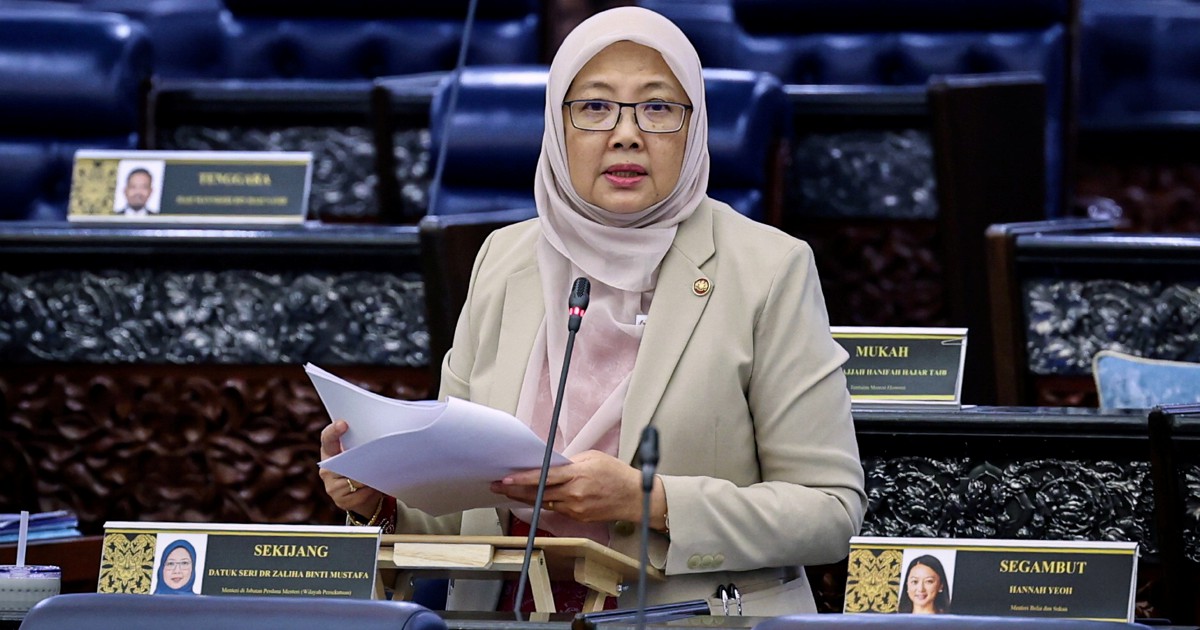
Datuk Dr Zaliha Mustafa, chairman of the Government Backbenchers Club (BBC), has launched a pointed critique against Perikatan Nasional (PN) MPs for orchestrating a coordinated exit from the Dewan Rakyat during a special parliamentary sitting convened to examine the Royal Commission of Inquiry (RCI) findings on Lembaga Tabung Haji (TH). The incident during the parliamentary session underscores deepening tensions between government coalition partners and the opposition bloc, particularly over how parliament should handle sensitive institutional inquiries.
The walkout represents a deliberate political maneuver by PN lawmakers, signalling their refusal to engage substantively with proceedings investigating Malaysia's largest Islamic financial institution. Lembaga Tabung Haji, which manages the savings and pilgrimage funds of millions of Malaysian Muslims, has faced mounting scrutiny over investment decisions, fund management practices, and governance structures. The RCI was established to provide an authoritative examination of these concerns and recommend reforms.
Zaliha's condemnation reflects broader frustrations within the ruling coalition regarding opposition tactics in parliament. By staging a walkout, PN MPs prevented their party from participating in debate, questioning, and cross-examination that could have allowed them to present their perspective or challenge conclusions they disagreed with. This absence from parliamentary proceedings denies them a platform to influence discourse at a critical juncture when the RCI findings are being discussed in the nation's primary legislative chamber.
The special sitting itself carries significant weight, demonstrating government commitment to transparency regarding Tabung Haji's operations. Allowing parliament to debate an RCI report on a major financial institution signals accountability and provides legislators with opportunity to scrutinise management, request clarification, and propose remedial action. Parliamentary debate on RCI findings enables multiple stakeholders—government MPs, opposition MPs, and concerned watchdogs—to engage in detailed analysis affecting a crucial institution serving the Muslim community.
For Malaysian readers familiar with Tabung Haji's role in Islamic finance, the debate holds personal relevance. The institution manages billions in ringgit belonging to pilgrims and savers who have entrusted their funds with the assumption of prudent stewardship. Concerns over investment performance, particularly following documented losses during volatile market periods, have prompted public questions about governance and risk management protocols. An RCI investigation addresses these concerns through systematic review and expert testimony.
PN's parliamentary absence during these discussions raises questions about their approach to accountability and institutional oversight. Opposition parties traditionally play a crucial role in holding government institutions under scrutiny, asking difficult questions, and representing public interest. By choosing not to participate, PN forgoes this responsibility, leaving only government coalition MPs and other opposition voices to engage with the RCI's conclusions.
The BBC, which represents backbenchers from government coalition parties, has emerged as an increasingly vocal faction within parliament. Under Zaliha's leadership, the club has advocated for stronger parliamentary procedures, more rigorous oversight of executive functions, and greater accountability mechanisms. Her criticism of the PN walkout aligns with the BBC's mission to enhance parliamentary effectiveness and ensure legislators fulfill their oversight duties regardless of political affiliation.
This incident reflects broader parliamentary dysfunction that occasionally surfaces in Malaysian politics when opposition parties employ boycott tactics. While walkouts represent a form of protest and can signal serious disagreement, they simultaneously diminish parliament's deliberative capacity and rob opposition MPs of opportunity to influence policy through reasoned argument. The practice undermines parliament's function as a forum where competing political interests engage substantively rather than theatrically.
The Tabung Haji RCI report itself likely contains detailed findings about specific governance failures, investment losses, and institutional weaknesses. Parliamentary debate provides mechanisms for government to respond to criticisms, announce reforms, and commit to corrective action. Opposition participation allows PN to raise alternative interpretations, question the RCI's methodology, or propose different remedial approaches. Both outcomes depend on opposition presence in the chamber.
For Southeast Asian observers monitoring Malaysian governance, the parliamentary incident illustrates ongoing tensions between coalition government stability and opposition effectiveness. Malaysia's federal structure, with coalitions spanning multiple ethnic and religious communities, often requires consensus-building among diverse political interests. Opposition walkouts, while tactical, risk exacerbating polarisation and reducing common ground needed for institutional reforms.
The broader context involves Tabung Haji's attempted recovery following investment underperformance that prompted government intervention. Restructuring proposals, regulatory adjustments, and governance reforms require parliamentary scrutiny to ensure they serve beneficiaries' interests. Comprehensive debate benefits from full participation, including critical questioning from opposition benches.
Zaliha's intervention signals that government backbenchers view parliamentary procedure and institutional effectiveness as matters transcending partisan calculation. Her criticism suggests increasing frustration with opposition tactics that prioritise political posturing over legislative substance. As parliament grapples with investigating major institutions and implementing reforms, such tensions between performative protest and substantive engagement will likely persist, shaping how Malaysian democracy addresses governance challenges affecting millions of citizens.

