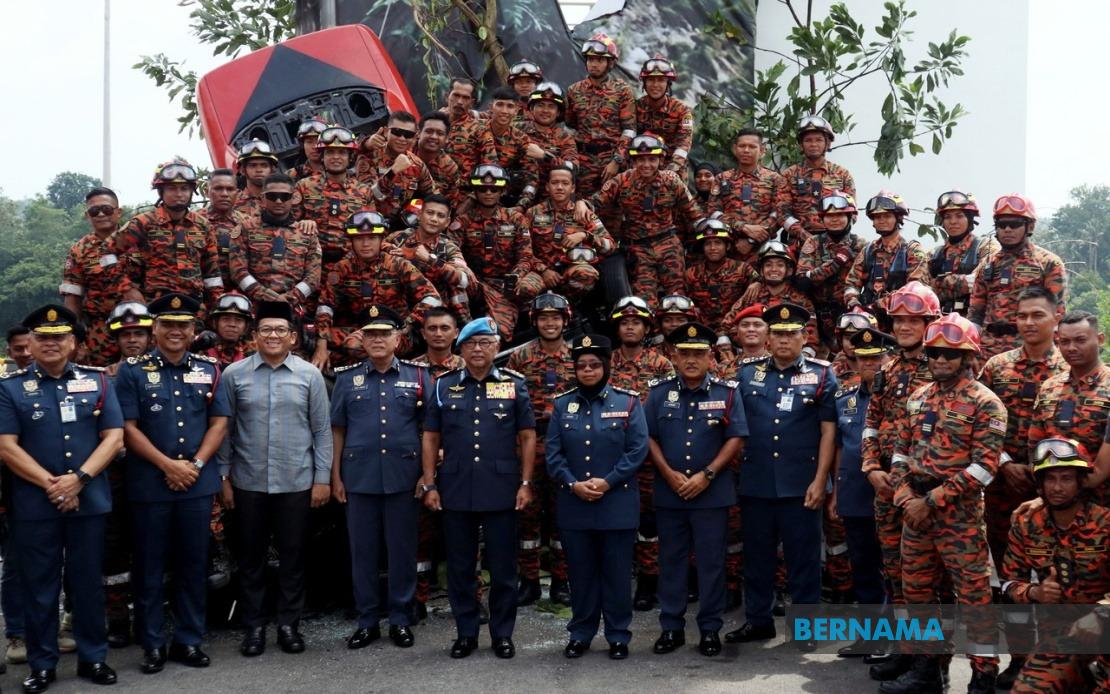
The Malaysian Federal Government has committed RM278.9 million in annual development spending to advance the operational capabilities of the Malaysian Fire and Rescue Department (JBPM), channelling resources into 86 distinct initiatives that span both new construction and the continuation of existing programmes. This substantial investment, announced in Kuantan, reflects the administration's emphasis on strengthening emergency response infrastructure across the country as it pursues broader objectives outlined in the 13th Malaysia Plan (13MP).
According to Housing and Local Government deputy minister Datuk Aiman Athirah Sabu, the funding envelope covers a balanced portfolio of 27 fresh projects alongside 59 programmes already underway, ensuring both expansion of the fire and rescue network and completion of work in progress. The geographic spread of these initiatives demonstrates an attempt to address capacity gaps across Malaysia's federal territory, states, and federal territories, moving beyond concentration in major urban centres.
Within Pahang alone, seven facility development initiatives are advancing simultaneously under the umbrella of the 12th Malaysia Plan (12MP) and the First Rolling Plan of the 13MP. These undertakings include the purchase and development of the Gohtong Jaya Fire and Rescue Station (BBP) complex complete with residential quarters, the construction of the Benta BBP from the ground up, and parallel efforts to establish both a Tioman BBP facility and associated living quarters. Such simultaneous work demonstrates the department's ambition to fill service coverage gaps identified in the state.
Beyond new construction, the Pahang allocation supports critical modernisation work. Enhancement projects for the Bentong BBP and Kuantan BBP are underway, while the Triang BBP is undergoing comprehensive reconstruction rather than mere refurbishment. Preliminary groundwork for the future Tanjung Lumpur BBP has commenced, signalling the department's long-term planning horizon even as immediate priorities absorb resources. This combination of new builds and upgrades indicates recognition that existing facilities in some areas have reached operational or structural limits.
The newly opened Sungai Lembing BBP exemplifies the practical outcomes of this investment strategy. Constructed at a cost of RM6 million on a seven-acre parcel of land, the station represents the 29th fire and rescue facility established in Pahang and commenced operations on February 15. The facility is designed to serve approximately 15,000 residents in Sungai Lembing and the surrounding locality, filling what had been a service void in the former mining town's emergency response capability.
Beyond its immediate firefighting mandate, Deputy Minister Aiman Athirah envisaged the Sungai Lembing BBP evolving into a comprehensive community safety hub. Her remarks indicated aspirations for the station to function as an educational and training centre, fostering citizen awareness of fire prevention and basic rescue techniques. This broader conception of the facility's role reflects emerging international practice where fire stations serve as platforms for community resilience-building rather than purely reactive emergency responders.
The revival of Sungai Lembing as a heritage destination underpinned the justification for the new station's establishment. Deputy Economy Minister and Paya Besar Member of Parliament Datuk Mohd Shahar Abdullah positioned the BBP within a wider economic revitalisation strategy targeting the town. Heritage tourism development initiatives, including restoration of the PCCL Cinema, creation of ecotourism attractions, establishment of a digital museum, tunnel rehabilitation, and pursuit of UNESCO World Heritage Site designation, aim to position Sungai Lembing as a modern destination drawing domestic and international visitors.
Mohd Shahar's remarks underscored that infrastructure development, whether tourism-related or emergency response-focused, loses credibility and effectiveness without adequate safety frameworks. He emphasised that the Sultan of Pahang's directive to construct the Sungai Lembing BBP had been fulfilled and that the station now anchors the town's emergency preparedness architecture. This framing deliberately links public safety investment to broader economic development, a connection often overlooked in infrastructure debates yet crucial for convincing taxpayers and investors of a location's stability and liveability.
The alignment between fire and rescue infrastructure expansion and state-level development priorities reflects a maturing understanding within Malaysian governance circles that emergency services constitute foundational rather than peripheral services. As states increasingly position themselves as investment destinations and tourism hotspots, the presence of credible, accessible emergency response capacity becomes a competitive advantage. The Sungai Lembing BBP thus serves dual purposes: immediate risk mitigation for residents and signal of responsible governance to external stakeholders assessing the area's suitability for investment or visitation.
Pahang's experience with 86 nationwide projects and seven concurrent facilities within the state illustrates the scale of the JBPM modernisation push. For Malaysian readers following regional development patterns, the RM278.9 million annual allocation signals sustained government commitment to upgrading what has historically been a resource-constrained service sector. The emphasis on both new construction and rehabilitation of existing facilities addresses a common criticism that Malaysia's emergency services suffer from uneven geographic coverage and variable facility standards.
The high-level official attendance at the Sungai Lembing opening ceremony, including the Sultan of Pahang, Menteri Besar Datuk Seri Wan Rosdy Wan Ismail, and the State Legislative Assembly Speaker, underscored the political importance attached to this initiative. Such visibility signals to communities that fire and rescue service expansion carries genuine commitment from leadership rather than constituting bureaucratic routine, potentially enhancing morale within the JBPM and public confidence in emergency response capability.
Looking forward, the 13MP framework positioning suggests continued allocation cycles for fire and rescue development. The two-track approach of completing 12MP initiatives while launching 13MP projects creates both fiscal continuity and momentum for further expansion. For other Malaysian states monitoring Pahang's experience, the Sungai Lembing model—combining new facility provision with broader community development and heritage preservation narratives—offers a replicable template for securing approval and political support for what might otherwise appear as routine infrastructure spending. The effectiveness of this approach in delivering both emergency preparedness and community development outcomes will likely influence how future inter-agency collaboration between public safety and economic development ministries unfolds across the country.

