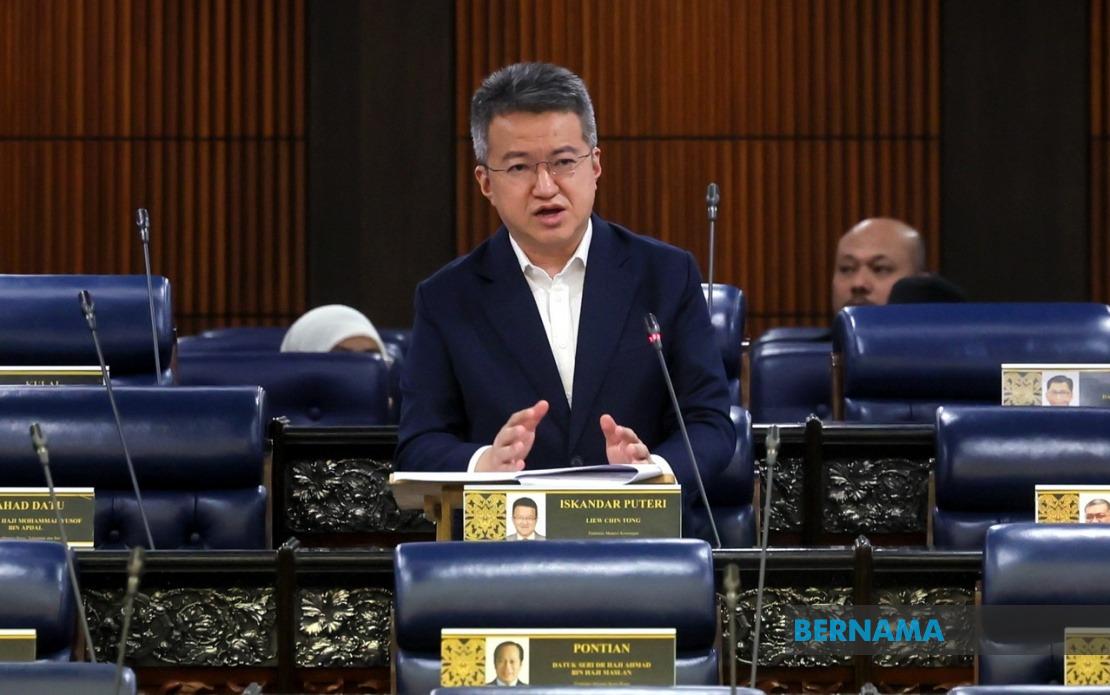
The Malaysian government has committed RM15.77 million to fund the Malaysian Human Rights Commission (SUHAKAM) throughout 2025, representing a significant boost to the independent statutory body responsible for safeguarding fundamental rights and freedoms in the country. This allocation, announced by Deputy Finance Minister Liew Chin Tong during parliamentary proceedings on July 8, represents a notable year-on-year increase of RM2.2 million compared to the RM13.55 million allocation for 2024. The funding expansion reflects the government's recognition of the growing operational demands facing the commission as it navigates an increasingly complex human rights landscape across the nation.
The approved budget encompasses not only SUHAKAM's core operational expenses but also extends support to the Office of the Children's Commissioner (OCC), a specialist body operating under SUHAKAM's institutional framework. This integrated funding approach acknowledges the interconnected nature of rights protection, particularly concerning vulnerable populations such as children. The allocation demonstrates governmental commitment to ensuring that both the parent commission and its specialist office have adequate resources to execute their respective mandates effectively.
Within the operational framework, the 2025 funds are earmarked to cover a comprehensive range of expenditures essential to SUHAKAM's functioning. These include the fixed allowances and emoluments for the commission's leadership and staff, ongoing operational costs such as rental payments for office premises and utility expenses, and critically, the implementation of SUHAKAM's ambitious annual programmatic agenda. This diverse spending landscape illustrates the multifaceted nature of contemporary human rights work, which demands both institutional capacity and active engagement with communities and stakeholders across Malaysia's federal territories and states.
Deputy Minister Liew emphasized that the budgetary determination followed a comprehensive review process undertaken during the 2024 Budget evaluation session. The decision-making process incorporated multiple factors including an assessment of SUHAKAM's previous spending performance, demonstrating the government's application of performance-based budgeting principles. Equally significant was the incorporation of the government's prevailing financial capacity assessment, reflecting a balanced approach between aspirational funding levels and fiscal sustainability. This methodology suggests that funding deliberations extended beyond routine appropriations to encompass strategic considerations about Malaysia's broader fiscal environment.
In a statement carrying substantial symbolic weight, Deputy Minister Liew reaffirmed that since SUHAKAM's formal establishment, the government has consistently honored its financial commitments to the institution without interruption. This continuity of support, whether interpreted as institutional confidence or constitutional obligation, underscores the formal recognition accorded to independent human rights mechanisms within Malaysia's governance architecture. The assurance carries particular significance given periodic debates in some quarters regarding the autonomy and effectiveness of statutory bodies tasked with monitoring governmental compliance with rights standards.
Beyond the SUHAKAM-specific allocation, parliamentary proceedings revealed the government's concurrent initiatives addressing social protection for Malaysia's substantial informal and gig economy workforce. In responding to queries from members representing Bagan Serai and Kulim Bandar Baharu constituencies, Deputy Minister Liew outlined the continuation of the i-Saraan programme through the 2025 Budget framework. This voluntary contribution scheme specifically targets workers operating outside traditional employment arrangements, encouraging their participation in the Employees Provident Fund (EPF) system by offering government matching incentives that substantially exceed standard contribution rates.
The i-Saraan programme structure provides matching government contributions at twenty percent of individual annual contributions, subject to a maximum of RM500 yearly or RM5,000 cumulatively across a participant's lifetime. This incentive structure represents a substantial government subsidy designed to overcome participation barriers among informal sector workers who frequently face irregular income patterns and limited access to conventional occupational pension schemes. The programme's voluntary nature acknowledges the practical constraints facing workers in the informal economy while simultaneously creating financial incentives favoring long-term participation and accumulated savings discipline.
Anticipating emerging challenges within Malaysia's rapidly evolving gig economy, the government has announced plans for the i-Saraan Plus programme, scheduled for implementation commencing 2026. This specialized initiative targets platform-based workers engaged in e-hailing and p-hailing services, a workforce segment that has expanded exponentially over the past decade but frequently remains outside traditional social protection frameworks. The programme design offers enhanced government matching contributions reaching RM600 annually or RM6,000 over lifetime participation, reflecting recognition that gig economy workers face distinct precarity and income volatility compared to informal sector workers in traditional occupations.
The differential matching incentive rates between standard i-Saraan and the specialized Plus variant suggest sophisticated policy design acknowledging that platform-based workers face compounded risks including algorithmic employment termination, rapid technological displacement, and minimal statutory protections. By calibrating incentives to this specific cohort's circumstances, the government demonstrates awareness that uniform retirement security approaches may prove inadequate for workers operating within digital platform ecosystems. This targeted differentiation represents a progressive element within Malaysia's evolving social protection architecture, though questions persist regarding adequacy given the scale of the gig economy workforce.
Concomitantly, the government through the EPF has initiated examinations of enhanced mechanisms designed to expand contribution coverage across the broader informal and gig economy spectrum. These investigative efforts suggest recognition that voluntary schemes, regardless of incentive structures, may prove insufficient to achieve universal social protection coverage. The stated objective centers on ensuring that informal and gig economy workers ultimately achieve dual goals: receiving demonstrably improved social protection during their economically active years, and accumulating retirement savings sufficient to maintain adequate living standards throughout their post-work existence.
These concurrent developments addressing human rights institutional capacity and informal worker protections reflect Malaysia's navigation of contemporary governance challenges. The expansion of SUHAKAM's budget alongside innovations in social protection schemes reveals governmental response to pressures demanding both strengthened rights accountability mechanisms and expanded economic security for workers operating outside conventional employment relationships. However, observers note that the success of these initiatives will depend substantially on implementation effectiveness, with particular scrutiny likely directed toward participation rates in voluntary savings schemes and the genuine adequacy of accumulated savings relative to retirement needs in Malaysia's progressively expensive urban environments.
The parliamentary announcements also signal the government's acknowledgment that Malaysia's demographic composition and economic structure have transformed substantially since earlier policy frameworks were established. The concentration of workers in informal and platform-based employment, driven by technological disruption and economic restructuring, demands innovative policy responses. Whether the proposed allocations and programme enhancements prove sufficient to address the scale of social protection deficits affecting millions of Malaysian workers will emerge as a key performance metric shaping future budget deliberations and social policy evaluations.

