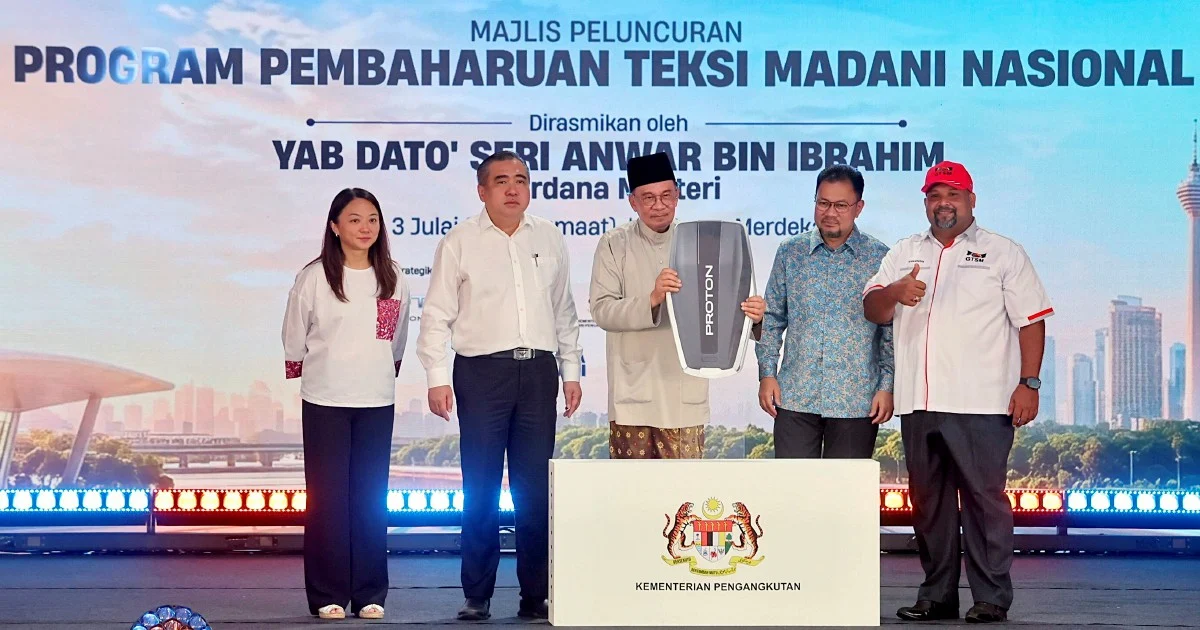
The Malaysian government has committed an additional RM10 million to accelerate its taxi modernisation programme, with Prime Minister Datuk Seri Anwar Ibrahim formally announcing the funding allocation. The supplementary investment represents a targeted effort to address the challenges faced by an aging taxi fleet across the country's transport network.
The matching grant programme represents a collaborative approach where government contributions are paired with investment commitments from operators themselves. This structure incentivises private sector participation whilst ensuring public funds are deployed alongside genuine industry commitment to fleet renewal. By leveraging matching grants, the initiative aims to distribute the financial burden more equitably between authorities and taxi operators who are ultimately responsible for maintaining service quality and safety standards.
The broader context of this announcement reflects growing pressure on Malaysia's taxi sector, which has faced mounting competition from ride-hailing platforms and persistent complaints about vehicle conditions. Many taxis operating on Malaysian roads have exceeded their optimal operational lifespan, raising concerns about passenger safety, comfort, and the sector's ability to compete with more modern alternatives. The government's intervention through this scheme acknowledges these structural challenges whilst attempting to support livelihoods within the traditional taxi industry.
Financial barriers have historically prevented many operators from independently upgrading their fleets. Purchase costs for new vehicles, combined with operational expenses and relatively modest profit margins, have left individual taxi owners with limited capacity to fund modernisation without external assistance. The matching grant structure specifically addresses this constraint by reducing the effective capital requirement for participating operators, making vehicle replacement financially viable for those who might otherwise be unable to afford upgrades.
The timing of this announcement carries significance for Malaysia's transport ecosystem. As the country continues urbanisation and economic development, the quality and reliability of taxi services remain important for urban mobility. Older vehicles contribute disproportionately to emissions, fuel inefficiency, and maintenance costs, which ultimately affect the economic viability of operator businesses. Modernisation thus addresses multiple policy objectives simultaneously—supporting industry participants, improving service standards, and advancing environmental sustainability goals.
Implementing such schemes requires careful coordination across multiple government agencies and stakeholders. Eligibility criteria, application procedures, and fund disbursement mechanisms must be clearly defined and transparently communicated to ensure operators understand how to access available support. Effective implementation determines whether allocated resources translate into actual fleet renewal or whether bureaucratic obstacles impede uptake among those most needing assistance.
The scheme's success will ultimately depend on participation rates among taxi operators. Market conditions, perceived sustainability of the taxi business model, and confidence in government support mechanisms all influence whether operators commit to modernisation. Economic pressures and the structural challenges posed by ride-hailing disruption mean some operators may view fleet investment as economically risky despite available subsidies, potentially limiting the scheme's effectiveness in achieving comprehensive modernisation.
For Malaysian consumers, successful fleet renewal promises tangible improvements in taxi service quality. New vehicles typically offer better air-conditioning, more reliable operations, improved safety features, and superior overall passenger comfort compared to aging units currently in service. Enhanced reliability particularly benefits passengers dependent on taxis for regular urban transportation, whilst improved safety standards align with broader public health and security objectives.
Regionally, Malaysia's approach to taxi sector modernisation reflects patterns observed across Southeast Asia where governments grapple with balancing traditional transport operators' welfare against technological disruption and modern service standards. The matching grant model offers a template that potentially interests other regional jurisdictions facing similar pressures, though implementation success depends heavily on local context, operator cooperation, and sustained government commitment beyond initial funding announcements.

