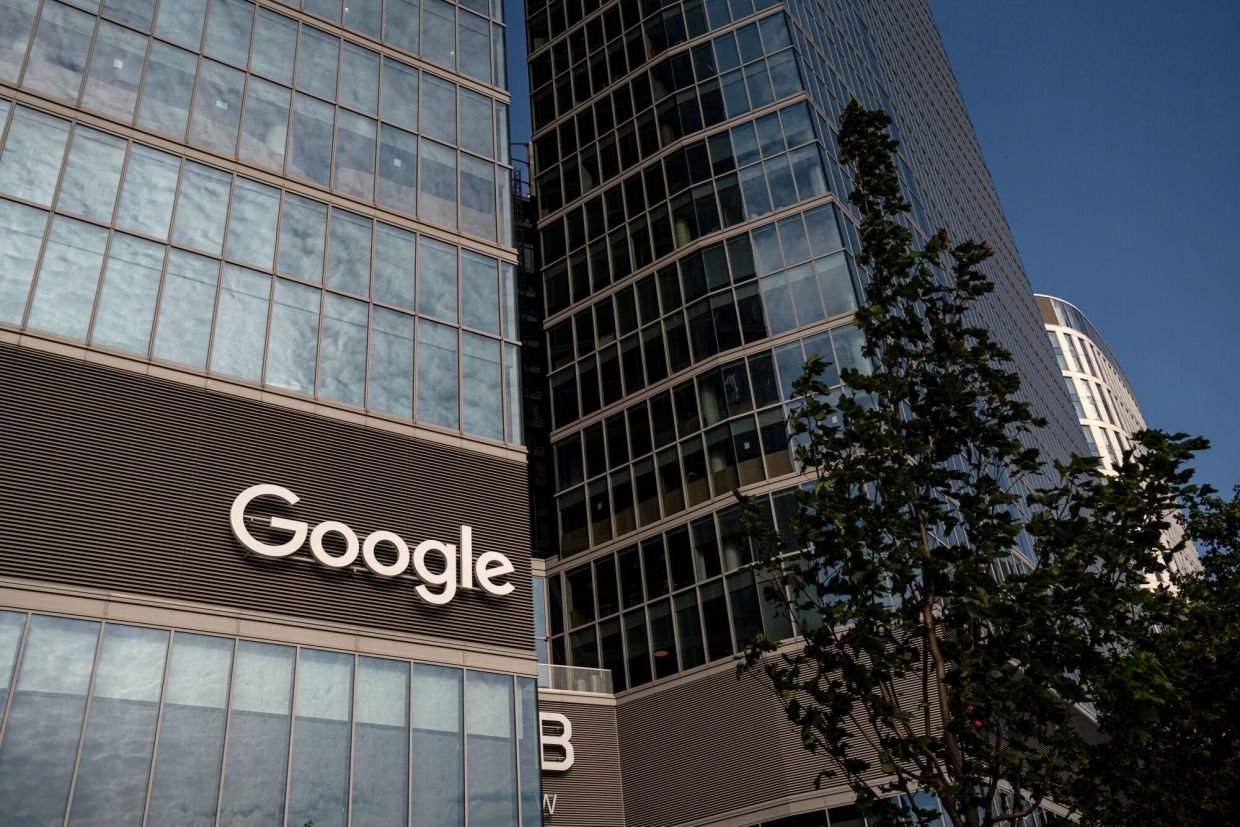
Google DeepMind's AGI Safety and Alignment Team, tasked with managing risks posed by advanced artificial intelligence systems, has taken an unusual step: it is advising prospective employees to circumvent the company's own automated hiring processes. The team distributed a confidential document urging applicants for open positions to complete a special form alongside their standard application, explicitly designed to sidestep the probability that the company's internal AI screening systems might reject them before a human reviewer ever sees their credentials. This move reveals a paradox at the heart of Silicon Valley's employment practices—the architects of cutting-edge AI safety do not trust the very recruitment tools their employer markets to businesses worldwide.
According to the leaked document, which carried a warning against wide distribution, the team acknowledged that its applications system carried "a non-trivial probability your CV will be screened out incorrectly or take too long to reach us." By filling out the bypass form, applicants could ensure their resume landed directly with team members rather than being filtered through algorithmic gatekeepers. The existence of this workaround speaks volumes about internal confidence in Google's hiring infrastructure. When the engineers most concerned with preventing AI systems from causing harm express doubts about a specific application of the technology, it deserves scrutiny from both regulators and job seekers alike.
Google's official response attempted to minimise the significance of the disclosure. A company spokesperson denied that the AI screening systems filter applicants incorrectly, instead characterising the special form as a convenient shortcut for candidates to reach the hiring team directly. However, this framing sidesteps the uncomfortable reality articulated in the internal document itself. The gap between marketing claims and internal practices has become a recurring pattern in the AI hiring space, where vendors promise efficiency and accuracy while evidence mounts that these systems are neither as reliable nor as objective as advertised.
The corporate deployment of AI in human resources has accelerated dramatically over recent years, driven by genuine operational pressures. Organisations receive hundreds or thousands of applications for single positions, and sorting through this volume manually consumes substantial time and resources. Google's Workspace division actively promotes AI-assisted hiring to business clients, highlighting how the technology can automate job posting creation, resume evaluation, and workforce forecasting. The sales pitch emphasises speed and scale—capabilities that appeal to stretched HR departments. Yet the practical reality, as Google's own researchers have discovered, frequently falls short of these promises.
The reliability concerns surrounding AI hiring systems extend well beyond Google's internal experience. OpenAI's ChatGPT, one of the most widely adopted language models, has demonstrated signs of potential bias correlated with applicants' names in investigative testing. These biases, whether rooted in training data or algorithmic design, can systematically disadvantage candidates from minority backgrounds or underrepresented communities. The stakes are not abstract: a hiring filter that underperforms for certain demographic groups effectively enforces discrimination at algorithmic scale, affecting the career prospects of thousands of individuals across multiple organisations.
Legal challenges to AI hiring systems are now working through the courts. Workday Inc, a major vendor of enterprise workplace management software, faces a lawsuit alleging that its AI-powered hiring tools discriminate against applicants based on race, age, and disability status. Workday has maintained that human recruiters make final hiring decisions and has denied the allegations, suggesting that AI serves merely as a preliminary screening tool. Yet preliminary screens can be gatekeepers; candidates never progress beyond them are never evaluated on merit by humans. This distinction, while legally important, obscures the practical reality that algorithmic filters fundamentally shape the candidate pool human reviewers encounter.
A secondary concern has emerged from an unexpected direction: some job applicants are gaming these same AI filters, using language models to generate applications that superficially match the algorithmic preferences of screening systems. In a cruel irony, the attempt to optimise for machine preferences produces applications that appear strikingly similar to one another, creating a kind of homogenised applicant pool. Google DeepMind's team anticipated this problem and explicitly warned candidates not to rely on large language model assistance when applying, noting that their human reviewers find such responses exhausting and indistinguishable from one another. The feedback reveals how layers of automation—candidates using AI to game employer AI—can degrade hiring quality rather than improve it.
For Malaysian job seekers and professionals across Southeast Asia, this dynamic carries particular weight. Many are competing for international positions with multinational firms that increasingly rely on automated screening. The risks of bias in AI hiring systems can compound existing disadvantages faced by candidates from smaller economies or underrepresented regions. A resume screening algorithm trained predominantly on North American or European hiring data may systematically undervalue qualifications or experience patterns more common in Asian contexts. Simultaneously, the competitive pressure to use AI tools to optimise applications creates a prisoner's dilemma: candidates feel compelled to adopt AI-generated letters and tailored materials, even as employers signal fatigue with such approaches.
The revelation from Google DeepMind also illuminates broader questions about trust and transparency in enterprise AI deployment. When a company's researchers doubt the reliability of tools the marketing division sells as solutions, it suggests either that quality control is inconsistent across product lines or that the company has not adequately stress-tested these systems before commercialisation. Neither scenario should inspire confidence among businesses considering investment in AI hiring infrastructure. The confidential nature of the leaked document—marked with warnings against sharing—suggests that Google's leadership recognises the reputational sensitivity of acknowledging internal problems with these tools.
Regulatory bodies in multiple jurisdictions are beginning to scrutinise AI hiring systems more closely. The European Union's AI Act imposes stricter requirements on high-risk applications, including employment decisions. Malaysia and other Southeast Asian nations may eventually establish similar frameworks. The Google DeepMind situation provides a natural test case: if even Google's own specialists cannot rely on the company's hiring AI, what standards should regulators expect from less sophisticated implementations deployed by smaller firms? The internal acknowledgment of problems, while refreshing compared to unconditional marketing claims, raises the uncomfortable question of how many flawed systems remain in operation without equivalent scrutiny from within.
Looking forward, the tension between AI's promised efficiency and its demonstrated unreliability in hiring contexts will likely intensify. Organisations face genuine pressures to process large applicant volumes, yet the tools marketed as solutions carry documented risks of bias, inconsistency, and opacity. Google DeepMind's approach—encouraging candidates to bypass automated screening—represents a pragmatic workaround rather than a systemic solution. For hiring to function fairly at scale, organisations may need to fundamentally reconsider how AI augments human decision-making rather than replacing it entirely. The irony is that the company pioneering advanced AI safety research has itself discovered that even narrower applications of the technology demand human oversight to function reliably.

