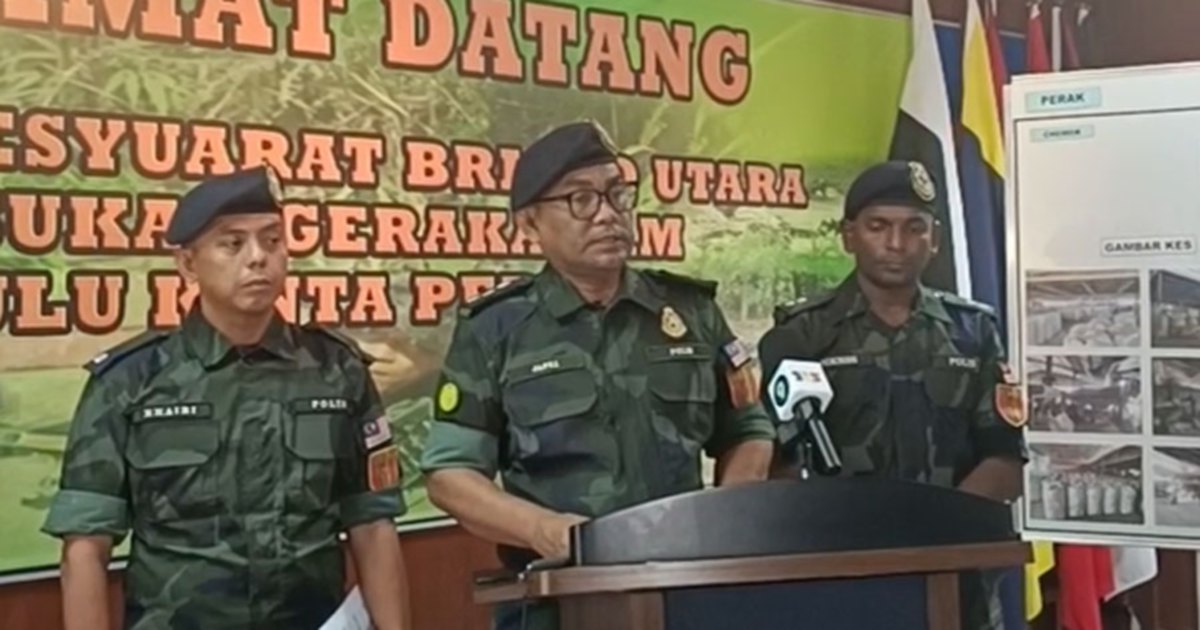
The General Operations Force Northern Brigade has struck a major blow against the illicit mining sector through a coordinated enforcement campaign that dismantled illegal mineral extraction and processing operations across northern Peninsular Malaysia. In what represents one of the larger seizures in recent years, authorities arrested 30 suspects and confiscated machinery and mineral stocks estimated at RM31.7 million following raids conducted across multiple sites in both Perak and Kedah states.
Illegal mining has long plagued Malaysia's natural resources sector, with underground operations siphoning off valuable minerals while circumventing licensing requirements, environmental safeguards, and tax obligations. The scale of this operation reflects growing official concern about the proliferation of unlicensed mining and processing facilities, particularly in northern Peninsular Malaysia where mineral-rich terrain and porous enforcement capabilities have historically attracted criminal operators. The Northern Brigade's success underscores intensified efforts by security and law enforcement agencies to clamp down on activities that deprive the federal and state governments of legitimate mineral revenues.
The arrested individuals face potential charges under relevant mining and environmental legislation, though the specific legal framework and charges have not yet been detailed. Enforcement actions of this type typically involve cooperation between multiple agencies including the Department of Minerals and Geoscience Malaysia, state authorities, and the police force. The involvement of the General Operations Force, traditionally known for paramilitary operations and security tasks, indicates that authorities view the illegal mining problem as sufficiently serious to warrant deployment of specialized enforcement units beyond standard regulatory bodies.
The seized machinery and mineral stocks represent both the operational assets and accumulated inventory of the illegal enterprises. Processing equipment, excavation tools, storage facilities, and extracted minerals together comprised the RM31.7 million valuation. This figure provides insight into the commercial scale of these operations—they are not small-scale subsistence activities but rather organized ventures with significant capital investment and production capacity. The value of seized materials also highlights the financial incentives driving such activities, as operators profit from avoiding licensing fees, environmental compliance costs, and legitimate taxation.
Perak and Kedah are among Malaysia's most mineralogically significant states, with substantial reserves of tin, copper, gold, and other minerals. Their geography makes them particularly vulnerable to illegal extraction, as remote areas and established mining regions provide cover for unlicensed operations. The concentration of enforcement activity in these states reflects where the problem is most acute and where regulatory agencies have identified clusters of illegal mining activity. Historically, Perak's mining heritage has also created conditions where informal mining networks persist despite formal prohibitions.
The environmental consequences of illegal mining are considerable. Unregulated extraction degrades landscapes, contaminates water sources, destabilizes soil, and destroys vegetation. Unlike licensed operations that must comply with environmental impact assessments and restoration requirements, illegal mining imposes full environmental costs on surrounding communities without accountability. The enforcement action thus serves environmental protection objectives alongside revenue and regulatory concerns. Residents in areas affected by illegal mining frequently report degraded water quality, increased flooding risks, and health impacts from dust and contamination.
From an economic perspective, the operation addresses a form of resource leakage that diminishes government revenues and competitive advantage for legitimate mining companies. State and federal governments lose mineral royalties and associated taxation, creating fiscal losses that affect public finances. Licensed mining operators face unfair competition from unlicensed rivals unconstrained by regulatory costs, potentially affecting investment in legitimate mining sectors and Malaysia's attractiveness as a regulated mining jurisdiction. The crackdown therefore serves broader economic governance interests beyond simply prosecuting individual offenders.
The timing and scale of this enforcement operation may reflect broader policy priorities within Malaysia's security and natural resources management apparatus. Recent years have witnessed enhanced focus on combating organized crime and illegal extractive activities across Southeast Asia. The General Operations Force's involvement suggests this operation was strategically significant and possibly targeted organized criminal networks rather than opportunistic individuals. Intelligence gathering and multi-site coordination would have preceded the visible enforcement phase, indicating sustained investigation and planning.
Successful prosecution of the 30 arrested individuals will depend on evidence quality and legal processes, while the practical challenge of preventing recurrence remains substantial. Illegal mining typically re-emerges after enforcement actions unless authorities maintain presence, improve community awareness of reporting mechanisms, and address underlying incentive structures. The captured machinery and materials will require proper disposal or destruction to prevent their redeployment in future illegal operations. Recovery of the full RM31.7 million value through criminal asset forfeiture, if pursued, would provide additional deterrent effect and compensate government losses.
This operation contributes to Malaysia's efforts to improve governance of extractive industries and demonstrate capacity for environmental and regulatory enforcement. As regional competition for investment intensifies, Malaysia's ability to regulate its mining sector credibly matters for long-term development strategy. The seizure signals to the legitimate business community that authorities actively protect the formal licensing regime, while communicating to potential violators that enforcement risk exists. Sustaining this enforcement momentum will require continued resource allocation to surveillance, investigation, and prosecutorial capacity in mining enforcement across northern Peninsular Malaysia.

