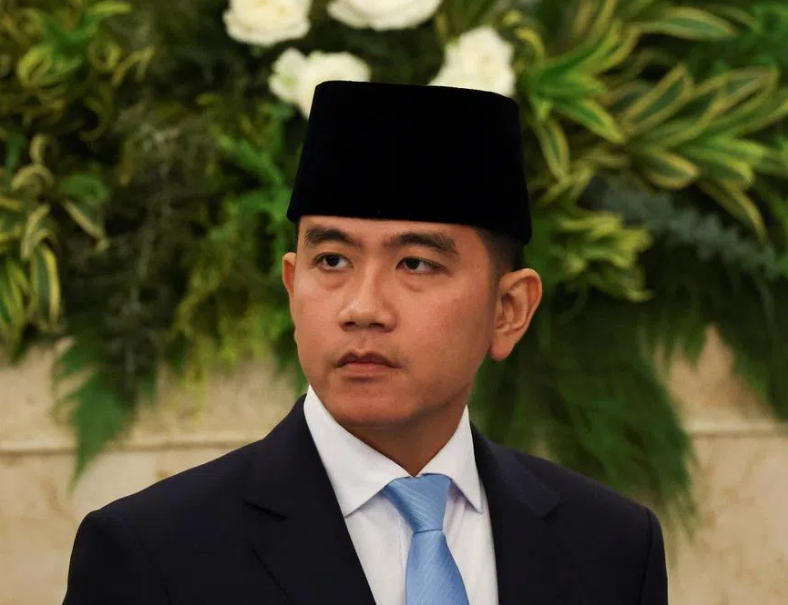
Vice-President Gibran Rakabuming Raka has stepped into the public eye through a calculated engagement with student protesters, inviting five university representatives to accompany him on an official visit to eastern Indonesia just three days after meeting with campus leaders who had taken to Jakarta's streets demanding reforms to flagship government initiatives. The sequence of events—a closed-door audience at the palace followed by inclusion on a high-profile working trip—signals an attempt to position himself as a responsive and accessible figure within the Prabowo administration, a marked departure from the typical detachment of Indonesia's vice-presidents.
The underlying triggers for this outreach are the growing protests against two of the government's most visible programmes: the free meals initiative and the Red and White Cooperative scheme, which aims to establish thousands of village-run businesses nationwide. Student activists have conducted detailed research into both initiatives and presented their findings to Gibran, who according to his office pledged to audit their work and convey their concerns to President Prabowo Subianto. Such receptiveness to criticism from below is unusual at the upper echelons of Indonesian politics and has attracted both support and scepticism in equal measure.
Online commentary reveals considerable doubt about the authenticity of Gibran's outreach. Critics questioned why students from Indonesia's most prestigious universities were not invited, suggesting that involving larger campus organisations would have lent greater legitimacy to the consultation process. Some observers characterised the entire engagement as theatre rather than genuine dialogue, a perception that gained credibility when news later emerged that students who attended the palace meeting received substantial cash payments—ranging from 2 million to 20 million rupiah—though the Presidential Palace has stated it is investigating the source and purpose of these funds. The timing and transparency issues surrounding the payments have reinforced suggestions that the student engagement was orchestrated rather than organic.
Political analysts from the Centre for Strategic and International Studies attribute Gibran's recent visibility to a longer-term strategic calculation. At 38 years old and the eldest son of former president Joko Widodo, Gibran has the political lineage and resources to harbour presidential ambitions, and the 2029 election cycle provides the obvious target window. While he has not publicly declared his intention to run, his carefully managed public profile suggests he is building the perception of a communicative leader willing to engage with ordinary citizens and student critics. Each photo opportunity, each expression of concern, each promise to follow up on local grievances contributes to a narrative of accessibility and responsiveness that differs markedly from his current position within the Prabowo administration.
Yet analysts uniformly acknowledge that Gibran's actual policy influence remains severely circumscribed. Since assuming office in October 2024 alongside President Prabowo, he has been linked to various high-profile briefs such as Papua's development and the new capital Nusantara, but has largely remained peripheral to major policy decisions. Unlike some predecessors, he has not been assigned a substantial ministerial portfolio, meaning that responsibility for major government programmes flows directly from the president to relevant ministers and agencies. The free meals programme, for instance, channels through the National Nutrition Agency which reports to the president, while the Red and White Cooperative initiative sits under a presidential priority framework coordinated by multiple ministries and security agencies.
This structural reality constrains what Gibran can meaningfully accomplish through student engagement. Observers note that military and police institutional interests appear to dominate implementation of these programmes, suggesting that vice-presidential input counts for little in day-to-day operations or strategic direction. By publicly associating himself with student concerns about these initiatives, Gibran creates an appearance of engagement without the corresponding authority to drive substantive change. He becomes, in effect, a willing listener to grievances whose resolution lies beyond his administrative reach—a position that allows him to accumulate goodwill without accepting responsibility for outcomes.
The broader context of these student protests adds importance to Gibran's manoeuvring. The free meals programme faced serious reputational damage following corruption allegations within the National Nutrition Agency, culminating in the arrest of agency chief Dadan Hindayana and two former deputies in June over procurement irregularities. This scandal created space for student critics to gain traction and public sympathy, transforming what might otherwise have been dismissed as routine campus activism into a legitimate policy conversation. Gibran's visit to a primary school in East Nusa Tenggara during his June working trip included acknowledgment of these shortcomings and calls for improved governance—statements carefully calibrated to acknowledge problems while signalling his commitment to resolution.
The strategy appears designed to capitalise on public anger at government failures whilst positioning Gibran as a figure willing to hear and address criticism. By meeting students, by taking their research seriously, by promising audits and follow-ups, he demonstrates a political style that contrasts with perceived arrogance or indifference at the presidential level. For voters considering future electoral choices, such performances construct a narrative of leadership temperament and accessibility that may prove valuable in 2029. The 'lowest-cost' nature of these moves—as one analyst noted—means Gibran can generate considerable political goodwill through relatively modest expenditures of time and resources.
However, the lack of substantive policy power underlying these theatrical engagements raises questions about their ultimate utility. If student concerns about free meals and cooperatives cannot be substantially addressed through vice-presidential intervention, then the meetings serve primarily reputational purposes for Gibran himself rather than functional purposes for the protest movement. Student leaders who accepted invitations to the palace and received unexplained payments have become, whether intentionally or not, participants in Gibran's image-making rather than agents of genuine reform. This transactional dimension has not escaped critical observers, who view the entire episode as evidence of political calculation rather than principled dialogue.
Looking ahead, Gibran's approach to student activists may establish a pattern for how he navigates his remaining years as vice-president. Lacking the formal authority to drive major policy shifts, he appears committed to maximising his visibility and political brand through direct engagement with public constituencies. Each consultation, each acknowledgment of grievance, each promise to convey concerns upward, contributes to the accumulated impression of a leader who listens and cares—an image that becomes increasingly valuable as 2029 approaches. Whether this strategy can translate into actual policy influence or electoral support remains uncertain, but it clearly represents a deliberate effort to establish relevance within an administration where his formal role remains nebulous.
For Malaysian observers, the Indonesian case illustrates both the possibilities and pitfalls of vice-presidential positioning within presidential systems. Gibran's situation—assigned symbolic responsibilities without operational control, attempting to build a distinct political identity separate from the president, cultivating relationships with student and civil society constituencies—reflects dynamics that resonate across Southeast Asia. His experience suggests that modern vice-presidents increasingly operate as parallel political figures rather than simple successors-in-waiting, crafting independent platforms and constituencies even while formally subordinate to presidential authority. The question remains whether performative engagement can substitute for genuine power, or whether voters ultimately demand substantive accomplishment alongside accessibility.