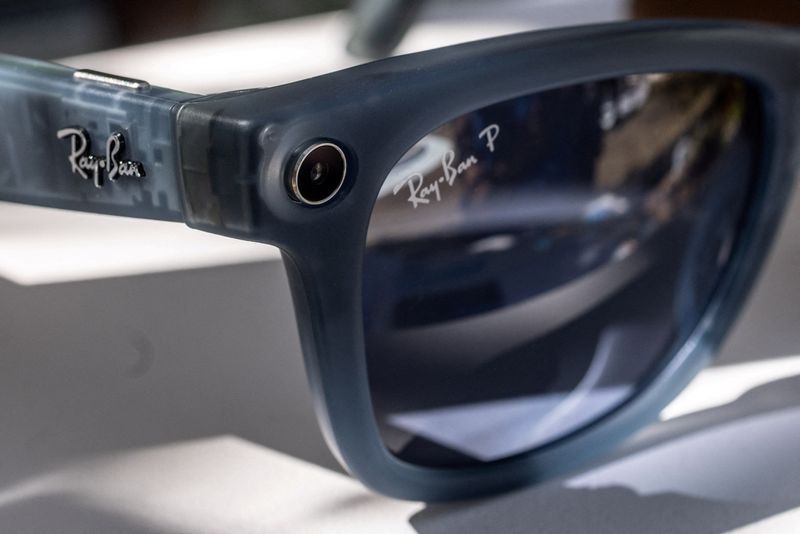
Germany's stringent approach to personal privacy has sparked fresh legal action against emerging surveillance technology, with the digital rights group HateAid filing a criminal complaint against Meta and several major spectacle retailers over the distribution of AI-enabled smart glasses. The complaint, submitted to Frankfurt's digital crime prosecution unit known as ZIT, targets Meta's management alongside EssilorLuxottica units including the Ray-Ban brand, as well as prominent German retailers Fielmann, Apollo-Optik, Mister Spex and MediaMarkt. The case represents another flashpoint in the continent's carefully calibrated balance between innovation and the protection of citizen privacy, a principle deeply embedded in German constitutional law and public consciousness.
The driving force behind the legal challenge is HateAid, an organisation dedicated to combating digital harassment and image-based abuse. According to the group's statement, the Ray-Ban Meta Wayfarer glasses breach established German digital privacy legislation by enabling covert recording of individuals without their knowledge or consent. Josephine Ballon, the organisation's managing director, articulated the concern in stark terms, emphasising that the technology eliminates the possibility of escaping surveillance in public spaces. The complaint suggests that individuals must now accept the prospect of being filmed without warning and having footage distributed online without their control or awareness.
The legal foundation for HateAid's complaint rests on federal digital data protection statutes that explicitly prohibit the sale of communication devices engineered to record audio or video content without the subject's knowledge. This legislative framework reflects Germany's historical commitment to safeguarding personal dignity and informational self-determination, principles that have guided data protection policy since the country pioneered comprehensive privacy law in the 1970s. The complaint underscores how rapidly evolving consumer technology can outpace regulatory frameworks, creating grey areas where manufacturers argue devices are lawful while advocacy groups contend they enable systematic privacy violations.
Germany's Federal Network Agency, known as BNetzA, issued guidance on smart glasses in late 2023, articulating that connected devices capable of covert recording were prohibited under German law. However, the agency's position includes a significant caveat: the ownership, import and sale of smart glasses remain permissible provided that recording functions are clearly visible to observers through optical signals or other obvious indicators. A spokesperson for BNetzA stated on Wednesday that the regulator is monitoring the smart glasses market closely but has not yet initiated formal investigations into potential breaches. This measured stance suggests regulatory authorities are attempting to distinguish between devices designed for transparent use and those engineered for surreptitious surveillance.
The complaint marks an escalation of concerns that have been building across German states. In July, broadcaster SWR reported that Hamburg's state-level privacy protection authority had begun taking legal measures against the use of smart glasses, indicating that enforcement action is moving beyond statements of principle into concrete administrative and legal challenges. This decentralised approach reflects Germany's federal structure, where state governments retain significant authority over privacy protection and data security matters. The convergence of complaints from multiple quarters suggests growing frustration with what advocates view as the inadequacy of current legal instruments to address the specific risks posed by wearable recording technology.
HateAid's broader concern extends beyond the immediate technical question of whether Ray-Ban Meta glasses comply with notification requirements. The organisation has been documenting a rise in image-based digital violence, a phenomenon particularly affecting women, where photographs and videos are weaponised for harassment, blackmail or non-consensual distribution. Smart glasses represent a qualitative shift in this landscape because they allow recording to occur seamlessly and unobtrusively, disguised as an ordinary consumer product. Unlike smartphones, which observers can visibly identify as recording devices, glasses appear as innocuous fashion accessories, potentially lowering the psychological and practical barriers to covert recording.
The case touches on regulatory tensions that extend well beyond Germany's borders. European Union member states have been grappling with how to harmonise privacy protections while accommodating technological innovation, a balance complicated by the global nature of technology markets. Meta's products are sold across Europe, meaning that regulatory decisions in Germany could influence enforcement approaches elsewhere on the continent. Conversely, the fragmented nature of state-by-state regulation creates incentives for companies to shop for jurisdictions with lighter touch oversight, though Germany's market size and regulatory influence limit that option considerably.
Mister Spex, one of the retailers named in the complaint, stated that it had not received formal notification of the legal action and reiterated its commitment to privacy protection. The company's response suggests that some retailers may not have anticipated the legal jeopardy posed by selling these devices, or alternatively may be positioning themselves as intermediaries rather than responsible parties for product compliance. Meta, EssilorLuxottica, the other retailers and ZIT have not yet commented on the complaint, meaning their substantive response to the allegations remains unknown.
For Malaysian and Southeast Asian observers, the German case offers instructive lessons about how different regulatory environments approach emerging surveillance technology. While Malaysia's approach to data protection has evolved considerably through the Personal Data Protection Act, the intensity of German enforcement and the cultural centrality of privacy rights may not have direct parallels in the region. Nevertheless, as smart glasses and similar wearable recording devices proliferate globally, questions about consent, notification and the appropriate balance between innovation and privacy protection will inevitably arise in Malaysian and ASEAN jurisdictions. The German complaint suggests that manufacturers cannot assume technical compliance with narrow regulatory requirements will insulate them from legal challenge if broader privacy principles are perceived as violated.
The outcome of HateAid's complaint will likely take months or years to resolve, but the case has already signalled that German prosecutors and regulators view smart glasses as presenting specific and material risks to personal privacy. Whether the complaint succeeds in establishing that Ray-Ban Meta glasses violate German law remains uncertain, but the legal action has forced a reckoning with the question of how societies should govern the transition from smartphones to wearable recording devices. The case demonstrates that privacy concerns are not merely matters of individual preference but are being actively enforced through state mechanisms in jurisdictions where data protection enjoys constitutional status.

