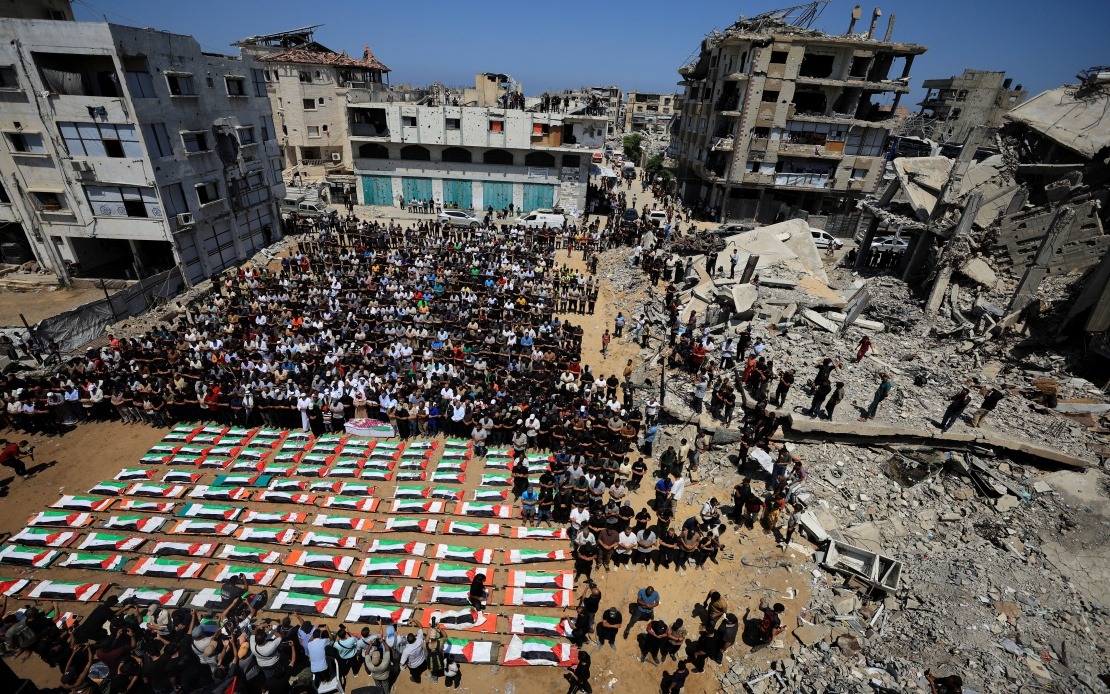
The people of Gaza are caught in an emotional pendulum, swinging between cautious optimism and crushing disappointment as negotiators haggle over the implementation of the ceasefire's second phase. For many residents, the talks represent far more than diplomatic theatre—they are a matter of life and death, of family reunification, and of the possibility to rebuild shattered homes. Yet each day of delay deepens the humanitarian crisis unfolding across the besieged territory, while negotiations remain mired in disagreements over withdrawal timelines and weapons decommissioning.
Saeed Helles, a 55-year-old father of five, embodies the daily struggle facing thousands of Gazans dependent on the outcome of peace talks. His 13-year-old daughter Saja lies in a Gaza City hospital fighting cancer, a condition that demands specialised treatment unavailable in the territory. When Hamas accepted mediators' proposals for advancing the second phase, Helles allowed himself to believe that border crossings might reopen, enabling his daughter to travel to Egypt for life-saving care. He began preparing her travel documents, each step forward feeling like a small victory against time itself. That fragile hope, however, evaporated as conflicting statements from negotiating parties once again cast the timeline into shadow. "Every day of delay reduces her chances of recovery," Helles said, his frustration palpable amid the uncertainty that has become a defining feature of Gaza's humanitarian experience.
The latest complications emerged after a US-led mediation body announced that its representative had met with Israeli Prime Minister Benjamin Netanyahu to discuss implementation of the next phase. The Israeli position, as articulated in statements following that meeting, introduces a significant complication: Israeli military forces would withdraw from Gaza only after a comprehensive disarmament process was completed, including the dismantling of weapons and tunnel infrastructure. This sequencing directly contradicts Hamas's stated position that progress on weapons discussions depends first on Israel halting military operations and fully implementing the initial phase agreement. The divergence represents not merely a technical disagreement but a fundamental impasse that threatens to paralyse negotiations indefinitely.
The humanitarian toll of this stalemate extends far beyond individual cases like Saja's. According to Mohammed Abu Nada, medical director of the Gaza Cancer Centre, approximately 11,000 cancer patients throughout the territory face severe medicine shortages, while some 4,000 patients holding medical referrals are unable to leave Gaza due to persistent restrictions at border crossings. The statistics become devastatingly real when considered in human terms: roughly three cancer patients die daily as a direct result of treatment shortages. Abu Nada has warned that further delays in opening crossings risk transforming a critical situation into an irreversible humanitarian catastrophe, particularly for patients whose conditions deteriorate rapidly without intervention.
Displaced Palestinians harbour their own desperate hopes pinned to the ceasefire's progression. Mariam Qudaih, a 46-year-old mother of four forced from her home in Khan Younis, represents the thousands of internally displaced persons whose lives remain suspended between devastation and the possibility of return. Though her home now stands in ruins, she clings to the vision of standing on its remains, of rebuilding something from the rubble. When negotiations initially appeared to advance, Qudaih reassured her children that they might soon return home, allowing them to imagine walking familiar streets and reclaiming their land. But the recent turn of events has dissolved that fragile comfort. "Every time we hear that negotiations are making progress, we feel our return is getting closer," she explained. "Then new developments take us back to the beginning, making us realise the road is still long."
This cycle of hope and despair inflicts psychological damage alongside the physical suffering of Gaza's residents. Palestinians have grown accustomed to disappointment, yet each apparent breakthrough rekindles expectations that subsequent developments cruelly extinguish. The pattern has become so predictable that many now approach positive news with reflexive cynicism, understanding from bitter experience that complications emerge precisely when resolution seems within reach. For families like Qudaih's, who have already endured displacement and loss, this emotional whiplash compounds the trauma of conflict itself.
Political analysts observing the negotiations suggest that the current impasse reflects deeper structural problems within the peace process itself. Mustafa Ibrahim, a Gaza-based political observer, contends that the linkage Israel has established between military withdrawal and weapons decommissioning fundamentally alters the power dynamics underpinning the mediators' proposed roadmap. By conditioning withdrawal on completed disarmament, Israel retains substantial leverage over the timing of the second phase's implementation, potentially indefinitely prolonging the occupation. This asymmetry in leverage suggests that purely diplomatic solutions may prove insufficient without external pressure on all parties to move toward genuine compromise.
The implications of ongoing negotiations failures extend beyond Gaza itself, resonating throughout Southeast Asia and the broader international community. Regional countries with significant Palestinian diaspora populations and historical support for Palestinian causes monitor developments with concern, recognising that prolonged humanitarian crises generate instability with transnational consequences. Malaysia and other regional nations have consistently advocated for humanitarian corridors and medical treatment access, viewing such basic provisions as non-negotiable human rights rather than negotiating chips.
For the international mediators attempting to broker the second-phase agreement, the humanitarian clock is running simultaneously with the diplomatic one. Unlike political negotiations, which can theoretically continue indefinitely, medical conditions deteriorate on fixed timelines, and displaced populations' resilience has finite limits. The 11,000 cancer patients, the 4,000 waiting for treatment referrals, and the tens of thousands of displaced families cannot afford to wait for perfect diplomatic solutions—they need functioning humanitarian pathways now.
The divergence between Hamas's position that Israeli military operations must cease before weapons discussions proceed, and Israel's insistence on disarmament as a precondition for withdrawal, creates a logical deadlock. Neither party appears willing to move first, each viewing initial compromise as a loss of negotiating position. This mutual distrust, rooted in years of conflict and failed agreements, poisoned the well from which breakthrough must emerge. Without a significant shift in either party's approach or intensive external mediation, the current trajectory suggests that humanitarian needs will continue being subordinated to military and political considerations.
For individuals like Saeed Helles and Mariam Qudaih, the failure to progress represents not merely political frustration but a profound denial of their basic human rights—access to medical treatment and the ability to return home. Each negotiation round that concludes without resolution translates into days lost for cancer patients and moments of anguish for displaced families. The humanitarian cost of deadlocked negotiations is not abstract but intensely personal, measurable not in diplomatic language but in wasted lives and destroyed futures. Gaza's residents continue their vigil, hoping that negotiators will eventually prioritise human suffering over military advantage, though hope itself has become as fragile and uncertain as the ceasefire it depends upon.

