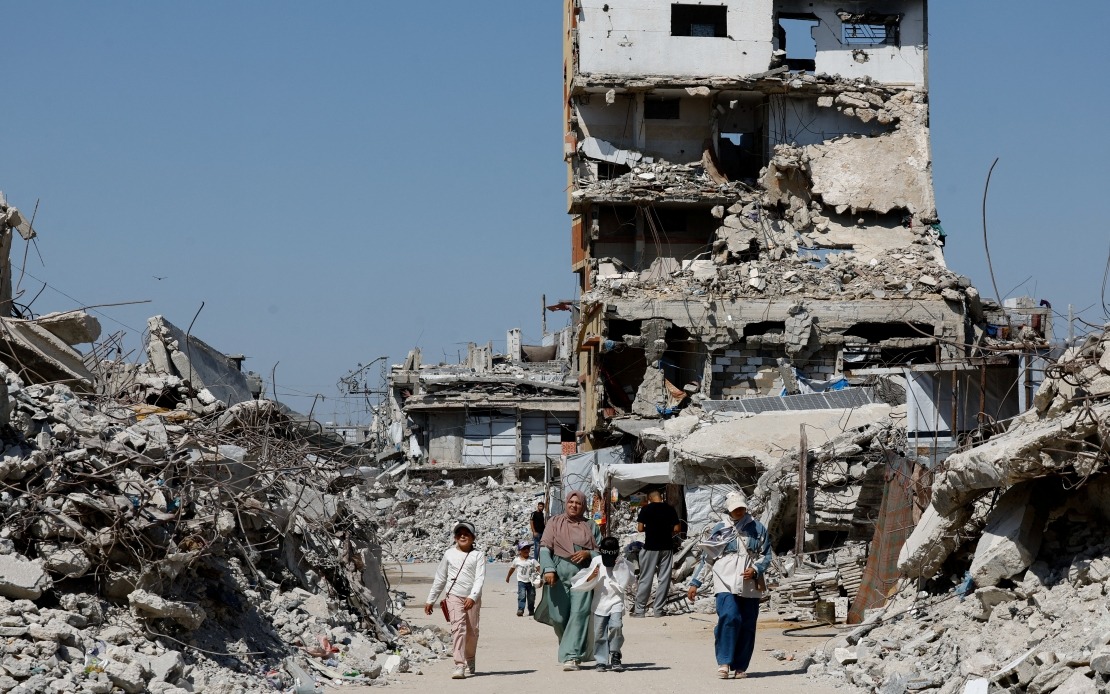
The death toll in Gaza has climbed beyond 73,400 as the Palestinian Health Ministry reported another 10 fatalities and 25 injured persons over a 24-hour period this week. These figures underscore the continuing toll of military operations in the blockaded enclave, which has endured sustained conflict since October 2023. The ministry's daily accounting system, which tracks casualties received at hospitals throughout the territory, provides a grim barometer of conditions on the ground for ordinary residents navigating an increasingly unstable security environment.
According to the Health Ministry's official documentation, Gaza's medical facilities admitted 10 bodies and treated 25 wounded individuals during the reporting window. The cumulative casualty count now stands at 73,417 deaths and 174,360 wounded persons. These figures represent only documented cases that reached hospital facilities—medical authorities have stressed that an undetermined number of victims remain unaccounted for, trapped beneath collapsed structures or inaccessible to emergency responders due to persistent insecurity.
Particularly concerning is the situation regarding an October 2025 ceasefire agreement, which appears to be deteriorating. The Israeli military has continued artillery bombardments and small-arms fire across multiple zones of Gaza, fundamentally violating the terms of the putative truce. The Health Ministry indicated that circumstances surrounding individual casualties remain unclear in many instances, as the violence occurs amidst chaotic conditions that make independent verification challenging. This ambiguity itself reflects the broader breakdown in civilian protections and the chaos characterising life for Gaza's 2.3 million residents.
The ceasefire violations have exacted a documented price. Health authorities have recorded 1,283 deaths attributable specifically to breaches of the October 2025 agreement, with an additional 4,248 people wounded during this period alone. These figures separate the post-ceasefire violence from the broader conflict toll, illustrating how even nominal truces in the region have failed to provide meaningful respite for affected populations. The distinction matters considerably for understanding the trajectory of violence and the deteriorating humanitarian situation.
Beyond the immediate casualty figures lies a deeper infrastructure catastrophe. Approximately 90 percent of Gaza's civilian infrastructure has sustained damage or complete destruction, according to available assessments. Schools, hospitals, water treatment facilities, power stations, and residential neighbourhoods have been systematically degraded. The United Nations has estimated that comprehensive reconstruction of Gaza would require approximately US$70 billion—a staggering sum that exceeds the annual government budgets of most developing nations and underscores the scale of the devastation.
For Malaysia and Southeast Asian countries, these developments carry several implications. Regional humanitarian organisations and governments have repeatedly condemned the violence and called for international humanitarian law compliance. The destruction of civilian infrastructure in Gaza creates long-term instability that affects global security dynamics and humanitarian responses. Malaysian civil society and medical organisations have been involved in relief efforts, though access constraints have severely limited aid delivery effectiveness.
The situation also reflects broader patterns in modern conflicts where civilian protection mechanisms have eroded. The targeting or incidental damage to hospitals, schools, and residential areas represents a fundamental challenge to international humanitarian law principles that Malaysia and other nations have endorsed through treaty obligations. The near-total destruction of essential services creates conditions where surviving residents face disease, malnutrition, and preventable health crises—consequences that extend far beyond the immediate conflict.
Emergency response capabilities have themselves become casualties of the conflict. Ambulance crews and civil defence personnel, who would ordinarily conduct rescue operations and provide emergency medical care, operate under severe constraints. Many cannot reach wounded or trapped persons due to security conditions, damaged roads, and fuel shortages affecting vehicle operations. This collapse of emergency infrastructure means that even non-fatal injuries may become fatal when timely medical intervention becomes impossible.
The Health Ministry's reporting mechanisms, while imperfect, represent one of few sources of casualty information available to international observers. However, the acknowledged gaps in their data—missing persons, those beyond hospital reach, and unverified figures—suggest that documented tolls likely underestimate actual losses. Independent verification of casualty figures has become nearly impossible due to communication blackouts, restricted media access, and the sheer scale of destruction making comprehensive surveys infeasible.
The humanitarian dimensions of this crisis extend beyond statistics. Tens of thousands of families have lost members. Entire communities have been displaced. Children have experienced trauma that will shape their development for decades. The psychological toll of sustained conflict, combined with deprivation, creates conditions that development specialists warn will require generational healing efforts. For a territory already burdened by poverty and limited economic opportunity, the destruction of remaining infrastructure compounds long-standing development challenges.
Regional stability concerns also merit attention. Protracted Israeli-Palestinian conflict creates conditions affecting neighbouring countries, including potential refugee movements and security spillovers. Lebanon, Egypt, and Jordan face pressures associated with the Gaza situation. Southeast Asian nations, while geographically distant, have diplomatic and humanitarian interests in Middle Eastern stability. The failure of ceasefire mechanisms and continued violence signal that negotiated solutions remain elusive, potentially extending the conflict timeline and expanding humanitarian consequences.

