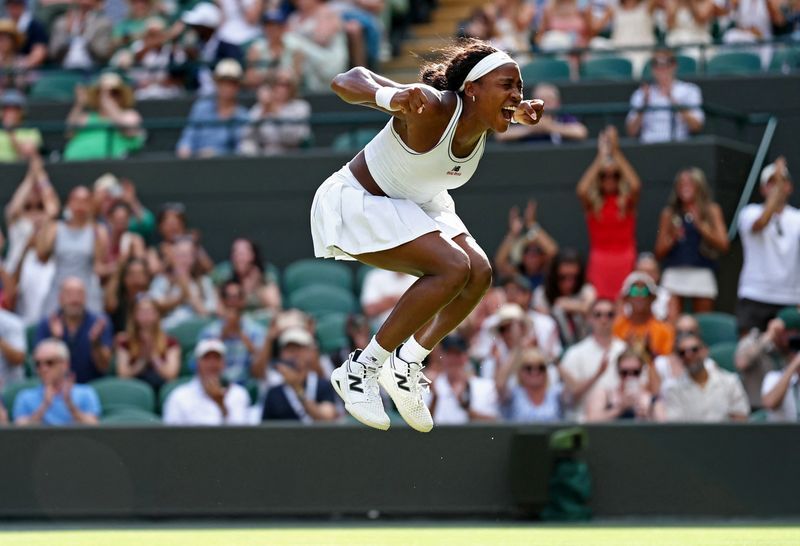
American tennis powerhouse Coco Gauff held off a determined challenge from Argentina's Solana Sierra to advance to the third round at Wimbledon, securing a hard-fought 6-3 3-6 7-6(10-7) victory on Court One on Wednesday. The two-time Grand Slam champion delivered when it mattered most, storming back from the brink of an early exit to keep her tournament hopes intact, though the All England Club continues to pose difficulties for the world's seventh-ranked player.
Gauff's relationship with Wimbledon has been a source of frustration throughout her career, with the grass-court major remaining the only Grand Slam tournament where she has failed to progress beyond the fourth round. This vulnerability against elite competition at the tournament has haunted her ambitions, making Wednesday's encounter against Sierra far more consequential than a routine second-round fixture. The American found herself in genuine peril against an opponent who had proven capable of producing remarkable performances under pressure.
Sierra, currently ranked 56th globally and possessing direct tournament entry, arrived at the match with a compelling narrative of her own. The Argentine had made headlines the previous year by becoming the first lucky loser in the Open era to reach the women's final 16 at Wimbledon, demonstrating that she possessed the skill and temperament to trouble established players on grass. Her presence in the draw represented the kind of unpredictable competitive threat that can unravel tournaments for favourites.
The opening set proved straightforward for Gauff, who dominated Court One proceedings to claim the first six games and establish early control. However, her performance deteriorated noticeably in the second set, with her rhythm disrupted by uncharacteristic errors and positioning lapses. An unusual service fault that flew sideways into the umpire's chair appeared to unsettle her concentration, coinciding with a dip in her output. Sierra capitalised on this momentum shift, breaking Gauff's serve without allowing a point and establishing a commanding 2-0 advantage before extending her lead further to 4-1.
As the match progressed into its decisive third set, the contest evolved into precisely the kind of grinding battle that characterises the most absorbing professional tennis. Sierra secured a break point opportunity at 1-1 in the decider, threatening to seize control, but Gauff's competitive instincts kicked in decisively. The American unleashed a 124 mph serve to save the break point and immediately regained the upper hand. The momentum exchange was relentless, with neither player establishing a commanding position.
Sierra demonstrated remarkable resilience, saving multiple break points as the third set progressed toward a tiebreak. The Argentine's defensive capabilities kept her in contention even when Gauff applied pressure, and she secured a crucial break at 4-3 to level the match's complexion. With Gauff serving to remain alive at 5-3, the American showed why her serve has become her signature weapon, holding firm before executing the crucial break that shifted psychological momentum decisively in her favour.
The tiebreak crystallised the entire match's narrative arc. Sierra seized an advantage at 7-4, positioning herself within touching distance of a famous victory against a top-10 opponent. However, Gauff's championship mentality emerged at the crucial juncture. The American won six consecutive points in a stunning rally, with her service game proving absolutely decisive. On the first of two available match points, Gauff delivered a 117 mph ace that clinched the contest and extended her Wimbledon campaign.
Gauff reflected on the encounter with measured perspective, acknowledging her opponent's quality without becoming defensive about her own performance. She characterised the match as a prolonged struggle for advantage, suggesting that Sierra's powerful groundstrokes had forced her into reactive positions throughout the contest. Rather than claiming dominance, Gauff identified aggression during opportunities as her tactical approach, revealing a player thinking strategically about her approach rather than simply overpowering opposition.
The American's post-match commentary emphasised her confidence in her serving arsenal, attributing her ability to sustain pressure and ultimately prevail in the tiebreak to the consistency and effectiveness of her delivery throughout. This assessment proves particularly relevant at Wimbledon, where grass-court conditions reward well-executed serving more than other surfaces. Her acknowledgment of this technical advantage suggests intellectual engagement with the specific demands of tournament conditions, relevant context for understanding why she ultimately succeeded despite the match's competitive intensity.
Gauff's progression to the third round represents genuine progress toward her Wimbledon breakthrough, though the tournament's structural challenge to her game remains evident. Moving forward, the American must navigate opponents with increasingly powerful striking capabilities, all while maintaining the serving consistency that proved decisive against Sierra. The match demonstrated both her vulnerabilities at the grass-court major and her capacity to recover from adversity, qualities that will determine whether she finally transcends her quarter-final barrier at the All England Club.

