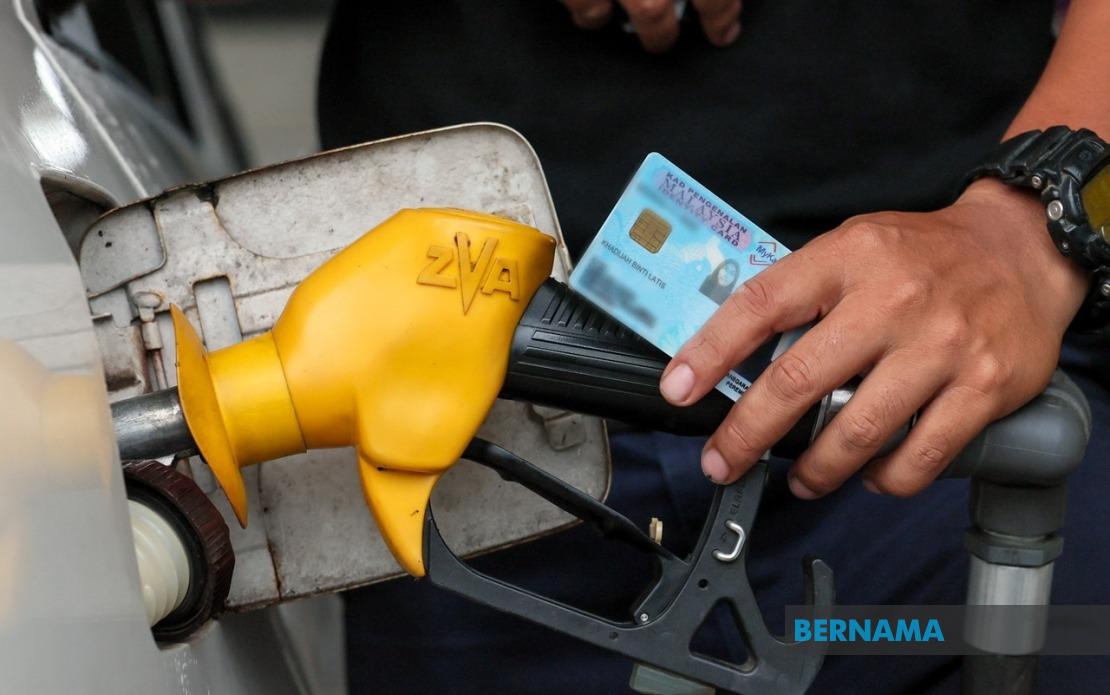
The Malaysian government has moved to ease cost-of-living pressures by restoring and expanding fuel assistance quotas under its BUDI MADANI subsidy programme. Prime Minister Datuk Seri Anwar Ibrahim unveiled the enhancement during the 2026 National Day address at the Putrajaya International Convention Centre, signalling a recalibration of the targeted subsidy approach introduced to manage fuel expenditure more efficiently across income groups.
The adjustments take immediate effect and represent a meaningful shift in the government's balance between fiscal prudence and household relief. The RON95 petrol quota for eligible beneficiaries has been lifted from 200 litres to 300 litres monthly, while the diesel allocation has climbed from 300 litres to 400 litres. For a nation where private vehicles dominate transport and where logistics costs cascade through supply chains, these increases carry ripple effects across multiple sectors of the economy.
The BUDI MADANI framework itself reflects a strategic pivot away from blanket subsidies toward means-tested distribution. Rather than subsidising fuel uniformly across the entire population, the programme targets assistance to those deemed most vulnerable to fuel price volatility. This approach attempts to preserve budget resources while concentrating support where household impact is most acute. The restoration of quotas suggests the government has determined that previous allowances had become insufficient as actual driving patterns and economic conditions evolved.
Among urban workers dependent on private transport, the quota increase addresses a genuine practical constraint. Furzani Ahmad, a 24-year-old private sector employee, highlighted the monthly budgeting reality facing commuters who travel 30 kilometres daily to work. With the expanded 300-litre allowance for RON95, such workers can now sustain regular commuting within the subsidy envelope without depleting the quota mid-month, freeing resources for other essential expenses from groceries to utilities. This psychological and financial breathing room extends beyond mere arithmetic to household stability.
Similarly, workers with variable commutes face reduced uncertainty. Darwisy Khairudin noted that his baseline 20-25 kilometre daily commute occasionally expands to accommodate external assignments, creating monthly budgeting hazards under tighter quotas. The expanded allowance absorbs this volatility and reduces the calculus many Malaysian workers perform weekly when deciding whether anticipated fuel consumption will exceed their monthly entitlement. For millions making such calculations, this represents tangible relief from a source of genuine anxiety.
The diesel increase holds particular significance for self-employed traders and small business operators dependent on vehicle transport. Abdul Manan, a 63-year-old fruit vendor, operates within tight margins where logistics costs directly affect retail pricing power. When sourcing stock from distant suppliers, fuel expenses mount rapidly; the jump from 300 to 400 litres monthly provides operational flexibility that protects working capital. Rather than absorbing higher diesel costs through reduced purchases or reduced margins, traders can maintain stable pricing and inventory levels, benefiting both their sustainability and consumer affordability.
This dynamic illuminates how fuel subsidies function as a hidden yet critical support mechanism for Malaysia's informal and small-business economy. Hawkers, street vendors, delivery operators, and small-scale transporters operate on profit margins measured in single-digit percentages. Diesel quota constraints force a choice between accepting fuel cost pressures or passing them to customers through price increases. When businesses raise prices, that inflation propagates through supply chains, affecting grocery costs and restaurant prices that form the core of living expenses for lower-income households. By stabilising fuel access for business operators, the government indirectly stabilises costs at the point of retail sale.
The timing of this announcement, coinciding with National Day, carries political messaging alongside economic substance. Cost-of-living remains a primary concern for Malaysian voters, and fuel accessibility sits at the intersection of personal frustration and economic policy. By demonstrating responsiveness to economic pressure, the government signals acknowledgment of household challenges while avoiding a return to universal subsidies, which proved fiscally unsustainable historically. This positions the administration as pragmatically balancing competing demands.
However, the longer-term sustainability of expanded quotas depends on several factors. Global crude oil prices influence subsidy costs; sustained high prices increase fiscal burden even with means-tested distribution. The definition of quota-eligible beneficiaries remains a potential flashpoint, as the process determining who receives BUDI MADANI assistance shapes access outcomes. Additionally, if actual fuel consumption patterns continue shifting due to electric vehicle adoption or remote work expansion, quota calculations may require periodic revision to reflect reality.
For Malaysia's broader economic context, reliable fuel costs matter disproportionately. As a developing nation with dispersed geography, limited public transport infrastructure in many areas, and supply chains dependent on trucking and maritime shipping, fuel price stability influences inflation rates, business investment decisions, and household purchasing power across sectors. The restoration of quotas represents an implicit government assumption that the economic and social costs of constrained fuel assistance exceed the fiscal costs of modest subsidy expansion.
The reception from affected groups suggests the quotas now align more closely with typical consumption patterns, reducing the artificial scarcity that encourages panic buying or quota gaming. When official allowances fall substantially below actual needs, beneficiaries resort to purchasing additional fuel at market rates, undermining the programme's intent to target assistance. By raising quotas to more realistic levels, the government may actually improve programme efficiency by reducing workaround expenditure.

