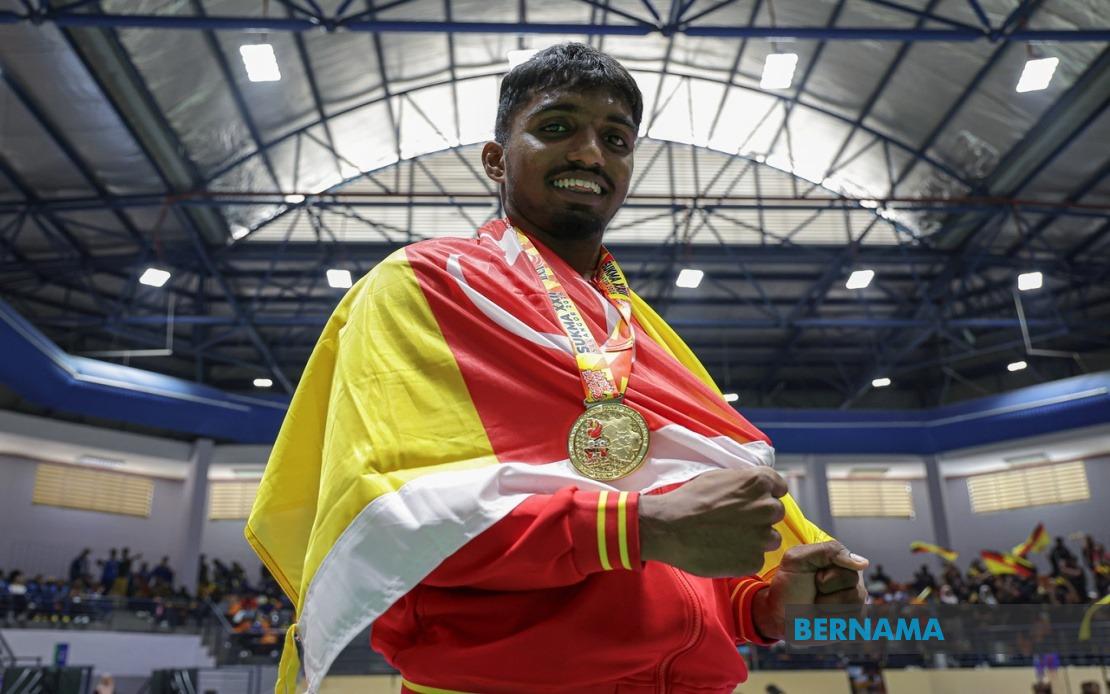
M. Mahendran's victory at the Selangor 2026 Malaysia Games represents a remarkable intersection of athletic ambition and working-class perseverance. The 20-year-old silambam competitor from Kuala Langat has etched his name into the sport's history books by becoming the first athlete in the discipline to secure three consecutive gold medals at SUKMA, a feat he accomplished while maintaining full-time employment as an air-conditioning service technician in the Telok Panglima Garang area.
The magnitude of Mahendran's achievement gains further dimension when one considers the compressed timeline of his preparation. Unlike elite athletes who typically dedicate years to perfecting their craft, Mahendran compressed his training into merely eight months while navigating the competing demands of his workplace. This condensed preparation period speaks to both the intensity of his commitment and the natural athletic talent he brought to the competition. For many aspiring Malaysian athletes, particularly those from working-class backgrounds, such resource constraints are commonplace. Mahendran's success therefore carries particular resonance as a blueprint for what determination and strategic time management can accomplish within real-world economic limitations.
The daily rhythm of his existence during the preparation phase exemplifies the sacrifices required of athletes who cannot afford to train full-time. Mahendran's routine was unrelenting: employment obligations consumed his daylight hours until 6 pm, followed immediately by a three-hour training block from 7 to 10 at night. He would then reset and return to his air-conditioning service calls by 10 am the following morning. This pattern repeats itself without respite, creating a lifestyle where physical and mental fatigue become constants rather than occasional challenges. The compounding effect of such a schedule—eight months of relentless repetition without meaningful recovery days—places his eventual triumph in sharper perspective.
Mahendran's victory was not straightforward, adding another layer of adversity to his narrative. His win was delayed by nearly two hours following a protest that was lodged against his performance. Rather than allowing this procedural uncertainty to derail his confidence, he maintained composure and faith in the legitimacy of his victory. He subsequently prevailed through the protest process and was officially confirmed as champion. This incident demonstrates the psychological resilience required not merely to perform at elite levels, but to defend one's achievements under scrutiny—a challenge that transcends the physical dimensions of athletic competition.
The achievement of a silambam hat-trick holds particular cultural significance within Malaysian sport. Silambam, an ancient Southeast Asian martial art with deep Tamil roots, represents an important component of Malaysia's multicultural sporting heritage. That Mahendran has become the first silambam competitor to achieve three consecutive SUKMA gold medals indicates how the sport continues to develop elite practitioners despite its smaller profile compared to more internationally recognized disciplines. His accomplishment elevates silambam's visibility and demonstrates that pathways to sporting excellence exist within traditionally marginalised sporting communities.
Mahendran's own reflection on his achievement captures both the personal pride and the broader significance of what he has accomplished. He expressed particular satisfaction in knowing that no previous silambam athlete has managed to replicate his feat, positioning himself as a pioneering figure within his discipline. This distinction carries implications beyond personal accolade; it establishes new performance benchmarks and expands perceptions of what silambam athletes can achieve at SUKMA level. Younger practitioners in the sport now have a demonstrated example of peak performance to aspire toward.
The role of parental support in sustaining Mahendran through this gruelling preparation period warrants particular attention. He acknowledged the unwavering encouragement his parents provided, describing how their constant motivation proved instrumental in maintaining his resolve during moments when the combined burden of work and training might otherwise have overwhelmed his commitment. This familial dimension of athletic success often remains invisible in public narratives that emphasize individual achievement, yet it frequently proves decisive in determining whether an athlete can sustain the psychological and emotional resources necessary for sustained high performance.
Mahendran's story carries broader implications for Malaysian sport and workforce dynamics. It challenges assumptions that elite athletic achievement requires full-time training access and substantial financial resources. His success occurred within the constraints that characterize many Malaysian workers' lived experiences—competing employers, limited training facilities, and the need to earn income while pursuing personal aspirations. For a nation seeking to develop broader athletic talent pipelines, Mahendran's example suggests that potential excellence exists among populations that current elite sports systems may not adequately identify or support.
The circumstances surrounding his SUKMA triumph also highlight structural questions about how sporting events accommodate working athletes. The delayed announcement and protest situation he navigated underscores that administrative processes must account for athletes operating outside traditional elite training systems. As SUKMA continues to evolve as Malaysia's premier multi-sport competition, ensuring equitable treatment and clear procedures for athletes from diverse backgrounds remains essential for maintaining the Games' integrity and inclusivity.
Looking forward, Mahendran's achievement raises questions about sustainability and progression. The training regimen that produced three consecutive golds, while extraordinary, exists at the outer limits of what a working athlete can sustain alongside full employment. Whether he continues competing at SUKMA level, pursues opportunities to transition toward full-time athletic training, or remains embedded within the working landscape will shape both his personal trajectory and broader conversations about athletic careers in Malaysia. His current achievement stands as testament to what is possible; the next chapters will illuminate what futures might follow.

