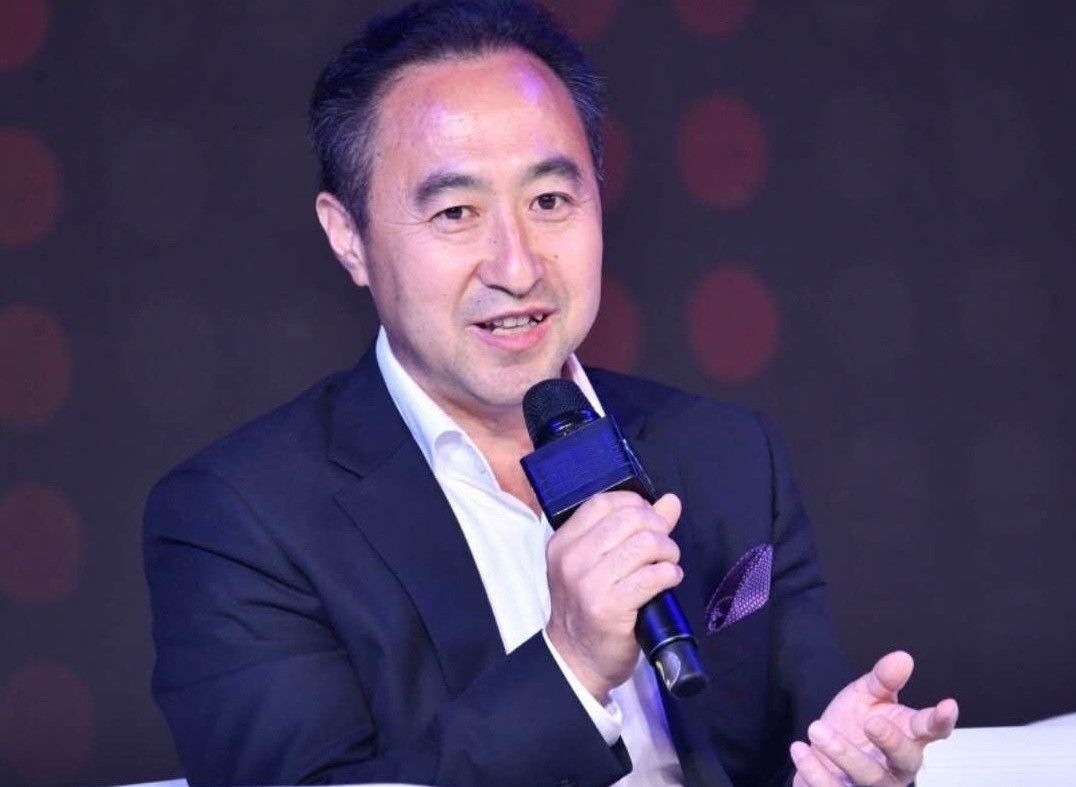
CJ Wang's ascent from provincial schoolteacher to billionaire industrialist reads like a parable of modern entrepreneurship—a narrative shaped equally by childhood necessity, technical innovation, and strategic cross-border acquisition. The 55-year-old Chinese entrepreneur, who commands a personal fortune valued at US$10.4 billion, spent his early career defying family expectations by abandoning a secure teaching position to pursue engineering ambitions that others might have dismissed as quixotic. Today, his influence spans two continents and touches millions of households through his kitchen appliance ventures, making him one of Asia's most consequential yet least publicly visible business titans.
Wang's journey begins in Yantai, a port city in Shandong province where soy milk preparation was woven into the fabric of daily domestic life. As a child, he participated in the grinding labour of traditional soy milk production, manually turning the massive stone mills that transformed soybeans into the creamy beverage consumed across China for centuries. These formative memories of backbreaking kitchen work would later crystallise into the entrepreneurial vision that drove his career. After completing electrical engineering studies at Beijing Jiaotong University, Wang initially followed the conventional path prescribed by his parents, entering the teaching profession as a natural extension of family tradition rather than personal conviction. Yet this period of conformity was merely a prelude; the restlessness evident in his later recollection—that he "always wanted to do something bigger and carve my own path"—suggests a fundamental tension between familial duty and personal ambition that demanded resolution.
The turning point arrived in 1994 when Wang made the decisive break from his teaching career, converting childhood observation into mechanical innovation. Recognising that soy milk and fried dough sticks would remain anchors of Chinese breakfast culture regardless of modernisation, he engineered the world's first fully automatic electric soy milk maker—a device that mechanised what had previously required hours of manual labour. The machine represented an imperfect but transformative breakthrough, enabling him to establish Joyoung that same year. The timing proved auspicious; by 2004, the company had saturated the domestic market with more than one million units sold, establishing the brand as synonymous with reliable, affordable kitchen appliances across China. Joyoung's subsequent expansion into blenders, rice cookers, and complementary appliances solidified its position as the dominant player in this appliance category throughout China and the broader Asian region.
For more than two decades following Joyoung's founding, Wang concentrated on deepening his grip over the Chinese domestic market, gradually transforming a regional innovator into a national powerhouse. The company's listing on the Shenzhen stock exchange represented institutional validation of this success, yet Wang recognised that further expansion was constrained by the company's near-total dependence on Chinese consumers and its minimal footprint in Western markets where brand recognition remained negligible. Rather than mounting an expensive and protracted effort to build Western market share from zero, Wang adopted an acquisition strategy in the late 2010s that would prove far more efficient: identifying and purchasing an already-established Western competitor with proven distribution channels and consumer loyalty.
SharkNinja emerged as Wang's strategic target, a company that had cultivated a devoted American consumer base through innovative vacuum cleaners and kitchen appliances despite operating with an outdated sales infrastructure. Wang's acquisition of a majority stake through his private equity vehicle in 2017 reflected not merely a financial calculation but a philosophical assessment of the firm's leadership potential. Critically, he retained CEO Mark Barrocas rather than imposing mainland management, signalling respect for the company's existing expertise even while plotting comprehensive operational transformation. This decision proved shrewd: Barrocas' understanding of American consumer preferences, combined with Wang's manufacturing optimisation expertise and supply chain sophistication, created a complementary partnership that neither side could have achieved independently.
The acquisition itself represented only the first phase of Wang's strategic redesign. SharkNinja's pre-2017 operating model suffered from multiple structural vulnerabilities that Wang systematically addressed: an insufficiently broad product portfolio that relied heavily on a narrow appliance focus; reliance on traditional television infomercials and home shopping networks rather than digital marketing and social media; and a fragmented supply chain dependent upon a small number of Chinese manufacturers that constrained innovation velocity and production flexibility. By consolidating SharkNinja under his Hong Kong-listed holding company, JS Global Lifestyle Co., which itself went public in 2019, Wang created the capital and structural flexibility necessary to execute a comprehensive turnaround. Investment in proprietary research and development capabilities transformed SharkNinja from a design-dependent entity into an innovation engine capable of generating viral products tailored to contemporary social media consumption patterns.
The transformation yielded spectacular results almost immediately. Under the combined stewardship of Wang and Barrocas, SharkNinja evolved from a modestly successful American appliance maker into a multibillion-dollar business celebrated for its TikTok-optimised products that generated organic viral engagement across digital platforms. The company's segmentation into two complementary brands—Shark for vacuum cleaners and beauty appliances, Ninja for kitchen appliances—enabled targeted marketing and product positioning that resonated with distinct consumer segments. By 2023, when SharkNinja completed its separation from JS Global and executed a direct listing on the New York Stock Exchange, the company had accumulated sufficient scale and profitability to justify a substantial standalone valuation, effectively validating Wang's acquisition thesis and integration strategy.
Wang's ownership stakes as of mid-2026 reveal the extent of his continued control and financial interest in both ventures: approximately 35 percent of SharkNinja alongside a commanding 52 percent stake in JS Global Lifestyle. These holdings, combined with his position as SharkNinja chairman, ensure that strategic decisions remain fundamentally aligned with his vision for how the company should evolve. His 2024 remuneration package of more than HK$520 million (US$66.3 million) as the second-highest-paid director in Hong Kong reflects the scale of his business operations and the premium placed on his continued engagement and direction. For Malaysian investors and business observers, Wang's model of acquiring established Western companies and retrofitting them with Asian operational excellence and supply chain capabilities offers instructive lessons about how regional manufacturers can internationalise without abandoning the cost and flexibility advantages that characterise Asian production networks.
Despite commanding a US$10.4 billion fortune and overseeing operations spanning two continents, Wang has cultivated a persona of deliberate obscurity that stands in sharp contrast to the celebrity entrepreneur archetype familiar in contemporary business media. Colleagues and associates describe him as soft-spoken and intensely private, with business interests apparently bounded by golf and appreciation for Macallan whisky rather than the conspicuous consumption patterns typical of billionaire publicity. This reticence reflects not merely personal temperament but also strategic calculation: Wang recognises that heightened US-China geopolitical tensions and intensified American scrutiny of Chinese investment in domestic industries have created an environment where high-profile ownership of major American appliance manufacturers invites unwanted regulatory and political attention.
Wang's decision to grant his first interview to international media—conducted with Time magazine in August 2026—represented a carefully calibrated effort to control his narrative and preempt speculation about his background and business motivations. By voluntarily providing biographical detail and clarifying the origins and structure of his business empire, Wang sought to humanise his entrepreneurial journey and ground it in familiar narratives of innovation and family aspiration rather than allowing his story to become entangled in broader anxieties about Chinese economic influence and capital flow into America. His explicit statement—"I just want to be ahead of the curve to proactively tell my story to mitigate any speculation"—reveals sophisticated understanding that biographical obscurity in the contemporary geopolitical context can generate more damaging inference than transparent disclosure.
For Southeast Asian manufacturers and entrepreneurs monitoring global appliance markets, Wang's integrated approach to building competitive advantage across production, distribution, and marketing offers important strategic insights. His recognition that Western companies often operate with operational inefficiencies and fragmented supply chains, combined with his willingness to acquire and systematically optimise rather than build from zero, demonstrates how Asian operational expertise can create value by retrofitting established Western brands with superior manufacturing and logistics capabilities. The successful integration of Joyoung's discipline with SharkNinja's American consumer insight created a hybrid company neither side could have become independently, validating the proposition that well-executed cross-border acquisitions can generate synergies exceeding what either party contributes separately.

