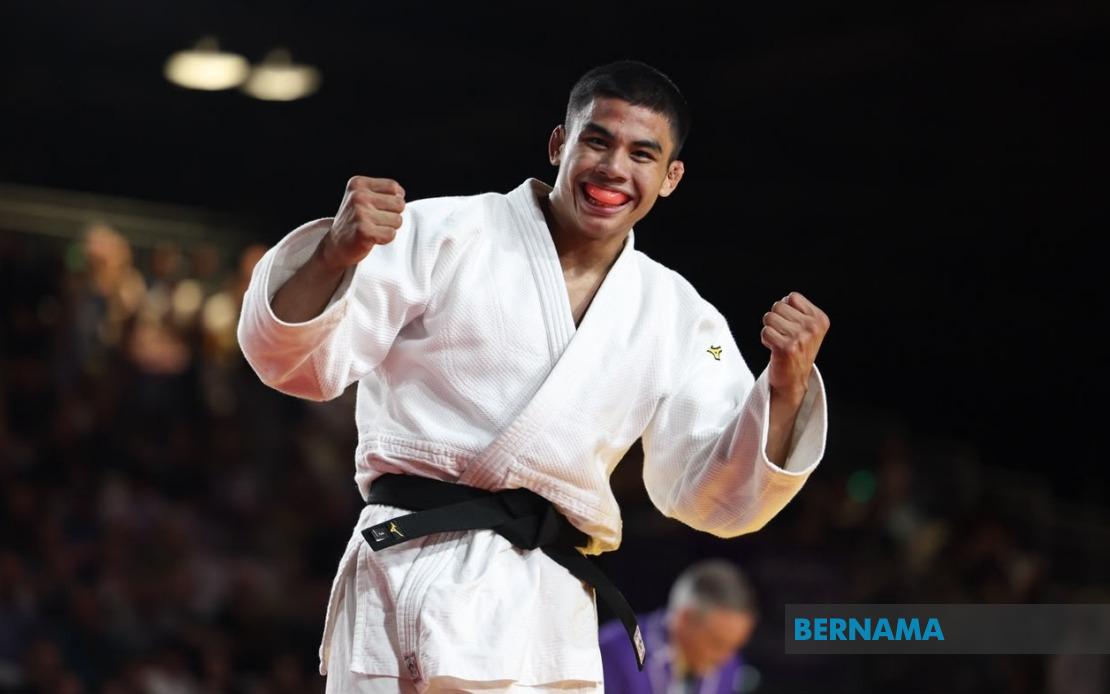
Amir Daniel Abdul Majeed has etched his name into Malaysian sporting history by becoming the nation's first judoka to capture gold at the Commonwealth Games, a feat achieved at Glasgow 2026 in Scotland yesterday. The 21-year-old athlete from Penang defeated South Africa's Timothy Meuwsen in the men's under-81 kilogramme final at the Scottish Event Campus, delivering Malaysia's eighth gold medal at these Games. His victory represents not merely a personal triumph but a significant milestone for Malaysian judo on the international stage, where the sport has historically struggled to produce medal-winning performances at major multi-sport events.
The path to this historic achievement began not on the judo mat but in the humble setting of a family home, where a young boy's determination to earn a promised storybook would foreshadow his later commitment to athletic excellence. At the age of four, Amir Daniel had developed a thumb-sucking habit that concerned his mother, Yeoh Suatkhim. Rather than resorting to conventional disciplinary measures, she employed a simple incentive: the storybook he desired would be his if he could break the habit. The strategy worked with remarkable swiftness. Within a single day, the toddler had completely abandoned the behaviour, demonstrating an early capacity for self-discipline that would become characteristic of his personality throughout childhood and into adulthood.
Yeoh's observation of her son's early determination proved prescient. She recognised in young Amir Daniel a personality trait that transcended the specific challenge of the moment—a fundamental drive to achieve goals once they were set before him. This quality would later serve him well in the demanding discipline of competitive judo, where incremental physical and mental improvements accumulate over years of training. According to his mother, whenever Amir Daniel committed himself to accomplishing something, he possessed the singular focus required to see it through to completion, an attribute that cannot be taught but rather must be cultivated and nurtured over time.
Introduction to the sport of judo came when Amir Daniel was five years old, placing him under the guidance of national coach Md Nashriq Md Nassir, a relationship that has endured throughout his athletic development and continues to the present day. This early exposure to structured training during the formative years of childhood allowed the budding judoka to develop both technical skills and the mental resilience necessary for competition at increasingly higher levels. The coach-athlete relationship that developed between Md Nashriq and his young protégé transcended the typical boundaries of sports instruction. Yeoh credited the coach with playing a multifaceted role in her son's development, encompassing not only the refinement of judo techniques but also the cultivation of discipline, academic responsibility, and personal character.
The depth of trust between the family and coach became evident in how Yeoh approached potential conflicts between Amir Daniel's training schedule and his academic obligations. Rather than managing these competing demands in isolation, she would consult directly with Md Nashriq about forthcoming examinations, allowing the coach to establish informal agreements with the athlete regarding study commitments. This collaborative approach ensured that the pursuit of sporting excellence did not come at the expense of educational development—a balance that many young athletes struggle to maintain. Amir Daniel's willingness to honour commitments made to his coach suggested that the relationship had cultivated not merely athletic discipline but a broader sense of personal integrity.
The trajectory of Amir Daniel's international judo career has shown steady progression through competitive achievements at major events. His first appearance at a Commonwealth Games in Birmingham 2022 resulted in a bronze medal in the men's under-73 kilogramme category, an impressive debut that signalled his potential to compete successfully at the highest levels of amateur judo. The subsequent move up to the under-81kg weight category represented both a physical development and a strategic decision within his athletic progression. His transformation from bronze medallist two years ago to gold medallist at Glasgow 2026 reflects the accumulation of training, experience, and refinement of technique that characterises the journey of elite athletes across all sports.
Malaysia's medal tally at these Commonwealth Games has been distributed across several sporting disciplines, yet Amir Daniel's achievement holds particular significance for the nation's judo programme. Historically, Malaysian judokas have competed at Commonwealth Games without securing gold medals, making this victory a watershed moment for the sport within the country. The presence of his mother at ringside in Glasgow to witness the historic victory added an emotional dimension to the achievement, bringing full circle the journey that had begun decades earlier with a storybook and a determined four-year-old boy.
Yeoh's philosophy regarding childhood development emphasises the importance of exposing young people to structured sporting activities and learning opportunities from an early age. This approach proved effective with both her children; her eldest daughter, Nur Yasmeen, was similarly introduced to sports, while Amir Daniel eventually developed a passionate commitment to judo as his chosen discipline. She views such exposure not as pressure to achieve athletic greatness but rather as a means of keeping young minds and bodies engaged in meaningful pursuits that build character and create formative experiences. This perspective reflects broader research in child development suggesting that early involvement in structured activities correlates with positive developmental outcomes.
The implications of Amir Daniel's success extend beyond the individual athlete to encompass the Malaysian judo community as a whole. His gold medal validates the investment of coaching resources, training facilities, and support systems directed toward developing homegrown talent. For young judokas in Malaysia watching this achievement, Amir Daniel now represents a tangible proof of concept—evidence that international success at the highest amateur levels is achievable for Malaysian athletes willing to commit fully to their chosen sport. The visibility of his triumph may inspire increased participation in judo among Malaysian youth and attract greater institutional support for the sport's development infrastructure.
Looking forward, Amir Daniel has articulated ambitions that extend well beyond Commonwealth Games competition. His ultimate sporting aspiration centers on Olympic participation, representing the next frontier in his athletic career. Yeoh has expressed optimism regarding her son's potential to reach the Olympic Games while simultaneously maintaining his commitment to academic pursuits and contributing to the development of other judokas within Malaysia. This multipronged approach to future goals reflects the values that have guided Amir Daniel throughout his life—the pursuit of excellence balanced against broader responsibilities to family, education, and community.
The story of Amir Daniel's journey from a determined four-year-old negotiating for a storybook to Commonwealth Games gold medallist illustrates the complex interplay of individual determination, family support, and expert coaching that characterises athletic success. While natural talent certainly plays a role in elite athletic performance, Amir Daniel's trajectory suggests that perhaps equally important are the early cultivation of discipline, the presence of trusted mentors who invest in holistic development, and family environments that value both achievement and balanced growth. His historic victory in Glasgow thus becomes not simply an individual accomplishment but rather a case study in how these elements combine to produce sporting excellence.

