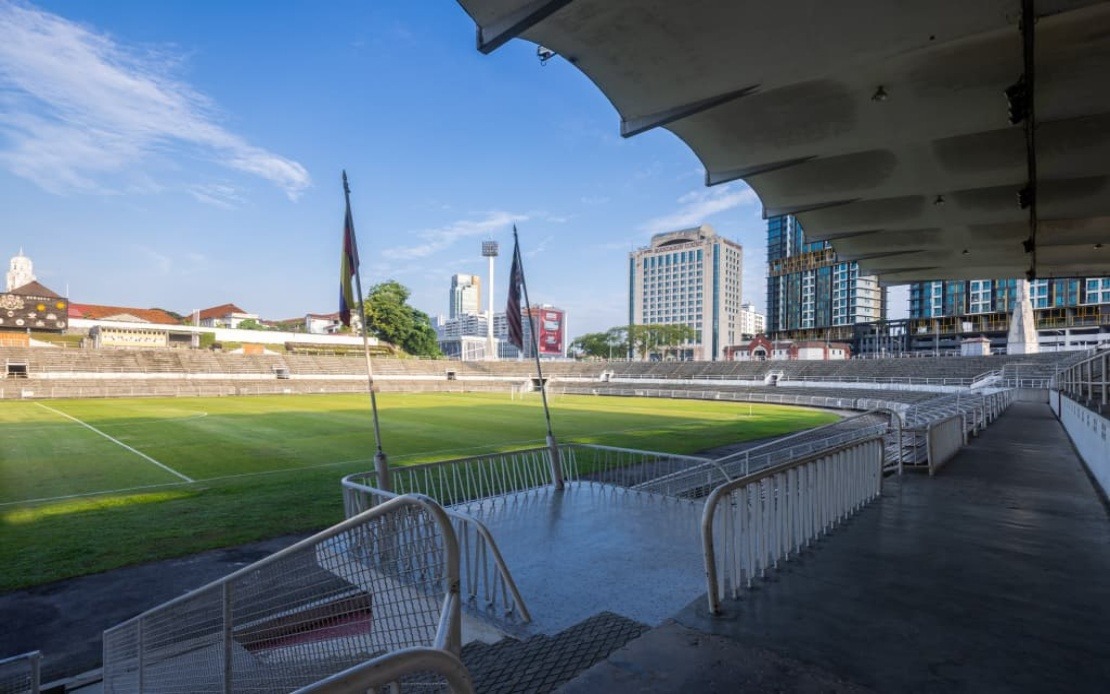
Tunku Abdul Rahman Putra Al-Haj's triumphant sevenfold proclamation of "Merdeka!" at Stadium Merdeka on August 31, 1957, transcended mere ceremonial significance. The resonant cry marked not simply the end of British colonial administration but the commencement of an independent nation's trajectory. Nearly seven decades onwards, that foundational spirit persists, now burning vibrantly at Dataran Putrajaya—a site that has crystallised into a representation of administrative excellence and the nation's forward-looking vision.
The geographical transition in hosting National Day observances reveals more than logistical convenience. The journey from Stadium Merdeka through various urban centres to Putrajaya encapsulates Malaysia's transformation narrative, documenting decades of rapid modernisation and institutional development. This evolution reflects a deliberate choice to situate patriotic commemoration within evolving contexts, each venue carrying distinct historical and symbolic weight. Putrajaya, established in 1995 on land previously known as Prang Besar, commenced hosting national-level celebrations in 2003 with the theme "Keranamu Malaysia." The federal administrative hub has subsequently welcomed these ceremonies on nine occasions prior to 2025, and Cabinet directives formalised its designation as the principal venue through 2027.
Critical questions emerge regarding whether venue relocation impacts younger Malaysians' comprehension of independence's historical significance. Prof Dr Sarjit Singh Gill, heading the National Unity and Progressive Society Cluster at the Malaysian Professors Council, articulates a nuanced perspective. Rather than diminishing National Day's meaning, Gill contends that Stadium Merdeka and Putrajaya function as complementary historical symbols, each resonating distinctly across generational divides. Stadium Merdeka summons profound nostalgic associations for older Malaysians—those now aged 70 and beyond—evoking personal memories of the independence era's immediacy. Conversely, Putrajaya represents contemporary administrative sophistication, engineered as a "smart city in a garden" embodying Malaysia's developmental aspirations.
This dual-venue approach proves pedagogically advantageous, according to the UPM Professor of Anthropology and Sociology. Celebrating at both locations establishes continuity between historical foundations and present-day achievements, enabling successive generations to grasp independence's significance within the broader context of national progress. Yet maintaining this patriotic consciousness requires deliberate attention to fundamental historical elements. Gill emphasises two irreplaceable components: first, honouring past leadership's sacrificial negotiation of independence through consensus-building; second, celebrating Malaysia's plural society through the unity-in-diversity paradigm. He reflects personally on his participation in the 1990 "Berjaya" parade, underscoring youth involvement's indispensability in cultivating genuine, enduring patriotism.
Putrajaya's selection reflects pragmatic administrative considerations extending beyond symbolism. The Event Management and Innovation Unit within the Ministry of Communications attributes the venue's recurring preference to substantial logistical advantages and contemporary infrastructure. Accessibility emerges as paramount—the Mass Rapid Transit network, water taxi services, and shuttle bus alternatives reduce private vehicle dependence whilst enabling efficient crowd management. These transportation innovations represent mobility transformation beneficial to large-scale gatherings. Putrajaya thus embodies continuity metaphorically: if Stadium Merdeka symbolises independence's genesis, Putrajaya marks that foundational struggle's continuation into Malaysia's unfolding future.
The 2026 National Day and Malaysia Day theme, "Malaysia MADANI: Kesejahteraan Dinikmati," substantiates this narrative continuity. The designation explicitly bridges independence achievement with contemporary development initiatives, illustrating the progression from liberation struggle to prosperity-building endeavours benefiting all citizens. This thematic architecture acknowledges that independence represented merely the beginning; genuine national fulfilment requires sustained commitment to wellbeing advancement. Contemporary celebrations incorporate creative technological elements specifically calibrated toward younger audiences. "Gema Inovasi MADANI" performances, the "Rentak MADANI, Paluan Tradisi" musical fusion combining innovation with traditional elements, and the "Human Graphic" formation featuring 1,500 schoolchildren demonstrate sophisticated attempts at bridging historical reverence with contemporary appeal.
For contemporary Malaysians, National Day celebrations provide experiential patriotism opportunities transcending classroom instruction. Muhammad Nasrul Nasir, a 30-year-old Administrative Assistant at the Federal Territories Department, exemplifies this generational engagement. His progression from spectator to parade participant demonstrates evolving commitment levels. Last year's attendance with family and friends created profound memories, particularly witnessing skydiving performances at Dataran Putrajaya. That experience catalysed deeper involvement—this year he participates as an official representative, embodying how celebrations function as catalysts for expanded civic participation.
For Nasrul, the celebration itself functioned as historical education. Witnessing ceremonies rekindled awareness of past leaders' sacrifices securing independence. This psychological mechanism—using celebratory occasions to transmit historical consciousness—proves particularly effective for younger demographics who lack lived experience of the independence era. The structured pageantry, combined with accessible venue infrastructure and technologically sophisticated performances, creates conditions enabling emotional and intellectual engagement with independence narratives.
The venue transition ultimately reflects Malaysian society's maturation. Relocating commemorations from their original historical site to modern administrative centres demonstrates confidence that independence's significance transcends geographical location. Putrajaya's emergence as primary venue acknowledges contemporary realities: younger cohorts increasingly inhabit modern urban environments; accessibility and facility quality matter for mass participation; symbolic power derives not from singular heritage sites but from nationally resonant significance transmitted across multiple contexts. Yet this modernisation requires conscious historical preservation efforts.
The integration of past leaders' contributions into contemporary celebrations represents one such preservation mechanism. Annual commemorations must persistently emphasise that Malaysia's current institutional sophistication, economic achievements, and multicultural stability represent fruits planted by independence-era negotiators. Without explicit historical scaffolding, younger generations risk interpreting celebrations as abstract patriotic performances divorced from causal historical narratives. Celebrations thus serve dual functions: affirming contemporary national identity whilst educating successive cohorts regarding independence's contested achievement through negotiation, compromise, and consensus-building among diverse communities.
Putrajaya's decade-long tenure as primary National Day venue reflects strategic governmental consistency. The three-year designation through 2027 signals sustained commitment to venue stability, potentially enabling accumulated institutional expertise in event management and audience engagement. However, this decision need not preclude occasional Merdeka Stadium celebrations, particularly during milestone anniversaries. The centennial approach—occasionally returning to independence's birthplace whilst maintaining Putrajaya as standard venue—could optimise symbolic resonance across generational cohorts.
Ultimately, Malaysia's National Day evolution demonstrates that patriotic commemoration adapts successfully to contemporary contexts without sacrificing historical integrity. The migration from Stadium Merdeka to Putrajaya represents not abandonment of independence narratives but their translation into modern administrative and technological vocabularies. Successive generations, experiencing independence celebrations within their contemporary lived environments, may develop ownership of patriotic consciousness precisely because celebrations acknowledge their present-day realities. By maintaining historical substance whilst embracing contemporary delivery mechanisms, Malaysia negotiates the perennial challenge facing all nations: transmitting foundational historical consciousness to cohorts lacking lived experience of those founding moments.

