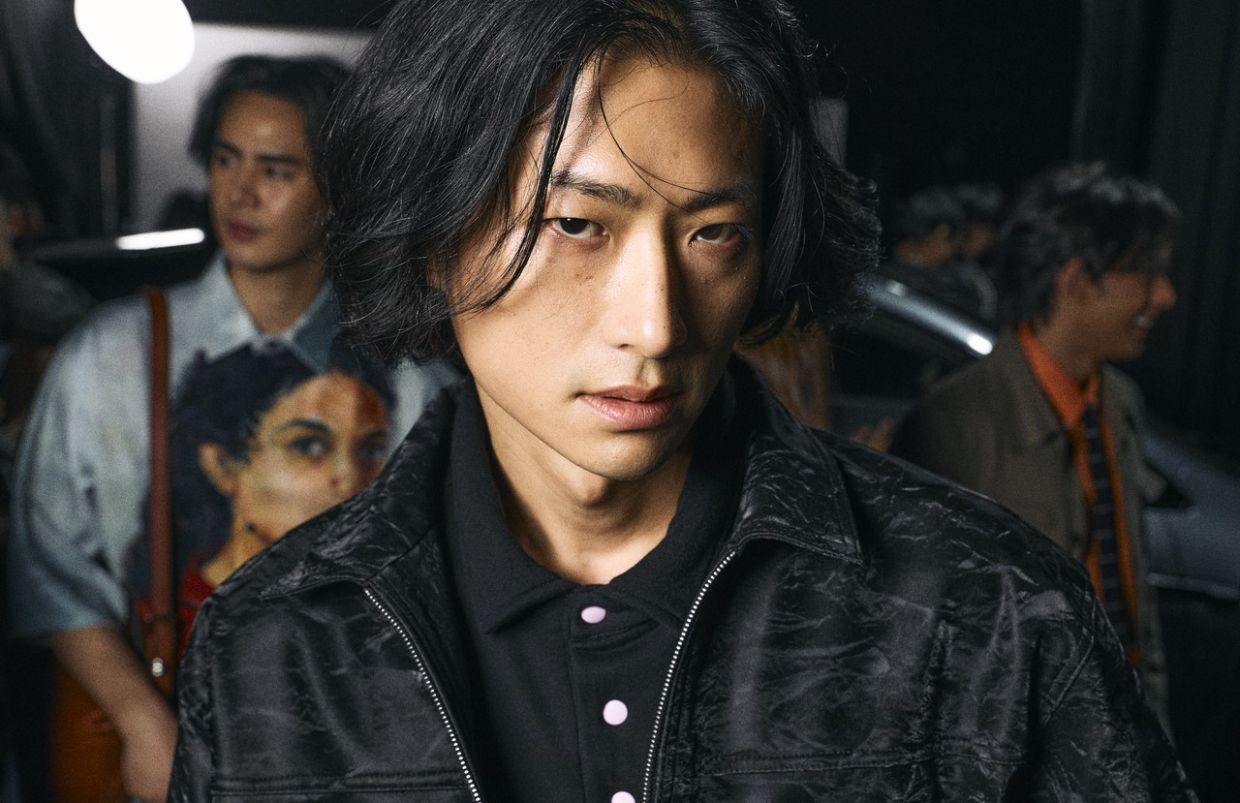
At an age when most professionals have settled into long-established careers, Heo Yong-jin made the unconventional decision to walk away from a decade spent working in litigation support at Kim & Chang, South Korea's preeminent law firm, to pursue fashion modelling. His journey took an unexpected turn last July when the 40-year-old graced the runway at an invitation-only Louis Vuitton trunk show held in Bangkok, where the French luxury house unveiled a menswear collection designed by Pharrell Williams alongside Japanese designer Nigo. For Heo, the moment felt almost surreal—a validation of a career pivot that seemed improbable by conventional standards.
The origins of Heo's transformation lie not in Seoul but in Spain, where he and his wife relocated in early 2023 to pursue further studies in sports management and the agency business. Rather than immediately immersing himself in academic pursuits, Heo found himself gravitating toward fitness activities. Surrounded by classmates with genuine enthusiasm for physical training, he began joining them for football and padel, a racket sport that has gained popularity across Europe in recent years. The structured movement and regular activity gradually yielded visible results—weight loss that would prove pivotal to his career trajectory. It was his wife who first glimpsed the potential when she casually suggested that his transformed physique and towering 188-centimetre frame might serve him well in the modelling industry.
The suggestion planted a seed that Heo initially watered cautiously. He recognised that while he possessed the physical attributes—particularly his height—that modelling agencies often seek, he was navigating a profession typically dominated by individuals who entered the industry in their late teens or early twenties. Yet the discovery that European agencies maintained strong demand for Asian male models shifted his calculus. With only four months remaining on his Spanish visa, Heo made a decisive commitment. He began constructing a professional portfolio from scratch, shouldering the costs of hiring photographers and undertaking the laborious process of contacting prospective clients independently. The hands-on approach—learning the mechanics of the business while simultaneously being its product—gave him a foundation of self-sufficiency and determination.
When Heo returned to South Korea with renewed optimism, he encountered the first significant hurdle in his new ambitions. Domestic modelling agencies proved resistant to representing a neophyte model approaching 40 years old with minimal professional experience. Age, they suggested, represented an insurmountable obstacle in a market that privileges youth and established track records. Rather than accepting this rejection as definitive, Heo expanded his geographical scope. He embarked on a systematic outreach campaign across China and Southeast Asia, dispatching emails and portfolios to agencies through their digital platforms. His persistence eventually yielded fruit when a Thai agency responded positively to his submission, recognising market potential that Seoul-based competitors had overlooked.
Transitioning between Thailand and South Korea, Heo began accumulating professional credits that substantiated his capabilities. He appeared in advertisements for local Thai brands, featured in a sunglasses commercial, and landed a European insurance company campaign that cast him as a Malaysian father—roles that, while modest in scope, provided evidence of his viability as a commercial model. The work generated sufficient momentum that when the opportunity arose to participate in the Louis Vuitton trunk show, Heo found himself positioned as a credible candidate. His presence at the Bangkok event represented not merely a single booking but validation that his unconventional entry into modelling had merit within the industry itself. The experience resonated beyond professional circles; a personal Instagram reel documenting his improbable career transition accumulated four million views, suggesting his story tapped into broader cultural conversations about reinvention and defying age-related expectations.
Yet Heo maintains a measured perspective about his trajectory, resisting the temptation to frame his journey as a completed success narrative. He acknowledges that walking for Louis Vuitton, while undeniably significant, has not automatically translated into consistent high-profile assignments. The luxury fashion industry operates according to dynamics distinct from accessible consumer markets, and a single prestigious appearance provides no guarantee of sustained engagement. The uncertainty that characterises his current position differs fundamentally from the predictability that defined his decade in law, yet Heo paradoxically finds this instability preferable. He attributes this shift in perspective to the trajectory of his professional life prior to modelling—years spent building expertise and maintaining stability in litigation support without ever discovering work that genuinely engaged his interest or passion.
The psychological transformation accompanying his career change extends beyond professional satisfaction to encompass deeper questions about authenticity and self-expression. During his legal career, Heo cultivated an external presentation of confidence that masked internal uncertainty about his actual aspirations and aptitudes. Modelling has reversed this dynamic, providing genuine confidence grounded in tangible professional opportunities and creative collaboration. When working on campaigns, he experiences the satisfaction of becoming the central figure in a visual narrative, of translating a brand's conceptual vision into embodied expression. This participatory role in storytelling offers rewards that litigation support—however competently executed—could never provide. The financial instability that periodically unsettles him pales in comparison to the psychological fulfilment he derives from work that feels inherently meaningful.
Heo's ambitions continue to expand geographically and in scope. Inquiries from South Korean fashion brands have commenced, including requests for involvement in fashion lookbooks that would position him before domestic audiences. Beyond these developing opportunities, he has targeted Milan and Paris fashion weeks scheduled for late September through early October, where major houses including Prada, Bottega Veneta, Saint Laurent and Tom Ford will present their menswear collections. These events represent the apex of his current aspirations, though Heo maintains clear-eyed awareness of the formidable obstacles arrayed against him. As a relatively unknown 40-year-old model operating outside the established infrastructure of major fashion houses, he must first secure agency representation willing to champion his candidacy, then compete for audition slots against younger, more extensively experienced competitors.
The Southeast Asian context shapes Heo's trajectory in meaningful ways. Thailand's emerging fashion industry, which lacks the entrenched hierarchies and age-defined gatekeeping that characterise established markets in Seoul or other East Asian hubs, proved instrumental in validating his transition. The region's receptivity to mature male models in commercial contexts—driven partly by demographic realities and partly by evolving aesthetic preferences—created space for his entry when more developed markets remained closed. For Malaysian readers, Heo's experience illustrates how regional creative industries increasingly offer opportunities for professionals willing to operate across borders and challenge conventional career timelines. His journey also reflects broader Southeast Asian labour market dynamics, where transnational mobility and the willingness to relocate have become significant competitive advantages.
Reflecting on his transformation, Heo maintains humility about what he characterises as his deliberately straightforward approach: losing weight and pursuing an entirely new profession. He does not present his story as extraordinary achievement but rather as a relatively simple recalibration of priorities in response to unexpected opportunity. This modesty itself proves instructive, particularly for professionals in their late thirties and forties who may assume their career trajectories are essentially fixed. The suggestion that meaningful reinvention remains possible at 40, that abandoning a stable and respectable profession for genuine engagement with work represents a rational rather than reckless choice, challenges prevailing narratives about career progression and life planning. The financial uncertainty that accompanies this choice weighs against him, yet his own experience suggests that material security, when decoupled from meaningful work, offers less satisfaction than precarity married to authentic engagement and continuous creative challenge.

