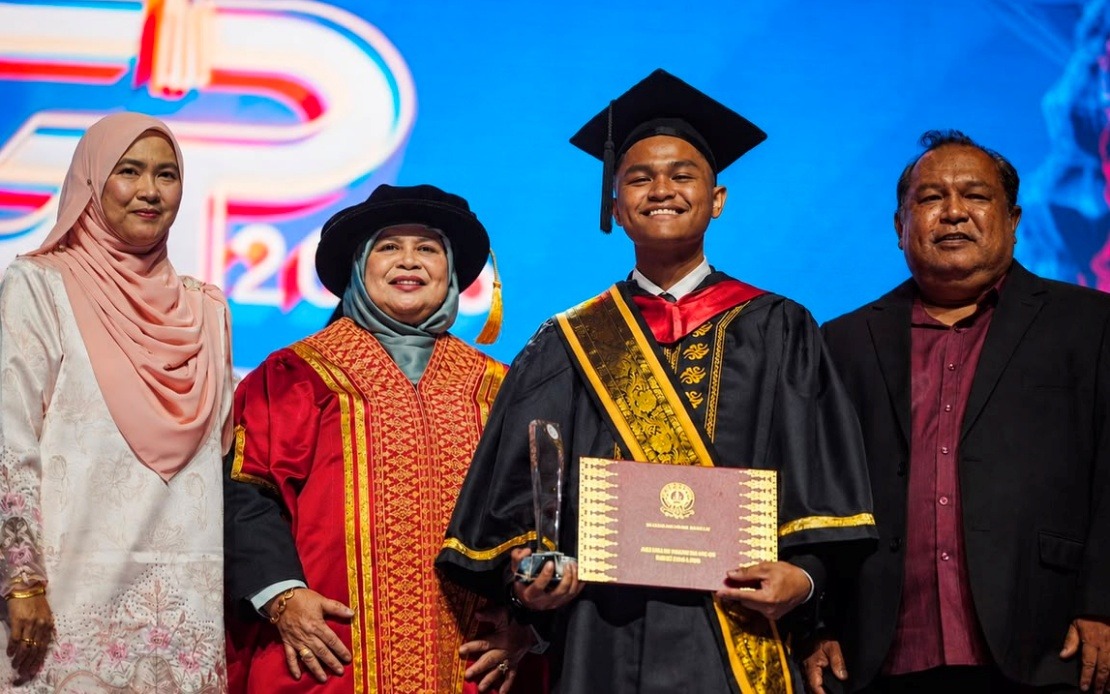
Muhammad Aaqif Dino Faezal's trajectory from MARA Science Junior College (MRSM) Tun Ghafar Baba in Melaka to the prestigious halls of Imperial College London exemplifies how targeted scholarship initiatives can fundamentally reshape educational outcomes for high-achieving Malaysian students. The 19-year-old, recently honoured as the 2026 MARA College Graduate Icon, represents a broader success story within Majlis Amanah Rakyat's constellation of programmes designed to nurture talent among economically vulnerable but academically gifted young Malaysians.
The financial barrier to international education has long deterred even the brightest students from middle and lower-income households from pursuing tertiary studies abroad. Muhammad Aaqif articulates this reality with candour, acknowledging that without MARA's Young Talent Development Programme sponsorship, the costs associated with studying at Imperial College London would have remained prohibitively high. His case underscores a critical challenge within Malaysia's education ecosystem: exceptional potential frequently goes unrealised simply because families lack the resources to unlock global opportunities. By absorbing these costs, MARA has effectively removed a structural constraint that might otherwise have confined this promising geologist to domestic institutions.
Pursuing the International Baccalaureate Diploma Programme at Kolej MARA Banting (KMB) from 2024 through May 2026, Muhammad Aaqif distinguished himself academically and institutionally. His performance in the IBDP examination last May—achieving 44 out of 45 points—places him among the elite cohort of IB students globally. More significantly, this exceptional technical achievement was complemented by substantive leadership contributions that revealed intellectual depth beyond classroom metrics. His presidency of the Students' Representative Council demonstrated an ability to navigate complex interpersonal dynamics, mediate between institutional hierarchies and student constituencies, and foster collaborative environments.
The recognition conferred upon Muhammad Aaqif extends beyond personal accolade. The MARA College Graduate Icon Award filters selections through multiple criteria: outstanding academic performance, demonstrated leadership capacity, measurable societal contributions, and assessed potential for future prominence. This multidimensional evaluation reflects institutional philosophy that education's ultimate purpose transcends examination scores. KMB director Arfaseela Amir emphasised this holistic conception, noting that Muhammad Aaqif exemplified the type of human capital MARA aspires to develop—individuals possessing both intellectual rigour and robust character foundations.
Muhammad Aaqif's secondary academic focus on geology carries particular significance for Malaysia's economic future. His stated intention to apply acquired expertise within the oil, gas and energy sectors addresses a genuine skills gap in these strategically important industries. Malaysia's energy sector faces mounting pressures to modernise, diversify into renewable energy sources, and maintain geological exploration capabilities as conventional resource bases mature. The return of sophisticated technical expertise cultivated at world-leading institutions like Imperial College directly benefits national capacity in these sectors. This represents a deliberate investment strategy by MARA, where scholarship allocation serves both individual mobility and sectoral development objectives.
The Imperial College London selection constitutes validation of institutional partnerships between Malaysian educational organisations and leading international universities. Imperial's reputation in geology, earth sciences and engineering creates an optimal learning environment for someone intending to contribute to resource management and energy transition frameworks. Malaysian graduates from such institutions frequently return with expanded professional networks, contemporary methodological knowledge, and credentials that enhance their value within both domestic and regional labour markets. This circulation of talent, when properly managed through sponsorship schemes, strengthens Malaysia's competitive positioning in knowledge-intensive domains.
Within the broader MARA ecosystem, Muhammad Aaqif's trajectory illustrates programme effectiveness across sequential stages. MRSM foundations provided rigorous academic grounding; KMB's international curriculum development prepared him for global tertiary environments; YTP sponsorship removed financial impediments; and institutional support through awards and recognition systems validated achievement and sustained motivation. This sequential scaffolding represents deliberate pedagogical architecture rather than ad-hoc intervention. Each stage builds upon prior competencies while introducing progressively complex intellectual and social challenges.
The co-curricular dimension of Muhammad Aaqif's KMB experience deserves particular attention. His receipt of both the KMB Best Graduate Award and Co-curricular Icon Award indicates balanced development across academic and extra-curricular domains. Leadership positions within student representative bodies carry intrinsic pedagogical value, fostering capabilities in negotiation, advocacy, accountability and institutional navigation that tertiary institutions and employers increasingly prioritise. These experiences cultivate adaptability and interpersonal sophistication that pure subject-matter expertise cannot provide.
Family support emerges prominently in Muhammad Aaqif's reflections on his achievements. His framing of the award as tribute to family, teachers, peers and institutions suggests understanding that individual accomplishment operates within networked contexts of social support. This recognition carries implications for scholarship programme design; financial support alone proves insufficient without concurrent family encouragement and institutional mentorship systems. MARA's effectiveness derives partly from comprehensive support infrastructure that extends beyond monetary assistance.
Looking forward, Muhammad Aaqif's September commencement at Imperial College represents both endpoint and beginning. The conclusion of MARA-sponsored secondary education gives way to autonomous navigation of sophisticated tertiary environments. Success at this juncture depends upon individual agency, resilience and intellectual curiosity. However, his demonstrated capacity for academic excellence, leadership contribution and balanced development suggests substantial probability of continued achievement. The question becomes whether post-graduation pathways facilitate meaningful return and application of acquired expertise within Malaysian contexts, or whether sophisticated human capital developed through public investment migrates permanently elsewhere.
The broader significance of Muhammad Aaqif's story resides in its illustration of how targeted educational investment in high-potential students generates multiplied returns. MARA's Young Talent Development Programme, though reaching relatively small cohorts annually, produces disproportionate impact when beneficiaries occupy leadership roles across government, corporate and academic sectors. Muhammad Aaqif, pending successful graduation from Imperial College, may eventually lead geological surveys, direct energy policy, mentor younger scientists or contribute technical expertise to Malaysia's transition toward sustainable energy systems. His current trajectory suggests such possibilities remain genuinely plausible.

