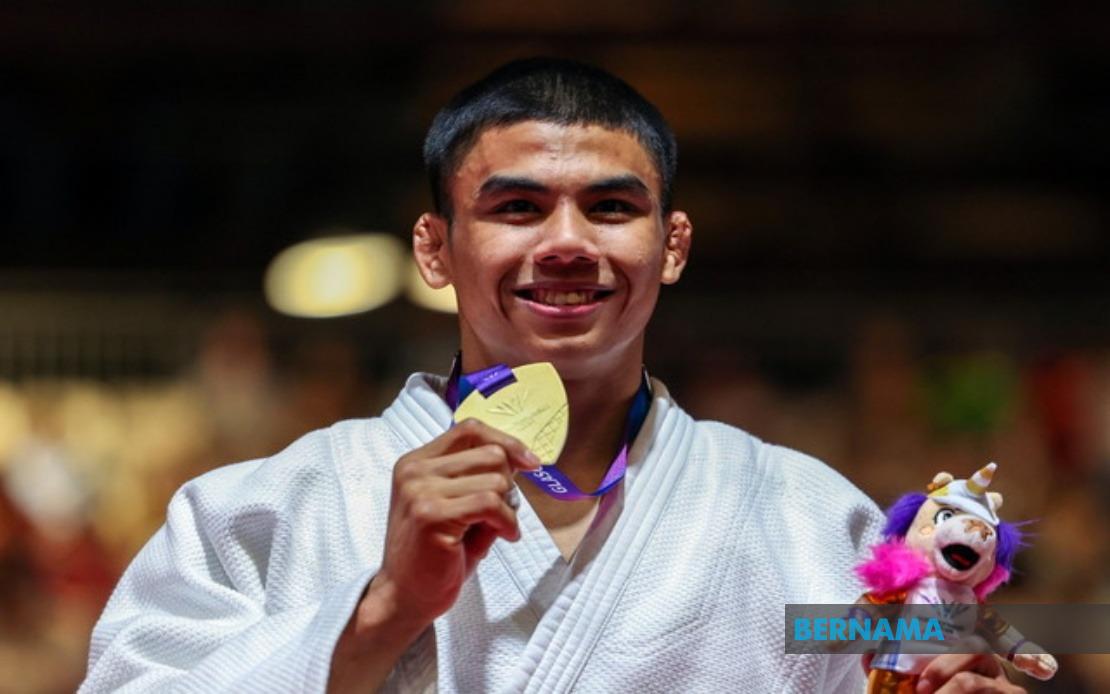
Amir Daniel Abdul Majeed, the 21-year-old judoka who earned gold at the Commonwealth Games, is navigating unfamiliar territory as he steps into a coaching position with the Penang judo contingent at SUKMA Selangor 2026. Rather than facing opponents on the mat, the young athlete now contends with the pressures of guiding athletes from the coaching corner—a role he describes as significantly more nerve-wracking than his previous life as a competitor.
The transition from athlete to mentor represents a fundamental shift in how Amir approaches his sport. During his competitive years, his concerns centred on personal performance and managing his own nerves during bouts. Now, as assistant coach of the Penang squad, his responsibilities have multiplied considerably. He oversees the development and preparation of 13 athletes, each requiring individualised attention, strategic planning, and emotional support. This expanded scope of responsibility creates a different psychological burden than the intensity of one-on-one competition.
Amir's investment in his charges runs deeper than typical coaching relationships. Having watched many of these athletes develop from their formative years in judo, he possesses intimate knowledge of their progression, strengths, and areas for improvement. He previously competed alongside several team members, giving him a unique vantage point to understand their capabilities and potential. This familiarity, while valuable for coaching insights, also heightens the emotional stakes when outcomes don't align with expectations.
Despite the pressures of his new role, the rewards have become apparent. Observing athletes flourish under his guidance delivers a satisfaction that differs from personal victory on the mat. The Penang judo team's performance at SUKMA Selangor 2026 validated this approach, as the contingent concluded their three-day participation with an impressive haul of three gold medals, one silver, and five bronze medals. This medal collection positioned Penang joint-top in the judo standings alongside Johor, demonstrating the effectiveness of the coaching direction implemented during the Games.
While his coaching commitments consume considerable attention, Amir remains focused on his individual competitive aspirations. The judoka is awaiting formal confirmation regarding his participation in the Aichi-Nagoya 2026 Asian Games in Japan, with the official selection committee meeting scheduled for the current week. This anticipated opportunity represents a significant milestone in his athletic journey, offering exposure at one of Asia's premier sporting events.
The prospect of competing at the Asian Games carries particular strategic importance for Amir's long-term vision. International judo at this level presents competitors substantially more challenging than domestic circuits, forcing athletes to refine techniques and develop resilience against elite opponents. Amir views the Japanese competition as a crucial stepping stone toward realising his ultimate Olympic ambitions. The combination of high-calibre opposition and the opportunity to accumulate competitive experience aligns perfectly with the developmental trajectory required for Olympic preparation.
Japan's judo landscape presents a uniquely demanding environment. As the birthplace of judo and a perennial powerhouse in the sport, competing in Aichi-Nagoya exposes Malaysian athletes to world-class standards. The quality of fighters, coaching methodologies, and tactical sophistication at the Asian Games substantially exceeds most regional competitions. For an athlete like Amir, this exposure serves educational value beyond mere medal accumulation, providing insights into international best practices and competitive benchmarks.
Looking ahead, Amir's competitive calendar remains ambitious. Beyond the Asian Games, the SEA Games Malaysia 2027 looms as another significant target, particularly given the home advantage and media spotlight. Balancing his dual roles as both athlete and assistant coach requires considerable discipline and time management. However, his experience coaching the Penang squad may inadvertently enhance his competitive performance by deepening his tactical understanding and psychological resilience.
The trajectory of Amir's career reflects broader patterns within Malaysian judo, where accomplished athletes increasingly contribute to athlete development pipelines. His transition mirrors a growing trend where medal-winning competitors leverage their experience to build stronger domestic talent ecosystems. For Penang judo specifically, having a recent Commonwealth champion guiding younger athletes elevates coaching quality and provides mentees with direct access to expertise from someone who recently competed at the highest levels.
Amir's dual commitment also illustrates the competitive pressures within Malaysian sports development. Few athletes receive the luxury of pursuing Olympic dreams without contributing to institutional building. His willingness to undertake coaching responsibilities while maintaining personal competitive objectives demonstrates maturity and a commitment to sport development beyond individual achievement. This approach strengthens the Malaysian judo ecosystem while positioning Amir strategically for his continued advancement.
The assistant coaching role itself provides unexpected benefits for Amir's individual preparation. Coaching requires articulating tactical principles, analysing opponent weaknesses, and problem-solving under pressure—skills that transfer directly to his competitive mindset. Explaining techniques to younger athletes forces cognitive clarity about mechanics and strategy, potentially enhancing his own technical execution. Consequently, his coaching responsibilities, while demanding, may paradoxically strengthen his competitive capabilities.

