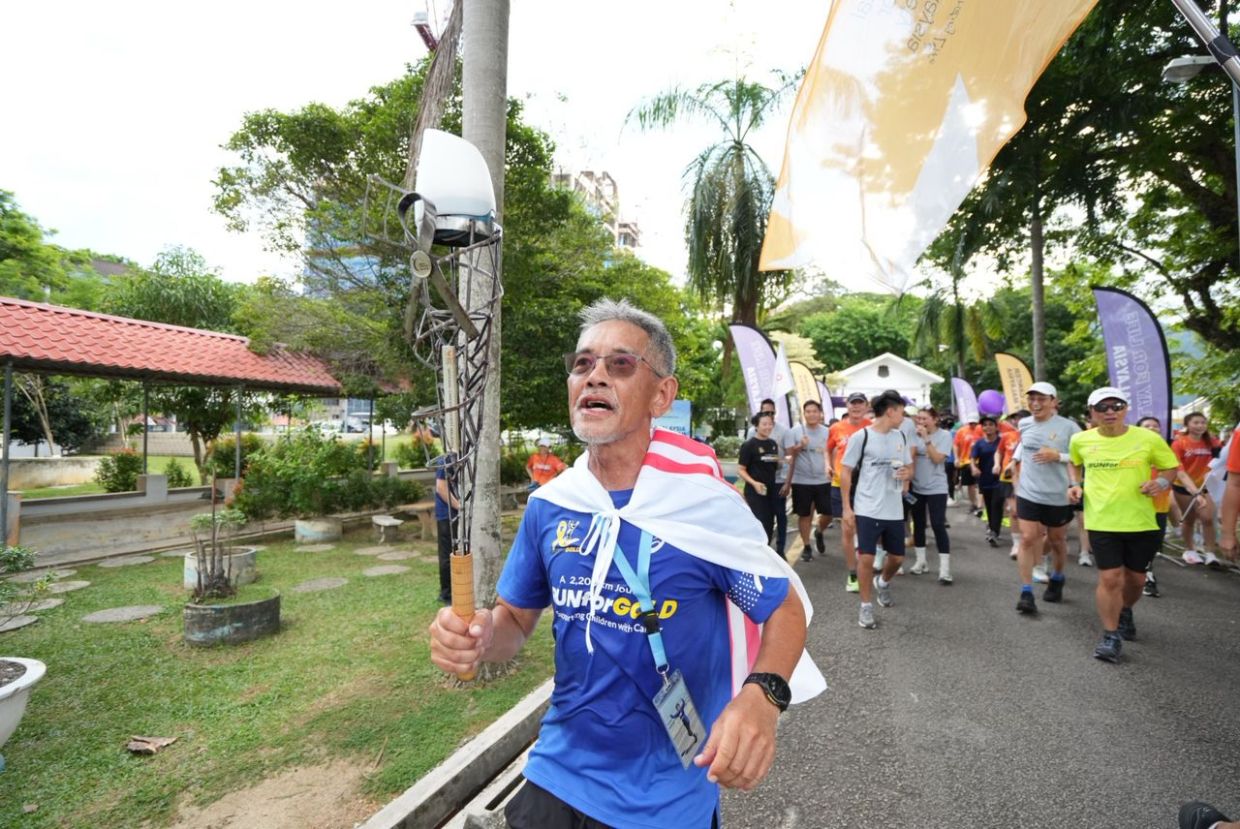
When SG Lim reached his retirement years, he faced an unexpected challenge that would reshape the trajectory of his life. The 66-year-old retired civil engineer and runner from Penang found himself navigating an unfamiliar landscape of loss after his wife, Goh Joo Lee, succumbed to cancer in 2024 at the age of 63. Rather than settling into the quiet contentment often associated with retirement, Lim embarked on a personal odyssey that would eventually transform his private sorrow into a force for public good across Malaysia.
In the months following his wife's passing, Lim scattered himself across three countries, seeking solace in motion and human connection. He divided his time between his two children in Australia, his mother and siblings in Malaysia, and periodic retreats to Hong Kong for personal reflection. Yet even as he moved through these different geographical and emotional spaces, the weight of loss remained constant. The woman he had spent decades with was no longer there to share these moments, and the absence became both companion and catalyst for what would come next.
When describing Goh Joo Lee, Lim's vocabulary distils her essence into two words: loving and caring. But these simple descriptors mask a deeper portrait of compassion that extended far beyond her immediate circle. Even while battling her own illness in hospital, she orchestrated small gestures of kindness toward strangers, requesting her husband to purchase flowers for a woman in an adjacent ward who had been hospitalised for over a year. Her husband recalls watching his wife's face light up with joy at this simple act of generosity, a moment that revealed how her empathy transcended personal circumstance and suffering. This unwavering capacity to care, even in the face of her own mortality, became the spiritual template for what Lim would pursue after her death.
Beyond her compassionate nature, Goh possessed a vibrant artistic spirit that manifested in drawing, painting, and multimedia creation. Her pop-up art pieces, documented and shared across social media platforms, remain digital memorials to her creative vision. These remnants of her artistic legacy would later inspire Lim to think about how grief itself could become a medium for something constructive and meaningful.
The turning point came when Lim encountered a book by Laurence Carter that sparked an ambitious idea. Inspired by this reading, he conceived of undertaking an extended running or walking journey across Peninsular Malaysia. Before committing to this enormous endeavour, Lim sought guidance from the book's author, seeking wisdom and perspective from someone who had already navigated similar terrain. With backing from the National Cancer Society Malaysia, his vision crystallised into a formal initiative: Run For Gold, an ambitious campaign designed simultaneously to raise awareness and generate funds for children battling cancer.
Preparing for such an undertaking required meticulous physical and mental conditioning. After completing the Sydney Marathon in August, Lim dramatically intensified his training regimen. He restructured his daily schedule around 5am wake-ups, regularly ran through the oppressive late-morning heat to acclimate himself to Malaysian conditions, participated in strength training sessions to build resilience, and taught himself video editing skills to document the journey for social media audiences. This preparation extended beyond mere physical endurance; it represented a deliberate transformation of his body and mind into instruments of purpose.
The actual running journey across eleven states and federal territories revealed the profound impact of human connection. During his first visit to a children's oncology ward organised by NCSM, Lim witnessed the fragility of the young patients and the helplessness etched across their parents' faces. This encounter crystallised his sense of mission: he was not simply running for abstract awareness, but for the tangible alleviation of suffering among Malaysia's most vulnerable populations. The children's vulnerability combined with their parents' desperation to help created an emotional resonance that fortified his commitment to the remaining months of the journey.
Along the route, Lim encountered ordinary Malaysians whose own acts of solidarity enriched the campaign's meaning. In Pekan, Pahang, he met a retired teacher and his wife whose story demonstrated that support for the cause transcended financial capacity. The teacher lacked the resources to donate money directly, but possessed something equally valuable: time, energy, and civic commitment. He actively accompanied Lim through multiple stages of the journey spanning Johor, Melaka, and Penang, stopping at roadside eateries to engage strangers about the campaign's purpose. His wife provided logistical support from the sidelines, their relationship characterised by the same tenderness and mutual care that Lim remembered in his own marriage. Watching this elderly couple's devotion to each other stirred complicated emotions in Lim, simultaneously rekindling his grief while affirming the continued existence of the love he was honouring through his run.
After nearly three months of continuous running and nearly 2,200 kilometres traversed across Peninsular Malaysia, Lim finally crossed the finish line in George Town, Penang. The physical culmination of his journey prompted an involuntary utterance that revealed the true object of his endeavour: "Darling, we made it!" In that moment, his achievement belonged as much to his deceased wife as to himself. The campaign had become not a personal monument to grief, but a collaborative tribute to their shared values of compassion and service.
What began as a private struggle with loss had metamorphosed into a public expression of solidarity with families fighting childhood cancer across Malaysia. When Lim crossed that final finish line, he was greeted not merely by his immediate family, but by former classmates, friends, and strangers whose lives had been touched by his three-month journey. The initial impulse to honour one woman's memory had expanded into a broader movement that connected dozens of communities across the peninsula. In this expansion from personal to communal, Lim discovered that grief, when channelled through deliberate action and sustained commitment, possesses the capacity to ripple outward and touch lives far beyond one's own circle of loss.

