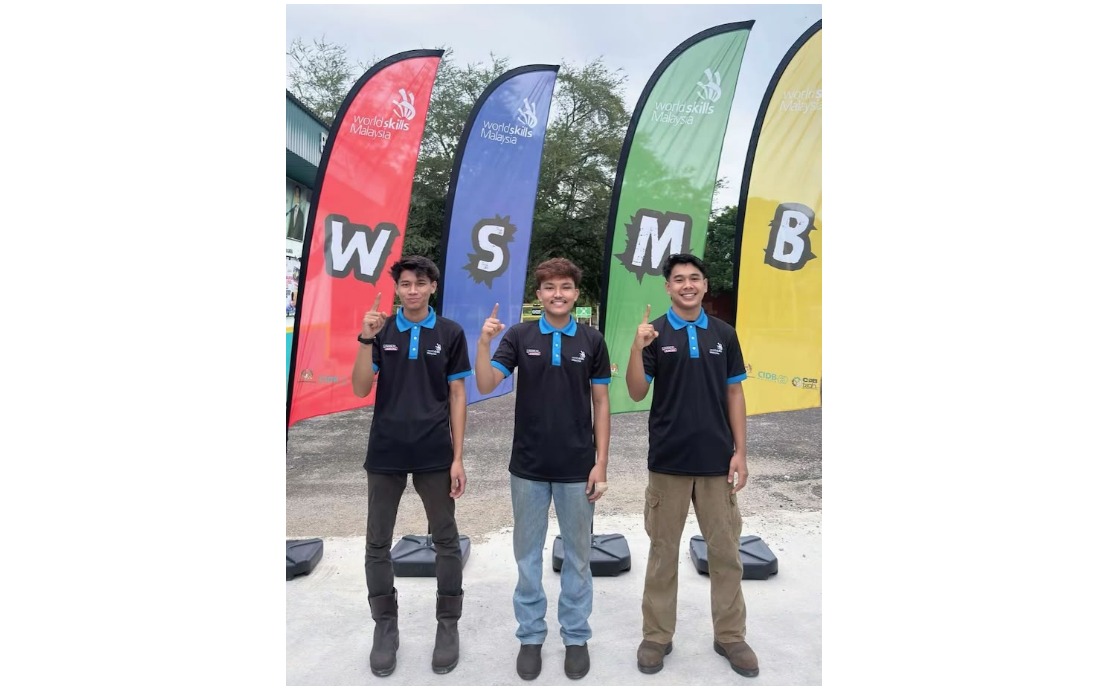
Three decades after its inception as the brainchild of former Prime Minister Tun Dr Mahathir Mohamad, WorldSkills Malaysia Belia continues its mission of identifying and nurturing talent within Malaysia's construction sector. Established in 1990 under the original title of Malaysian Skills Champion Competition, the programme has undergone multiple transformations—first as the Anugerah Tangan Emas Perdana Menteri between 1991 and 2006, then as MySkills from 2007 to 2013, before adopting its current identity in 2014. Despite these rebranding efforts, the core objective has remained unchanged: channelling promising individuals toward mastery of technical trades whilst preparing them for representation on the global stage.
The machinery supporting this ambition operates through collaborations between the Malaysian Construction Academy and CIDB Technologies, both accredited training centres furnished with infrastructure meeting international specifications. These institutions do more than simply host competitions; they function as talent pipelines deliberately designed to identify individuals capable of advancing Malaysia's standing in vocational excellence. Champions emerging from the annual competitions progress through carefully structured development and training regimens that culminate in potential selection for Malaysia's delegation to the WorldSkills international competition—a biennial gathering showcasing technical prowess from nations worldwide. This pathway transforms local achievement into international exposure and career advancement.
According to Mohd Hafiz Dasahi, chief executive officer of CIDB Technologies, the programme represents far more than a showcase for existing abilities. He frames WSMB as an incubator for a generation of professionals equipped to catalyse transformation within construction and allied industries. The philosophy undergirding this approach acknowledges that present investments in human capital directly influence Malaysia's competitive positioning in subsequent decades. Dasahi emphasises that curriculum development follows genuine industry demand rather than academic convention, integrating contemporary technological systems and ensuring graduates possess not merely theoretical knowledge but practical competency aligned with international benchmarks.
The technical rigour applied to participant assessment reflects this commitment to global standards. Zarulhakim Abdul Rahim, welding specialist at CIDB Technologies, details the multifaceted criteria against which competitors are evaluated. Precision in measurement, quality of execution, adherence to established welding procedures, efficiency in time utilisation, analytical problem-solving capability, and strict observance of occupational safety protocols all constitute scoring dimensions. Beyond technical mastery, however, participation cultivates psychological resilience, professional discipline, and an internalized commitment to continuous improvement. This holistic development proves particularly valuable as participants gain exposure to international technologies and methodologies, readying them for entry into sectors spanning construction, manufacturing, energy, and maritime industries.
Industry stakeholders recognise their role in sustaining this ecosystem. Putra Faisal Ashraf Idris, sales engineer at Lincoln Energy and Vinxus Mark, articulates the collective responsibility borne by welding firms to support emerging talent. Beyond rhetoric, this commitment translates into material support—companies provide machinery, specialist equipment, consumables, and technical mentorship throughout competitive cycles. This engagement ensures participants operate equipment identical to that found in professional environments, effectively collapsing the gap between training and workplace reality. Such industry participation simultaneously strengthens institutional relationships, creating feedback mechanisms whereby educational providers remain attuned to evolving technical requirements and market shifts.
Young competitors themselves attest to the tangible impact of participation. Ahmad Syafie Dasuki, twenty years old from Tumpat in Kelantan, brings nearly two years of hands-on workshop experience from Teluk Kalong in Terengganu prior to his involvement with WSMB. He articulates how competition provides the intermediate step between casual technical exposure and disciplined professional development, allowing him to refine welding capabilities whilst gaining familiarity with contemporary technological systems. The programme functions, in his assessment, as a practical preparation mechanism closely mirroring actual industry conditions—precisely the advantage young workers require when transitioning from training to employment.
Muhammad Fazran Md Rashid, aged twenty-one and currently employed at a welding enterprise in Kulim, Kedah, emphasises how participation strengthens both technical competency and psychological attributes. His involvement has enhanced knowledge depth whilst simultaneously building confidence, fostering discipline, and cultivating resilience—intangible qualities separating competent technicians from exceptional professionals. Fazran's stated objective reveals ambitions extending beyond immediate competition success toward establishing himself as an experienced, highly skilled operative within the welding sector. This trajectory, from competitor to industry professional, illustrates how WSMB functions as a stepping stone rather than a terminal achievement.
Mohd Sahmi Irfan Sulaimi, a twenty-year-old from Setiu in Terengganu, articulates enthusiasm for encouraging broader youth participation. His encouragement centres on multiple benefits extending beyond competitive experience itself—the programme builds professional self-assurance, instils disciplinary habits, facilitates knowledge transfer from expert instructors, enables networking within industry circles, and catalyses future employment prospects. Sahmi frames participation as an opportunity for converting challenges into learning moments, positioning struggle as developmental rather than discouraging. His messaging reflects a generational attitude wherein technical mastery intertwines with personal development and professional networking.
The longitudinal impact of WSMB extends beyond individual achievement to systemic strengthening of Malaysia's vocational landscape. By maintaining aligned incentives between training institutions and industry employers, the programme ensures curriculum relevance and skill applicability. Competition itself serves dual functions: it motivates excellence whilst simultaneously creating visible pathways encouraging younger cohorts to pursue technical trades. Within regional context, Malaysia's structured approach to vocational development distinguishes it amid Southeast Asian competitors, potentially positioning graduates for elevated earning potential and cross-border employment opportunities as the region integrates economically.
Looking forward, WSMB's evolution reflects Malaysian policymaking's sustained investment in human capital formation within technical sectors. The programme's thirty-six-year trajectory, despite nomenclature shifts, demonstrates institutional commitment to vocational excellence. As automation and digitalisation reshape construction methodologies, initiatives like WSMB gain heightened importance—ensuring Malaysia develops workforces capable of operating advanced systems rather than becoming economically marginalised by technological displacement. The blend of competition, structured training, industry mentorship, and international exposure creates a comprehensive ecosystem supporting both individual career advancement and national competitiveness.

