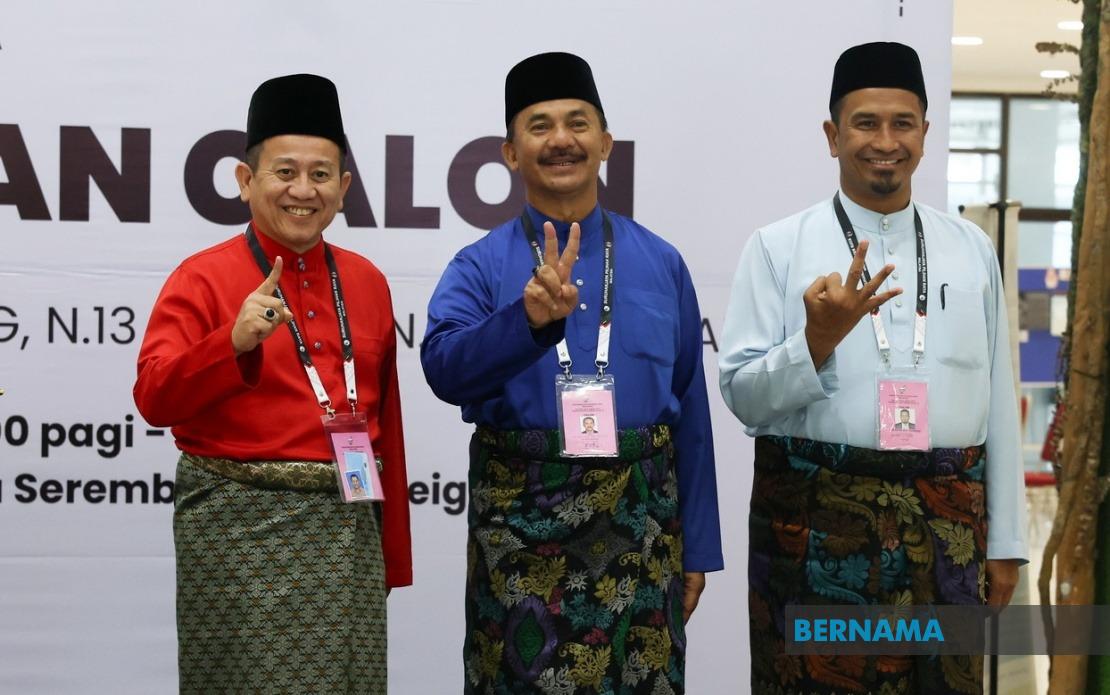
The 16th Negeri Sembilan State Election has emerged as a contest fundamentally reshaped by the strategic infusion of new political talent. With nomination papers having closed on July 18, a total of 103 candidates from various political parties and independent hopefuls have confirmed their participation across the 36 State Legislative Assembly seats up for grabs. This candidature distribution reflects a deliberate recalibration by Malaysia's political establishments, each seeking to balance institutional memory with fresh appeal at the ballot box. For regional observers and Malaysian voters seeking meaningful change, the composition of this candidate pool carries substantial implications for how power dynamics may shift within one of the nation's most closely contested states.
Pakatan Harapan's strategic positioning demonstrates the coalition's confidence in contesting every available seat. By fielding candidates in all 36 constituencies, PH has committed substantial organisational resources to Negeri Sembilan, traditionally a bellwether for national political sentiment. Within this full slate, the coalition has identified 24 newcomers to represent its interests, a deliberate choice reflecting either recruitment of fresh talent or strategic rotation away from underperforming incumbents. Alongside these newcomers stand experienced figures including Datuk Seri Aminuddin Harun, the Negeri Sembilan PH Chairman, who has opted to relocate his political base from the Sekamat seat to contest Linggi instead. This repositioning of senior figures suggests internal assessment of demographic shifts and changing voter preferences within specific constituencies, signalling sophisticated electoral mathematics beyond simple name recognition.
The inclusion of Transport Minister Anthony Loke as a PH candidate defends the coalition's parliamentary representation while simultaneously strengthening its campaign machinery through ministerial presence. Loke's decision to defend the Chennah seat underscores PH's calculation that established federal figures remain valuable assets in state-level contests, particularly where they can mobilise resources and media attention. The contrast between such high-profile figures and the 24 unknown candidates fielded by PH illustrates an electoral strategy attempting to satisfy both traditional voters seeking stability and reform-minded constituents demanding generational change.
Barisan Nasional has adopted a comparatively more conservative approach, contesting only 25 of the 36 available seats while fielding 13 new candidates within that reduced footprint. This strategic concentration, ceding substantial ground to competitors without serious challenge, reflects either resource constraints or calculated concession of certain constituencies deemed electorally unfavourable. Mohamad Hasan, BN's Deputy President and Foreign Minister, anchors the coalition's campaign by defending his Rantau constituency, providing ministerial-level credibility to BN's Negeri Sembilan operation. Such positioning allows BN to concentrate resources in winnable seats rather than dissipate efforts across the entire electoral landscape.
Datuk Ismail Lasim's decision to abandon his previously won Senaling seat in favour of contesting Juasseh represents the tactical repositioning common across both major coalitions. Rather than viewing this as retreat, such moves frequently reflect internal polling or demographic analysis suggesting improved prospects elsewhere. Similarly, Negeri Sembilan BN Chairman Datuk Seri Jalaluddin Alias retains the Pertang seat he captured in the previous 2023 state election, demonstrating BN's emphasis on consolidating existing gains rather than territorial expansion.
Perikatan Nasional's participation through its component parties adds complexity to the electoral matrix. By contesting 11 seats through PAS, Gerakan, Wawasan, and MIPP, PN maintains a presence without attempting statewide saturation. This selective approach allows PN to concentrate messaging and resources while potentially functioning as a strategic alternative for voters dissatisfied with either PH or BN. The distribution across multiple component parties suggests coalition coordination aimed at avoiding three-cornered contests that might fragment non-BN opposition votes.
Bersatu's strategic repositioning carries particular significance for Malaysian electoral dynamics. By contesting under its own party logo rather than adopting the PN banner used in the 2023 state election, Bersatu signals organisational independence and distinct political identity. Datuk Tun Faisal Ismail Aziz's emergence as a new candidate, combined with Hanifah Abu Bakar defending the Labu seat, illustrates Bersatu's attempt to establish a standalone presence within Negeri Sembilan. This repositioning from coalition badge to independent party branding may reflect calculations about brand value and voter perception of Bersatu's political standing.
The diversity of smaller participants including Parti Berjasa, Parti Orang Asli Malaysia, and Parti Sosialis Malaysia, alongside four independent candidates, demonstrates the breadth of the political marketplace in contemporary Malaysia. While individually marginal, collectively these fringe actors create a fragmented electoral landscape where vote splitting becomes a critical variable. Independent candidacies particularly merit attention as indicators of local figures seeking platforms outside established party structures, potentially reflecting grassroots dissatisfaction with coalition politics.
The demographic profile of candidates spans from Datuk Abd Latiff A Tambi, the 70-year-old PH candidate for Gemencheh, to Leevineshwaraan Murugan, the 23-year-old Bersatu candidate for Sri Tanjung. This generational breadth mirrors broader societal tensions between experience and change, institutional continuity and revolutionary transformation. The presence of such youthful candidates reflects parties' recognition that younger voters increasingly influence electoral outcomes, yet the persistence of septuagenarian candidates demonstrates the enduring value attributed to established political networks and relationships.
For Malaysian voters and regional observers, the candidate composition signals a state election increasingly defined by competitive equilibrium rather than dominant supremacy. No single coalition commands such obvious advantage in candidate quality or appeal that the outcome appears predetermined. This competitive intensity reflects Negeri Sembilan's historical role as a political bellwether, where outcomes frequently prefigure national political shifts. The blend of new and established faces across competing coalitions suggests an electorate facing genuine choice rather than coronation of pre-determined victors.
The electoral calendar, with early voting scheduled for July 28 and polling day set for August 1, provides limited time for campaigns to frame the narrative around candidate credentials and party platforms. This compressed timeframe may advantage established figures with existing voter relationships over newly emergent candidates requiring time to build recognition and credibility. The campaign intensity during this brief window will likely determine whether voter focus settles on experience and stability or embraces renewal and generational change.
Negeri Sembilan's state election ultimately represents more than routine political competition. With 103 candidates across competing visions and generational cohorts, the contest encapsulates broader Malaysian questions about political renewal, coalition durability, and the electorate's appetite for institutional transformation. The decision voters render on August 1 may carry implications extending well beyond state legislative seats, potentially signalling trajectories for federal politics and Malaysia's evolving democratic character.

