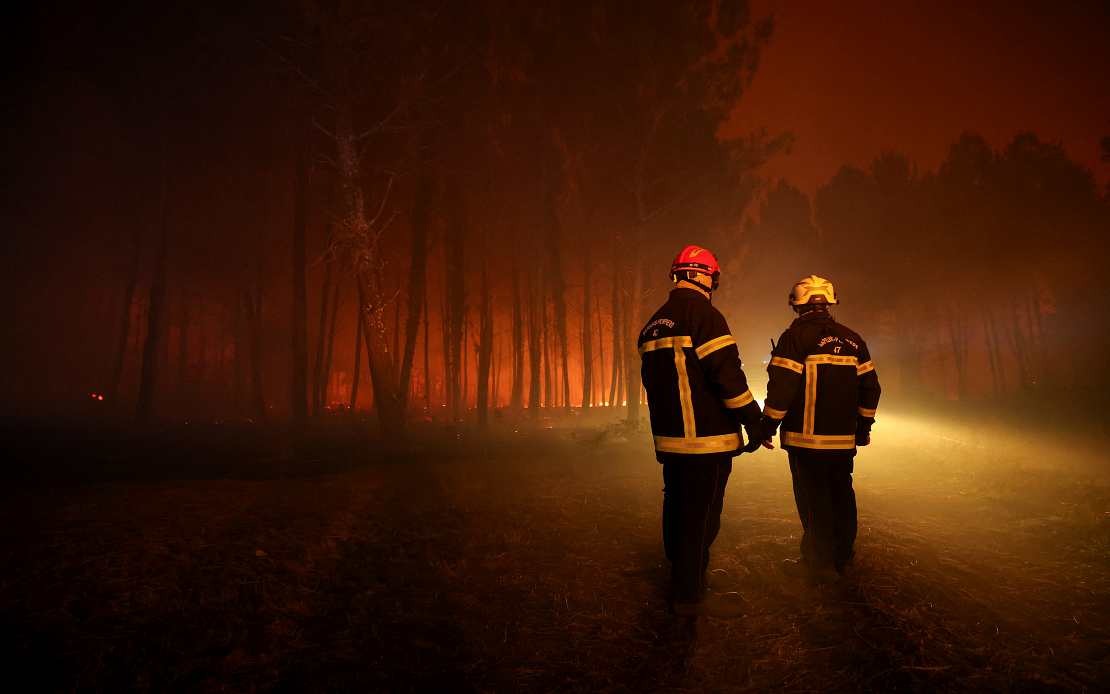
A 15-year-old boy in France has been charged in connection with a fire near Bordeaux that claimed the lives of two firefighters in July, marking a significant development in an investigation that has drawn attention to how quickly domestic incidents can escalate into tragedies with fatal consequences. The teenager appeared before a judge on Thursday and was subsequently placed in a closed educational centre pending further proceedings, according to French broadcaster BFMTV, as authorities work through the legal implications of his involvement in the incident.
The investigation into the Merignac fire began after emergency responders discovered that two firefighters had perished on July 21 while attempting to control a building blaze that had spread rapidly in the residential area. The circumstances of their deaths revealed a troubling pattern: the firefighters' emergency vehicle became trapped by the advancing flames, leaving them unable to escape the dangerous conditions. This tragic outcome prompted the Bordeaux prosecutor's office to launch a thorough examination of how the fire originated and the chain of events that led to the fatal outcome.
According to reporting from French daily Sud Ouest, investigators determined that the fire was allegedly ignited by a discarded cigarette butt, with evidence pointing to the 15-year-old as the person responsible for the negligent act. The sequence of events emerged during questioning: the two brothers had stopped in the parking area and were smoking cigarettes when the older brother disposed of his properly in the lot. The teenager, however, allegedly threw his cigarette stub onto nearby grass, where it apparently smouldered before igniting dry vegetation and spreading to adjacent structures.
The initial investigation involved both brothers, with the 22-year-old older sibling placed in police custody alongside his younger brother after their involvement in the incident came to light. Both were detained for questioning as authorities attempted to establish the precise circumstances and any potential responsibility each might bear. However, as the investigation progressed and evidence mounted, the picture became clearer: the teenager accepted responsibility for his actions, acknowledging that he had started the fire, albeit apparently unintentionally.
Following the teenager's admission and cooperation with investigators, his older brother was released from custody on Wednesday, having been cleared of involvement in starting the blaze. This development underscores how critical the burden of proof and factual determination become in such investigations, particularly when lives have been lost and legal accountability must be carefully assessed. The 22-year-old's release signals that authorities found insufficient evidence to charge him with any offence related to the fire's origin.
The tragic loss of two firefighters has profound implications for France's emergency services and public discourse around fire safety and prevention. Firefighters in European countries face inherent risks in their profession, yet incidents where poor citizen behaviour directly contributes to preventable tragedies raise questions about awareness campaigns and public education. The fire that killed the two responders exemplifies how a single moment of carelessness—discarding a lit cigarette—can cascade into catastrophic consequences that extend far beyond the initial actor's intent or expectations.
For Malaysian and Southeast Asian observers, this case carries relevance beyond its French context. The region experiences regular incidents where improperly discarded cigarettes ignite fires in residential, commercial, and agricultural settings. Malaysia's Fire and Rescue Department has repeatedly warned about the dangers of careless smoking habits, particularly during the dry season when vegetation becomes especially susceptible to ignition. Neighbouring countries face similar challenges in combating fire-related incidents that often stem from preventable human error rather than unavoidable accident.
The legal framework through which French authorities are handling this case—charging a minor with consequences appropriate to a closed educational centre rather than standard criminal detention—reflects different approaches to juvenile justice compared to some regional practices. Understanding how different jurisdictions balance accountability, rehabilitation, and proportionality for young offenders offers perspective on juvenile crime management systems. The focus on the teenager's age and the placement in an educational facility suggests emphasis on reformation alongside legal consequences.
The Bordeaux prosecutor's office continues examining all aspects of the incident to ensure a complete understanding of how the emergency response unfolded and whether any operational or systemic factors contributed to the firefighters' deaths. Such investigations often extend beyond identifying the fire's origin to assess whether response protocols, equipment, or resource allocation issues affected the outcome. These broader examinations frequently inform improvements to emergency services procedures and safety protocols.
This incident serves as a sobering reminder that responsibility for public safety extends beyond professional responders to every citizen. The tragic deaths of these two firefighters underscore how individual choices, particularly seemingly trivial actions like cigarette disposal, carry potential for devastating consequences. Community education initiatives throughout Malaysia and the wider region would benefit from emphasising such cautionary examples, particularly among younger populations who may underestimate fire risks. The case also highlights the importance of maintained vigilance during high-risk periods and the need for consistent messaging about fire prevention and responsible behaviour in public spaces.

