A harrowing rescue operation unfolded off the coast of Thailand's Koh Samui island last weekend when a French family was pulled to safety after languishing in the sea for more than 16 hours. The father, aged 50, together with his two young sons, aged just five and seven years old, endured an overnight ordeal before rescue teams located them on Friday morning. Though the experience left them physically drained and shaken, all three were eventually discharged from hospital after receiving medical checks, marking a fortunate conclusion to what could have been a tragedy.
The incident began when the father rented a jet ski from a local operator on Thursday afternoon at approximately 5pm, intending to enjoy recreational water activities around the island. What should have been a routine outing turned dangerous just 15 minutes into their venture, when the watercraft capsized unexpectedly while the family was onboard. The exact cause of the accident has become the subject of investigation, with authorities seeking to understand why the jet ski overturned so quickly. According to local government official Amorn Chomchoey, the family's condition upon discovery reflected the severity of their ordeal; they were visibly exhausted and had ingested significant quantities of seawater during their extended time in the ocean.
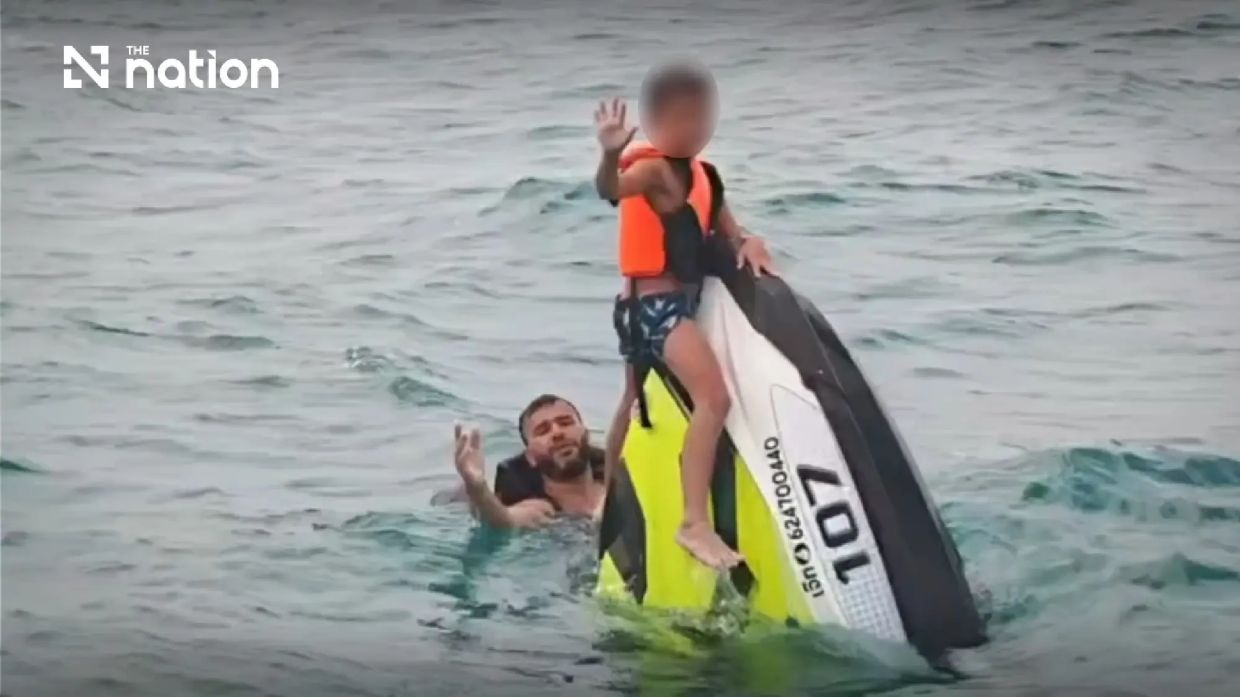
Rescue efforts were triggered when the jet ski operator noticed that the family had not returned at the previously agreed time. Concerned about their welfare, the operator promptly contacted local rescue teams and provincial authorities, setting in motion a search operation that would ultimately locate the family some 17 hours after they first departed. The rescue parties conducted an extensive sweep of the waters surrounding Koh Samui, eventually discovering the three at approximately 10am on Friday. Footage captured during the rescue showed the jet ski lying almost completely submerged, with only its triangular front section protruding above the waterline—a stark reminder of how desperate their situation had become.
What made the rescue footage particularly poignant was the sight of the younger of the two boys positioned atop the overturned jet ski whilst his father remained in the water nearby, both fortunately equipped with life jackets that proved instrumental in keeping them afloat throughout the ordeal. The presence of proper safety equipment likely proved decisive in their survival, preventing them from slipping beneath the surface during the long night and morning they spent awaiting rescue. Rescue personnel can be heard in the footage offering reassurance to the distressed family, with rescuers vocally instructing them to remain calm and affirming their survival prospects. The operation was conducted with appropriate urgency, with one rescuer helping the boy transfer to a rescue vessel while simultaneously providing the family with drinking water to counter dehydration.
The circumstances surrounding the accident have raised questions about adherence to safety protocols and rental procedures. According to a statement made by the jet ski operator's staff to local media, there were indications that the family may have ventured beyond the designated area specified in their rental agreement. This detail suggests that the family's route took them to locations potentially outside the standard safe zone established for recreational jet ski use. Meanwhile, the father claimed to local officials that he possessed considerable experience operating jet skis, though this expertise apparently did not prevent the incident. The investigation into the capsizing will need to examine multiple factors, including whether the family strayed into waters with hazardous conditions or whether mechanical or operational factors played a role.
Despite the trauma of their extended ordeal, the family chose to remain in Thailand and resume their holiday, demonstrating resilience in the face of an experience that might have prompted many visitors to abandon their vacation plans. This decision speaks to both the family's determination to salvage their trip and the quality of care they received following their rescue. Koh Samui remains one of Thailand's premier destinations for family holidays, attracting millions of international visitors annually who are drawn to its relatively sheltered waters and comprehensive resort infrastructure. The island's reputation as a family-friendly destination rests partly on its reputation for calm seas compared to other parts of Thailand's coastline, though as this incident demonstrates, accidents can occur even in established tourist areas when safety procedures are not meticulously followed.
The rescue underscores the critical importance of several safety measures for water sports enthusiasts visiting Thailand. Life jackets, as evidenced in this case, provide essential buoyancy that can mean the difference between survival and tragedy when accidents occur far from shore. The rapid response of local authorities following the operator's alert also illustrates how effective communication between tourism operators and rescue services can reduce response times and improve outcomes. For Malaysian visitors contemplating jet ski rentals or other water-based activities in Thai resort destinations, this incident provides a sobering reminder to strictly observe rental boundaries, ensure all passengers wear appropriate safety equipment, and verify both personal competence and equipment conditions before embarking on such activities. The family's experience, while ultimately ending in recovery, serves as a powerful cautionary tale about the unpredictability of maritime accidents and the paramount importance of preparedness.

