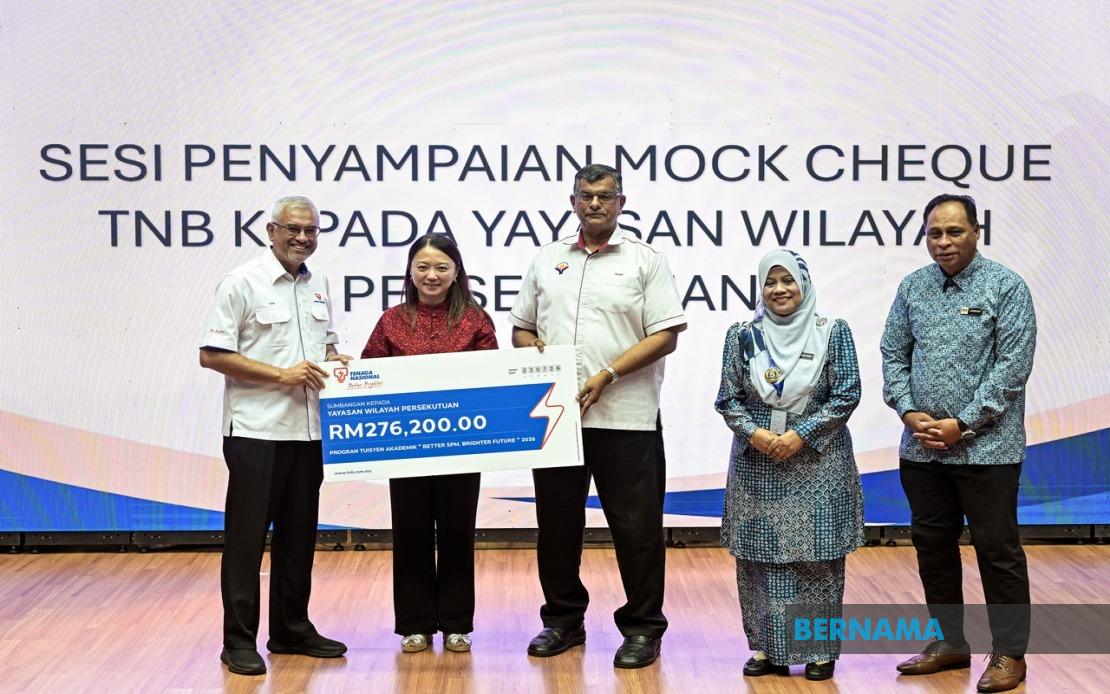
The Better SPM Brighter Future Programme has been rolled out to provide complimentary academic support to 1,600 Sijil Pelajaran Malaysia (SPM) candidates attending 40 secondary schools throughout Kuala Lumpur. The initiative, which seeks to bolster exam readiness without imposing financial strain on household budgets, was formally launched at Sekolah Seni Malaysia Kuala Lumpur on July 23. The scheme reflects growing recognition of the barriers that tutorial costs can present to equitable educational access, particularly for families with limited discretionary income.
The programme has been championed by Hannah Yeoh, Minister in the Prime Minister's Department (Federal Territories) and chairman of Yayasan Wilayah Persekutuan (YWP). Yeoh underscored that the free tuition initiative removes a significant obstacle parents frequently encounter when seeking to enhance their children's academic preparation. Rather than forcing families to choose between affording supplementary classes and managing other household expenses, the programme delivers professional instruction at no cost to recipients, thereby democratising access to educational resources that have historically been available primarily to those with higher purchasing power.
Tenaga Nasional Berhad (TNB) has underwritten the initiative with a financial commitment of RM276,200 directed towards Yayasan Wilayah Persekutuan. This corporate contribution demonstrates the growing role of the private sector in supporting public education objectives. The partnership combines TNB's resources with operational coordination by both YWP and the Kuala Lumpur Federal Territories Education Department, creating a collaborative framework that pools expertise and infrastructure across multiple institutions to maximise programme effectiveness and reach.
The curriculum focuses on four foundational subjects that form the backbone of the SPM examination: Bahasa Melayu, English, History, and Mathematics. This subject selection reflects the assessment regime's emphasis on linguistic competency, numeracy, and historical knowledge—competencies viewed as essential for tertiary education access and employment readiness. By concentrating resources on these domains, the programme targets areas where students frequently require additional scaffolding and practice to achieve proficiency standards.
For Malaysian families, particularly those in urban centres like Kuala Lumpur, the elimination of tutorial fees represents tangible economic relief during the period leading to national examinations. Secondary education constitutes a critical juncture in student trajectories, and SPM performance directly influences university admission prospects and vocational pathway options. The availability of free structured instruction acknowledges that parental income disparities should not determine academic outcomes, a principle increasingly central to educational equity discussions across Southeast Asia.
Yeoh also addressed a separate matter relating to public responsibility and environmental stewardship. She clarified that her prior observations regarding litter accumulation at Dataran Merdeka following a World Cup final broadcast were intended as an educational intervention rather than attribution of blame. This distinction matters, as public figures' remarks regarding civic governance frequently invite misinterpretation regarding their underlying intent or their implications for specific institutions or officials.
Her framing emphasised shifting responsibility culture—moving away from perspectives wherein cleanliness maintenance is constructed as the exclusive domain of designated workers or foreign labour. Instead, Yeoh articulated a vision of collective civic consciousness wherein all residents, irrespective of status, internalise responsibility for shared public spaces. This philosophy extends to intergenerational transmission of values, acknowledging that children's attitudes towards public spaces and environmental stewardship develop substantially through observing adult behaviour patterns and institutional modelling.
Kuala Lumpur City Hall has committed to maintaining Dataran Merdeka's accessibility to the public whilst reinforcing expectations regarding responsible usage. The designation of this space as a recreational precinct carries implicit social contracts—namely that citizens will utilise public amenities in ways that preserve their condition and ensure continued availability for broader community benefit. Balancing public access with maintenance requirements presents genuine logistical and financial challenges for municipal administrations across Malaysia and the region.
The Better SPM Brighter Future Programme emerges within a broader policy context emphasising human capital development and educational accessibility. As Malaysia seeks to maintain competitiveness within evolving regional economies, examination performance at secondary level carries implications extending beyond individual student outcomes. National performance profiles on standardised assessments influence institutional reputation, influence tertiary institution intake quality, and reflect the effectiveness of public education investments. Initiatives that systematically enhance preparation across diverse socioeconomic groups contribute to more equitable outcome distributions and potentially expand the talent pool available for advanced technical and professional fields.
For stakeholders monitoring education policy development across Southeast Asia, the programme illustrates mechanisms through which state institutions and corporate entities can coordinate resource deployment toward accessible public goods. The TNB contribution does not displace government responsibility but rather supplements and extends state capacity. This mixed-funding approach has become increasingly prevalent as governments across the region confront expanding education demand amid fiscal constraints, creating space for corporate social responsibility contributions that align with broader development objectives.

