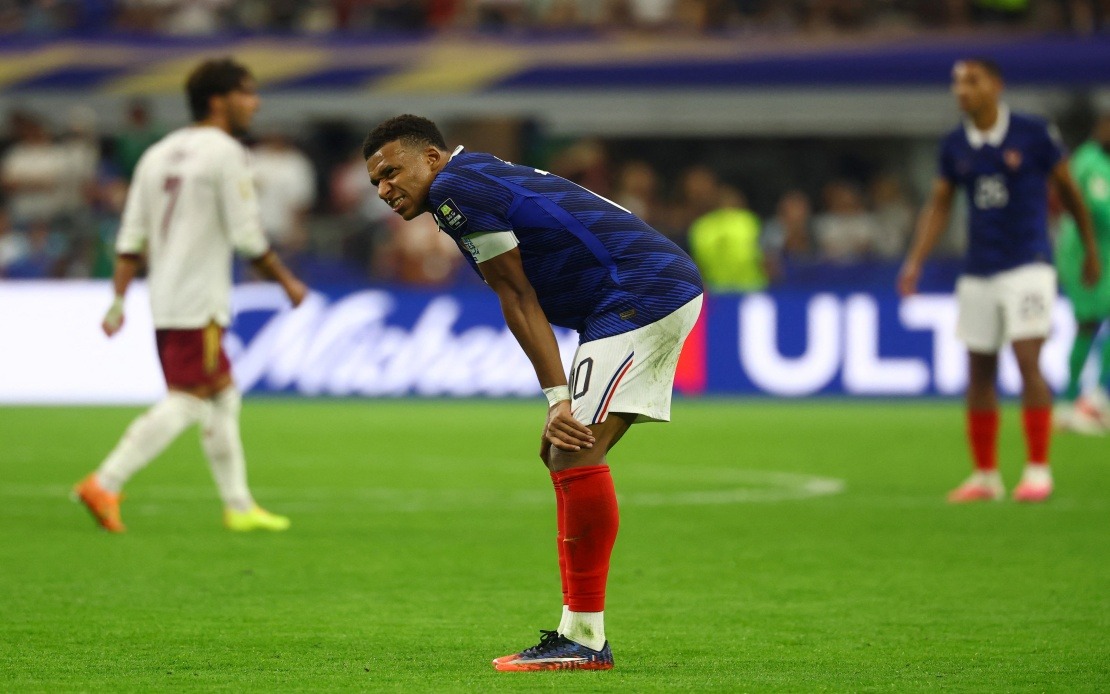
Police in France detained over 160 people across multiple cities on Wednesday following a night of unrest that erupted after Spain's 2-0 elimination of France from the FIFA World Cup semifinal. The scale of the arrests underscores the intensity of public reaction to the defeat, with law enforcement deployed across major urban centres to manage crowds and prevent further disorder. The incidents reveal the volatile intersection of sporting passion and urban tensions in contemporary France, where major sporting events can quickly escalate into confrontations with authorities.
In the Paris region alone, police arrested 141 individuals in connection with the disturbances that took place after Tuesday evening's match. According to the Paris Police Prefecture, the vast majority of detentions were linked to the discharge of firework mortars directed at police officers and emergency service personnel. This pattern of behaviour—targeting uniformed responders—reflects a troubling escalation beyond spontaneous expressions of disappointment into deliberate confrontations with state authority. The weaponisation of fireworks represents a calculated attempt to test police responses and provoke confrontation rather than mere celebratory exuberance.
Despite the numerous arrests and the apparent intensity of the clashes, authorities reported that no serious injuries resulted from the evening's events. This suggests that while the disturbances were widespread and disruptive, they remained largely contained and did not spiral into the kind of large-scale violence that has occasionally accompanied major sporting defeats in European cities. The relative restraint from both protesters and police likely prevented the situation from deteriorating further, though the sheer number of arrests indicates a coordinated law enforcement response to suppress the disorder.
Lyon witnessed its own outbreak of trouble centred on Place Bellecour, traditionally a gathering point for large crowds during significant sporting events. Several hundred people assembled in the square to watch the semifinal match unfold on screens and in person. When Spain's winning goal became certain, the mood shifted dramatically. Small groups began to fragment from the larger crowd, with some individuals throwing projectiles including fireworks toward police officers stationed to maintain order. This transition from peaceful assembly to confrontation followed a familiar pattern observed in many cities following disappointing sports results.
French riot police mobilised swiftly to suppress the emerging disorder in Lyon, deploying control tactics to disperse the problematic groups and prevent the disturbances from spreading throughout the city centre. Their intervention resulted in approximately twenty arrests in the Lyon metropolitan area. Notably, the detainees apprehended in connection with the disturbances were predominantly young people, with birthdates spanning between 2002 and 2011. This demographic skew suggests that youthful exuberance and a desire to challenge authority—rather than deep-seated political grievance—may have animated much of the unrest, though age alone does not fully explain the targeting of emergency personnel with fireworks.
Local authorities in Lyon reported that the disturbances resulted in neither significant injuries nor substantial property damage. This measured assessment contrasts sharply with some post-sporting-event incidents in other European cities, where public property has been substantially vandalised and individual injuries more severe. The relatively contained nature of the Lyon incidents suggests that police containment strategies and the relatively smaller scale of the disturbances prevented escalation into more destructive channels.
The incidents across both cities reflect broader patterns observable throughout Europe when major sporting defeats occur, particularly when national teams fall short of championship aspirations. France's elimination from the World Cup represented a significant disappointment given the nation's recent history of success and the high expectations that accompany competition in football, the dominant sport throughout the continent. The gap between expectation and outcome created fertile conditions for frustration to boil over into public disorder.
From a regional perspective, the events in France carry implications for Southeast Asian nations preparing to host or manage major sporting events. Malaysia and its neighbours increasingly host international sporting competitions and must contemplate how to manage public gatherings and potential disorder without overreacting in ways that undermine public confidence in security arrangements. The French response—substantial but measured arrests without apparent heavy-handedness—provides one model for balancing order maintenance with proportionate enforcement.
The targeting of police and emergency services with fireworks also raises questions about how modern protest and public disorder increasingly blur traditional boundaries. What began as spontaneous crowd reactions to sporting disappointment transformed into deliberate attacks on uniformed personnel, suggesting that organisational capacity and intent existed among at least some participants. This transition warrants closer examination by security experts and policymakers across Europe and beyond who must anticipate and prepare for such escalations.

