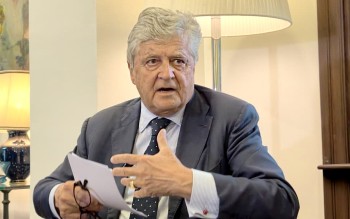
France has extended an offer to collaborate with Malaysia on developing civil nuclear energy capabilities, contingent on whether Malaysia's government decides to include atomic power in its long-term energy transition strategy. French Minister Delegate for Foreign Trade and Economic Attractiveness Nicolas Forissier made the overture during a press conference in Kuala Lumpur, emphasising that any such partnership would require sustained commitment spanning five to eight decades. The proposal reflects France's strategic interest in deepening economic ties with Malaysia while positioning itself as a reliable partner for decarbonisation efforts across Southeast Asia.
Forissier acknowledged that Malaysia remains in the exploratory phase, with policymakers still evaluating nuclear energy's viability through domestic consultations and public debate. Rather than pressuring Malaysia toward a particular course, the French official stressed that his government respects the country's sovereign decision-making process and stands ready to assist if and when Malaysian authorities determine that nuclear power aligns with national energy goals. This cautious approach demonstrates France's awareness of the political sensitivities surrounding nuclear technology in the region, where public opinion has historically been mixed on atomic energy development.
The French government's confidence in its nuclear credentials stems from decades of successful operation. France derives approximately 60 per cent of its electricity from nuclear facilities, with the remainder sourced from renewable technologies including solar and wind installations. This diversified low-carbon energy profile positions France as a credible model for countries seeking to reduce greenhouse gas emissions while maintaining reliable baseload power generation. The nation's experience in managing nuclear infrastructure, regulatory frameworks, and public communication around atomic energy provides valuable lessons for potential partners undertaking similar transitions.
Forissier articulated France's strategic rationale for nuclear partnership, characterising atomic power as among the most effective mechanisms for decarbonising electricity production. As nations grapple with climate commitments and growing electricity demand, nuclear energy offers a proven pathway to large-scale low-emission power generation without the intermittency challenges associated with some renewable sources. For Malaysia, wrestling with rising energy consumption amid industrial development and urbanisation, this technical option represents one potential component of a comprehensive energy security strategy.
The visit itself underscores the expanding bilateral relationship between the two nations. Forissier arrived in Malaysia accompanied by representatives from more than twenty French companies, signalling substantial commercial interest in expanding economic engagement beyond the nuclear sector. This delegation composition reflects how France views Malaysia not merely as a potential customer for nuclear technology, but as a broader market for French industrial capabilities and expertise spanning multiple sectors.
The timing of Forissier's mission arrives amid a notable uptick in high-level political exchanges between Paris and Kuala Lumpur. Malaysian Prime Minister Datuk Seri Anwar Ibrahim visited France on July 3 and 4, 2025, providing an opportunity for discussion of bilateral priorities and strategic cooperation. Earlier in March 2025, Malaysia's Defence Minister visited the French aircraft carrier, a symbolic gesture reinforcing defence and security cooperation between the nations. These interactions have created diplomatic momentum that Forissier's trade mission capitalises upon, widening engagement from traditional security domains into economic and energy partnerships.
For Malaysia, the nuclear question sits within a broader energy transition landscape shaped by regional dynamics and global climate imperatives. The country currently relies substantially on natural gas and coal for electricity generation, leaving considerable room for decarbonisation initiatives. However, introducing nuclear power would require substantial infrastructure investment, regulatory development, public education campaigns, and technical workforce expansion. France's offer to share experience and provide technical guidance could smooth some of these implementation challenges, though Malaysia would ultimately need to mobilise domestic consensus around the technology.
The Southeast Asian context adds further significance to this bilateral dialogue. As the region collectively pursues climate goals and energy independence, individual nations face distinct energy portfolios and development priorities. Malaysia's geographic position, industrial base, and demographic profile distinguish its energy needs from those of neighbouring countries. France's willingness to tailor partnerships to specific national circumstances, rather than imposing standardised solutions, reflects pragmatic diplomacy aligned with Malaysia's particular circumstances and preferences.
Looking forward, the nuclear partnership offer exemplifies how established industrial democracies are repositioning themselves as partners in developing economies' energy transitions. France, competing globally for influence and economic opportunity, has identified the clean energy sector as a growth arena. Malaysia, managing the complex balance between economic development and environmental responsibility, finds itself courted by multiple international actors offering differing technological pathways. The French overture presents one option within a broader menu of energy solutions that Malaysian policymakers continue evaluating.
The decision Malaysia ultimately reaches regarding civil nuclear energy will carry implications extending beyond bilateral relations with France. It will reflect the country's confidence in managing complex industrial technologies, its appetite for long-term infrastructure commitments, and the success of national dialogue in building consensus around energy choices. Whether Malaysia embraces nuclear power or pursues alternative decarbonisation pathways, the enhanced engagement with France signals how energy transition has become central to contemporary diplomacy, drawing technical partnerships, commercial opportunity, and strategic consideration into unified frameworks that reshape international relations.

