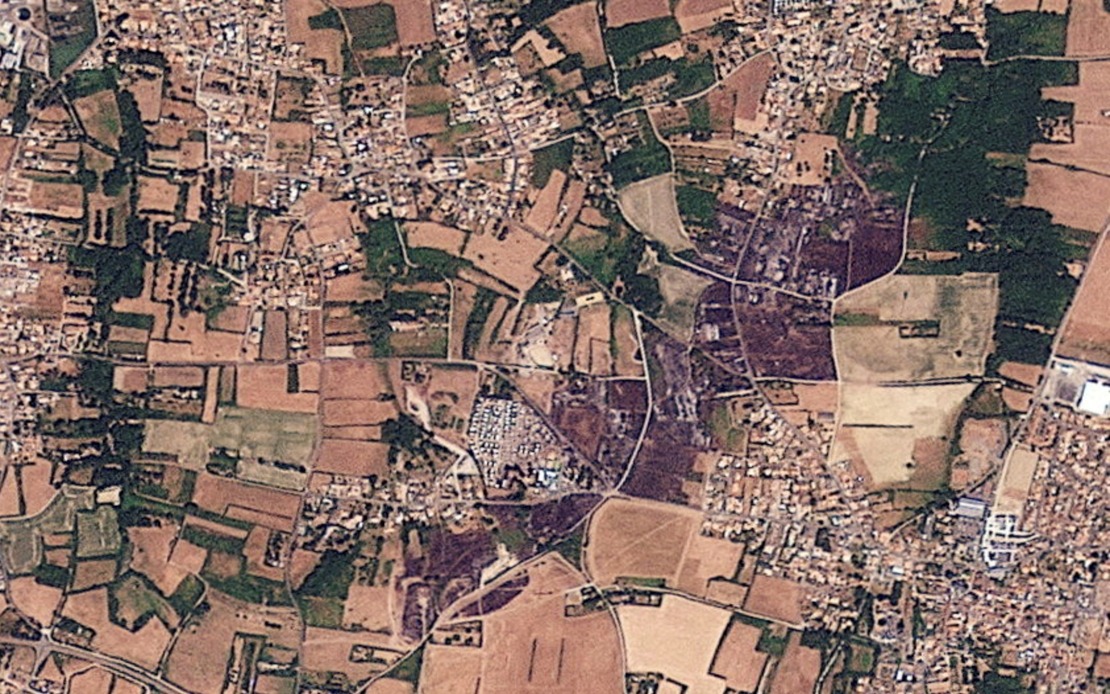
France faces an intensifying wildfire crisis as multiple blazes continue ravaging forests and grasslands across the nation, with the situation in the iconic Fontainebleau forest serving as a stark illustration of the scale and severity of the threat. Two fires burning simultaneously in the forest have consumed 1,920 hectares of vegetation, with the first outbreak on Sunday destroying approximately 1,500 hectares and a second blaze claiming between 300 and 400 hectares. The sustained nature of these fires, which continued spreading through the night, necessitated the deployment of roughly 600 firefighters to the affected region as emergency response teams worked to contain the expanding infernos and prevent further losses.
The human element in these disasters cannot be overlooked, as French law enforcement has apprehended two individuals suspected of deliberately igniting the initial Fontainebleau fire. This development underscores a troubling pattern across France, where authorities have documented 59 arrests since the commencement of the fire season on suspicion of intentionally setting wildfires. The deliberate nature of many blazes has prompted sharp reactions from government officials, who recognise that human-caused fires represent a distinct and controllable threat within the broader wildfire problem.
French Transport Minister Philippe Tabarot has articulated a hardline stance on those responsible for arson-related fires, advocating for stringent legal consequences that distinguish between criminal intent and psychological compulsion. His calls for "very harsh sentences" reflect frustration with individuals who knowingly endanger lives and destroy valuable ecosystems for purposes ranging from malice to thrill-seeking. Tabarot's nuanced position acknowledges that some fire-starters suffer from pyromania, a psychological disorder requiring medical intervention rather than solely punitive measures, yet offenders with clear criminal motivation should face "very severe penalties" under the law.
Beyond the Fontainebleau emergency, the French wildfire season has triggered crises in multiple regions, demonstrating that the nation confronts a geographically dispersed challenge rather than isolated incidents. In the Pyrenees-Orientales region, the Trevillach wildfire that ignited earlier in July has caused lasting disruptions to critical transportation infrastructure. The blaze damaged essential railway assets along the Perpignan-Villefranche-Vernet-les-Bains corridor, prompting the National Railway Operator (SNCF) to suspend services between Ille-sur-Tet and Villefranche-Vernet-les-Bains at least until July 20.
The economic and logistical ramifications of these transportation disruptions extend beyond inconvenience to passengers. The suspension of rail services in the Pyrenees-Orientales significantly impacts regional commerce, tourism accessibility, and the movement of goods through a vital transportation corridor. When wildfires damage railway infrastructure, the recovery process requires time-consuming repairs and safety inspections, causing extended service interruptions that reverberate through local economies. For Southeast Asian observers, this scenario illustrates how climate-related disasters increasingly disrupt critical infrastructure in developed nations, raising questions about vulnerability levels across different transportation systems.
Wildfire activity has also engulfed other French regions, with simultaneous outbreaks reported in Brittany and Lozère as firefighting crews struggled to allocate resources across multiple fronts. In Côtes-d'Armor, a coastal department within Brittany, a heath fire near Cap Fréhel consumed approximately 38 hectares and forced the evacuation of over 100 residents on Monday. The decision to evacuate civilians reflects the unpredictable nature of wildfire behaviour and the genuine danger posed to nearby communities when fires spread across open terrain with limited natural firebreaks.
The Lozère department in south-central France reported 107 hectares of burned territory, further illustrating the nationwide scope of the wildfire emergency. The simultaneous emergence of multiple fire zones stretches firefighting resources thin, requiring difficult prioritisation decisions about resource allocation and potentially leaving some areas with reduced protective capacity. This fragmentation of effort across geographically separated incidents represents a fundamental challenge that fire management agencies throughout Europe increasingly confront during extended fire seasons.
For Malaysian and Southeast Asian contexts, the French wildfire situation offers instructive parallels regarding climate vulnerability and disaster response capacity. While France possesses sophisticated firefighting infrastructure and trained personnel, the sheer number and intensity of simultaneous fires still overwhelm response capabilities. Similarly, Southeast Asian nations with less developed emergency infrastructure face exponentially greater challenges when dealing with transboundary haze and forest fires, as evidenced by recurring crisis situations in Indonesia and Malaysia during dry seasons. The arrest of suspected arsonists in France also highlights a human dimension that resonates across tropical regions, where intentional fire-setting during agricultural seasons sometimes ignites uncontrollable conflagrations.
The distinction that Transport Minister Tabarot drew between criminal arsonists and individuals suffering from pyromania reflects evolving perspectives on accountability within wildfire contexts. Rather than applying identical punishments universally, jurisdictions increasingly recognise that root causes vary and responses should reflect underlying motivations. Criminals motivated by malice warrant deterrent sentences, whereas individuals with genuine psychological disorders require therapeutic intervention alongside appropriate legal consequences. This graduated approach, while administratively complex, potentially addresses underlying causes more effectively than purely punitive frameworks.
The cumulative impact of these fires across multiple French regions during mid-July demonstrates that the European wildfire season remains volatile and dangerous well into summer months. Climate scientists have documented that rising temperatures and altered precipitation patterns extend traditional fire seasons and intensify fire behaviour, creating conditions where blazes spread more rapidly and prove harder to contain. The Fontainebleau fires, transportation infrastructure damage in Pyrenees-Orientales, evacuations in Brittany, and burning in Lozère collectively illustrate how environmental pressures now routinely generate cascading crises across multiple regions simultaneously.
As France confronts this complex emergency combining natural environmental conditions with human-caused ignitions, the situation underscores broader questions about wildfire prevention, resource allocation, and legal frameworks governing arson. The identification of suspected arsonists provides opportunities for prosecution and potential deterrence, yet criminal enforcement alone cannot address the underlying environmental conditions enabling fires to spread with such destructive force. Comprehensive solutions require investment in forest management, early detection systems, and community awareness alongside strict penalties for deliberate fire-setting.

