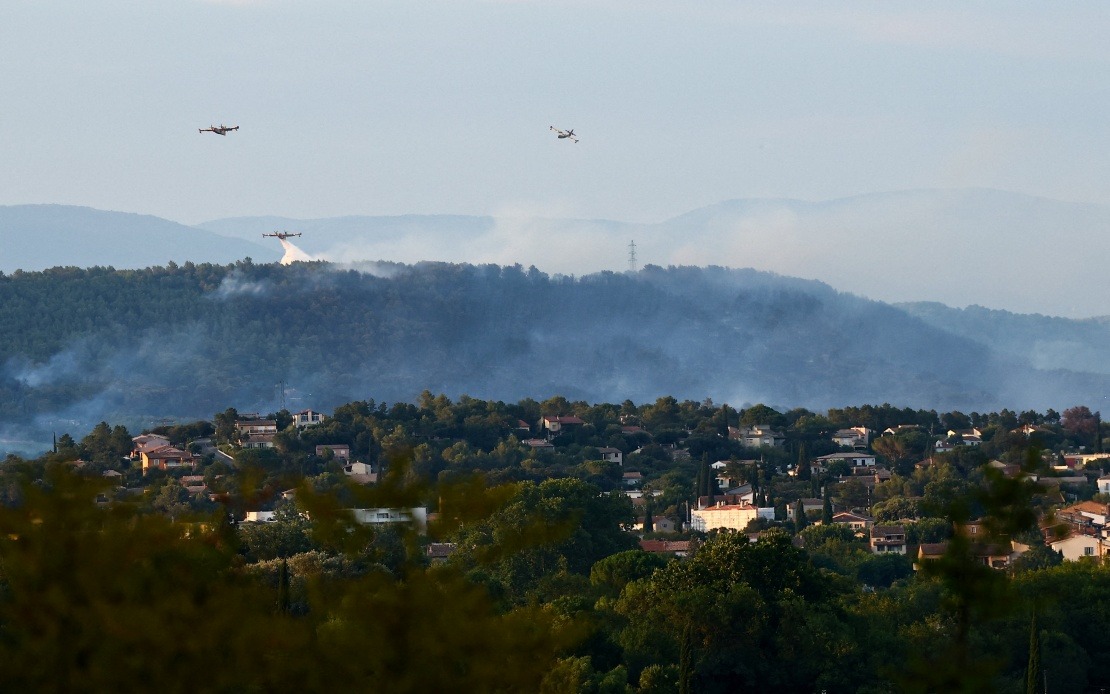
France confronts an escalating wildfire emergency that has already claimed nearly 40,000 hectares of forest and vegetation in 2026, according to Interior Minister Laurent Nunez, marking a catastrophic year for fire incidents across the country. The scale of destruction substantially exceeds the previous year's toll, with fresh outbreaks igniting almost daily as meteorological conditions deteriorate. This mounting crisis represents one of Europe's most severe environmental challenges and carries profound implications for the continent's climate resilience and emergency management capacity.
The unprecedented scope of France's wildfire season reflects the intensifying impact of climate-driven extreme weather patterns affecting Europe. President Emmanuel Macron characterised the current situation as the most severe wildfire season France has encountered since the conclusion of the Second World War, underscoring how contemporary climate disruption is reshaping hazard landscapes in developed nations. The comparison to the post-1945 period emphasises the historical magnitude of the present crisis and signals a potential shift toward more frequent and intense fire seasons across the region.
Extreme heat constitutes the primary driver behind the relentless spread of wildfires throughout France. Temperatures have soared to approximately 40 degrees Celsius across much of the country, with certain regions experiencing even more intense heat. Such elevated temperatures create ideal conditions for rapid fire propagation, reduced moisture content in vegetation, and accelerated fuel drying, effectively converting forests and grasslands into tinderboxes. The meteorological service's warnings in 72 of the nation's 96 departments—the highest number ever recorded—demonstrate the geographically pervasive nature of the heat emergency and the corresponding wildfire threat.
The frequency of new fire outbreaks underscores the systemic nature of the challenge confronting French authorities. Rather than isolated incidents manageable through conventional suppression tactics, the country faces a diffuse crisis requiring coordinated responses across multiple regions simultaneously. This sustained ignition pattern suggests that prevention and early detection mechanisms, however sophisticated, struggle to contain conflagrations when atmospheric conditions remain consistently favourable to combustion and fire spread. The daily emergence of fresh fires indicates that existing firefighting and emergency response infrastructure operates at or near maximum capacity.
For Malaysian and Southeast Asian observers, the French wildfire crisis offers important perspective on climate vulnerability affecting even developed nations with substantial resources. While Southeast Asia confronts distinct environmental challenges—including transboundary haze from agricultural burning and deforestation—the French experience demonstrates how climate change fundamentally alters hazard profiles globally. Extreme heat waves capable of triggering catastrophic wildfires represent an emerging risk category that regional policymakers must integrate into long-term planning frameworks, particularly as global temperatures continue rising.
The economic and social ramifications of such extensive fire damage extend far beyond immediate forest loss. Burned landscapes require decades to regenerate, affecting timber production, biodiversity, carbon sequestration capacity, and recreational resources. Rural communities neighbouring affected areas face displacement risks, agricultural disruption, and economic dislocation. The psychological impact of living under persistent wildfire threats—manifested through evacuation orders, air quality degradation, and constant vigilance—imposes measurable stress on civilian populations. Infrastructure destruction, including roads, utilities, and private property, generates substantial reconstruction costs that strain governmental budgets.
Europe's experience with amplified wildfire intensity mirrors scientific predictions regarding climate change trajectories. Climate models have consistently forecast that Mediterranean and temperate regions would experience progressively more severe fire seasons as global temperatures increase and precipitation patterns shift. France's current crisis appears consistent with these projections, suggesting that similar escalations may emerge across the continent in coming decades. For nations in Southeast Asia, this serves as a cautionary indicator of how climate change translates into tangible hazards affecting daily life, economic stability, and environmental integrity.
Cross-border and regional cooperation mechanisms become increasingly critical as wildfire seasons intensify and transcend traditional jurisdictional boundaries. France's current emergency management approach, presumably coordinated through national authorities, demonstrates both the capabilities and limitations of individual nation responses to climate-driven disasters. Southeast Asian nations frequently collaborate on transboundary haze management through organizations like ASEAN, yet wildfire coordination mechanisms remain inconsistently developed. The French precedent suggests that anticipatory regional frameworks—enabling resource-sharing, early warning systems, and coordinated suppression strategies—warrant greater institutional investment.
The relationship between heat waves and wildfire proliferation carries particular significance for Southeast Asian countries experiencing intensifying temperature patterns. While tropical regions possess different fire ecology compared to temperate France, the principle remains constant: elevated temperatures accelerate vegetation drying and fire propagation. Malaysia's own experience with forest fires during El Niño-driven drought periods provides a domestic reference point for understanding how climate variability translates into environmental crisis. Strengthening preparedness mechanisms now, before regional heat extremes approach European levels, represents prudent risk management.
Governmental responses to the French wildfire emergency likely encompass resource mobilisation, inter-agency coordination, and public communication strategies. The Interior Ministry's public disclosure of casualty figures suggests transparency regarding the crisis scope, though complete assessment of damage—including indirect economic losses and ecosystem degradation—remains ongoing. For Malaysian governance contexts, the French response architecture offers both instructive examples and cautionary lessons regarding emergency management under conditions of sustained environmental stress. Building institutional capacity to manage novel hazards requires sustained investment in personnel, equipment, and coordination infrastructure.

