The quarter-final meeting between France and Morocco carries weight that extends far beyond football, rooted in a century of political, cultural and sporting entanglement that continues to define both nations. As the 2022 World Cup champions face the tournament's most compelling African representatives, their clash represents more than a competition for advancement—it embodies the complex legacies of post-colonial relationships and the ways migration has reshaped modern sport. The Boston venue, removed from the security apparatus that would surround this fixture on European soil, creates space for a more personal encounter between supporters and nations whose histories remain inseparable despite their political separation.
Morocco's experience under French protectorate rule from 1912 until independence in 1956 established deep institutional connections that persist today. Beyond politics and diplomacy, these ties have woven themselves into education systems, business networks and the movement of people between both nations. Football has become one of the most visible expressions of this ongoing relationship, transforming what might have been a straightforward sporting rivalry into something more layered and intimate. The players taking the field on Thursday afternoon represent this reality in concrete ways, their career paths tracing the routes that connect Moroccan talent to European development systems.
Six members of Morocco's current squad were born on French soil, a demographic reality that speaks to broader patterns of family relocation and economic opportunity. Beyond these half-dozen players, several others spent formative years in Ligue 1 or progressed through French youth academies before ultimately choosing to represent Morocco internationally. The talent development pathway between the two nations has become well-established, with Moroccan football authorities deliberately cultivating relationships with their diaspora communities to strengthen the national team. This strategy converts what could be seen as brain drain into a source of competitive advantage, bringing technically refined players who understand both footballing cultures.
Ayyoub Bouaddi exemplifies this dual footballing identity with particular clarity. The teenager emerged from Lille's youth system and earned capped appearances for France at developmental levels before committing his future to Morocco. His journey—from birth in France through elite French coaching to eventual Moroccan representation—encapsulates the kind of career trajectory that has become increasingly common. Such players occupy a unique psychological and cultural space, comfortable in both environments and representing something of a bridge between the two footballing traditions. Their presence in the squad adds resonance to a fixture that, for many supporters and observers, transcends the usual parameters of international competition.
The personal connections among players themselves deepen this sense of interconnection. Kylian Mbappe and Achraf Hakimi developed a close friendship during their time together at Paris Saint-Germain, a bond forged in the high-pressure environment of European club football. These individual relationships remind us that despite international allegiances, the world's elite footballers often inhabit shared spaces and develop friendships across national boundaries. When such players face each other in official competition, the encounter carries an additional layer of complexity that purely nationalist narratives cannot adequately capture.
France approaches this quarter-final as the tournament's defending champions, a side shaped by the multicultural composition that has long characterised their squad. Their dominance in 2018 established them as one of football's elite forces, and their current campaign demonstrates that their attacking weaponry remains formidable. Yet the weight of expectation and the security apparatus surrounding their participation in the tournament create a distinctly different atmosphere from what will unfold in Boston. The temperature of the fixture has been elevated in French media and security planning, reflecting domestic sensitivities around the France-Morocco dynamic.
Morocco, by contrast, arrive as a side transformed by their unexpected semi-final appearance four years ago in Qatar. That achievement shattered preconceptions about African football's ceiling and established Morocco as a team capable of competing with established powers through organisation, discipline and intelligent tactical execution. Their performance against Canada—a comprehensive 3-0 victory—demonstrated that they have moved beyond the underdog narrative of 2022. The federation's investment in youth development and their systematic recruitment of diaspora talent has created a squad with genuine belief in their ability to challenge the continent's traditional giants.
Boston's Moroccan community, though smaller and less visible than the large populations in French cities, has established itself as a stable presence in the metropolitan area. Morocco-born residents and their descendants have built networks of families, students, professionals and entrepreneurs that form the social infrastructure for supporting the national team. These communities typically avoid the zero-sum viewing experience that can characterise such fixtures in more polarised settings. The shared experience of immigration and adaptation often creates spaces where competition remains spirited but ultimately collegial, grounded in mutual respect rather than adversarial national sentiment.
Mohammed Saadi, a 57-year-old taxi driver embedded in Boston's Moroccan community, offers insight into the tenor of support in this setting. His observation that French and Moroccan supporters often inhabit the same buildings and social circles suggests that the fixture will generate excitement without dividing communities cleanly along national lines. The approach to watching football in diaspora communities frequently differs from the nationalist intensity that can characterise viewing in home countries, where supporters' sense of national identity becomes more explicitly tied to sporting outcomes. In Boston, the match becomes what Saadi describes—a family affair rather than a conflict requiring resolution.
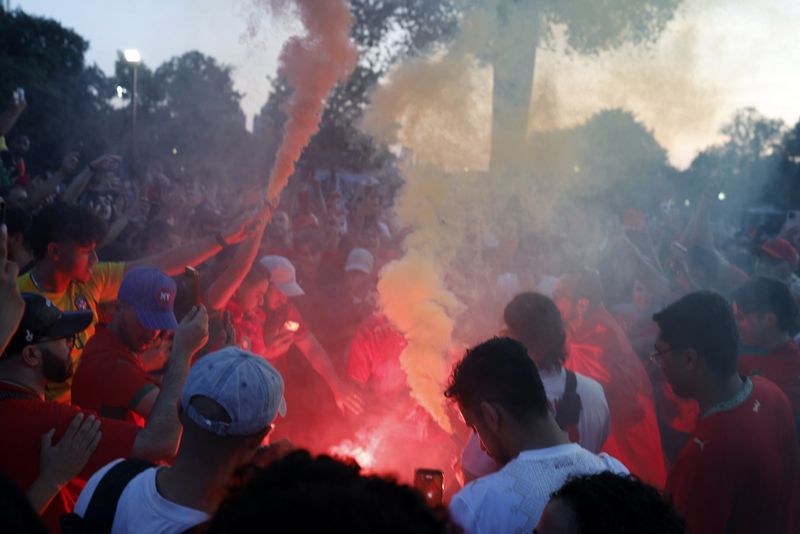
The gathering in Boston Common ahead of Thursday's match, where over one thousand supporters assembled singing Dima l-Maghrib and waving national flags in peaceful demonstration, illustrated the celebratory rather than confrontational mood. Youssef Bennani, a 36-year-old software engineer who travelled from Finland to attend Morocco's tournament matches, described the environment as conducive to genuine celebration. His observation that the crowd included both Moroccan and French supporters anticipating a major party underscores how the Boston venue facilitates a different kind of international football experience from what would occur in Europe's more polarised contexts.
Morocco's trajectory through this tournament has fundamentally altered the nature of the France fixture. They are no longer simply a plucky underdog capturing global sympathy but a comprehensively organised side with player development structures, tactical sophistication and genuine belief in their capacity to challenge football's traditional hierarchy. Their federation's deliberate strategy of connecting domestic development with talent cultivated in European systems has created a squad with technical excellence and tactical discipline. France must contend with an opponent that, unlike many African teams, brings both individual quality and collective coherence to the pitch.
France's own vulnerabilities have become apparent despite their attacking potency. Their path to the quarter-finals required overcoming Paraguay, a result that, while successful, did not fully test their defensive organisation against high-intensity opponents. Morocco's methodology—combining pace, discipline and progressive ambition—represents precisely the kind of challenge that could expose gaps in France's setup. The 2022 meeting between these teams, won 2-0 by France, carried emotional weight but also demonstrated something more important: mutual recognition between two sides operating at elevated levels. That previous encounter, though decisive in outcome, suggested that another meeting would be competitive rather than a coronation of established hierarchy. Thursday's quarter-final will test whether Morocco's continued development has transformed that competitive balance in their favour.

