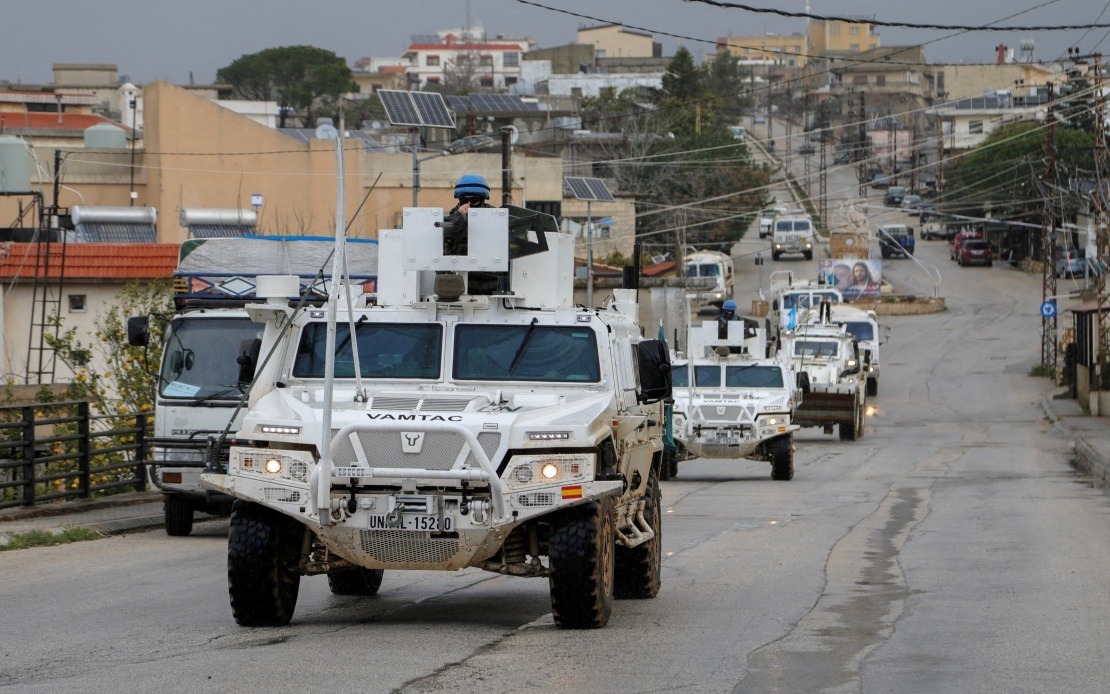
France and Italy have jointly committed to forming a multinational coalition aimed at supporting Lebanon once the United Nations Interim Force in Lebanon concludes its decades-long mandate at the end of December. French President Emmanuel Macron announced the initiative during a press conference with visiting Italian Prime Minister Giorgia Meloni in Antibes, signalling a major diplomatic effort to maintain international engagement in the strategically crucial Middle Eastern nation during a vulnerable transition period.
The coalition represents a proactive response to the impending security challenge facing Lebanon as it prepares for the formal conclusion of UNIFIL's operations under the terms of Security Council Resolution 2790. Rather than allowing a complete withdrawal of international presence, the French and Italian governments have determined that a coordinated multinational arrangement is essential to sustain Lebanon's institutional capacity and territorial integrity. This reflects a broader European concern about stability in the Eastern Mediterranean region and the potential consequences of power vacuums in conflict-affected areas.
Macron articulated the coalition's primary objectives with clarity: strengthening Lebanese sovereignty and enhancing the operational capability of the country's armed forces. These twin goals underscore the partnership's emphasis on building Lebanese institutional capacity rather than imposing external military control. By focusing on capability development and sovereign reinforcement, the initiative attempts to navigate the sensitive politics of foreign military presence in a nation deeply fractured by competing regional and international interests.
The timing of this announcement carries significant weight. Lebanon faces mounting economic challenges, ongoing political dysfunction, and persistent security threats emanating from non-state actors operating within its borders. The proposed coalition appears designed to create a stabilising framework that prevents the power vacuum created by UNIFIL's departure from being exploited by destabilising forces. European policymakers have grown increasingly conscious that premature withdrawal of international support could trigger a cascade of security problems with ripple effects throughout the Mediterranean and beyond.
Meloni's endorsement of the coalition plan adds Italy's substantial diplomatic and military resources to the initiative. The Italian Prime Minister characterised the maintenance of international presence as essential to avoiding what she termed an "extremely dangerous" security vacuum. Her language reflected the gravity with which European capitals view Lebanon's fragility and the potential for rapid deterioration should international attention wane following UNIFIL's departure. Italy's participation signals that this is not merely a French initiative but a broader European commitment.
Coordination with both the European Union and the United Nations sits at the heart of the proposal's architecture. Rather than establishing a unilateral intervention framework, France and Italy have positioned this coalition within existing multilateral structures. This approach seeks to lend legitimacy and burden-sharing capacity to what could otherwise appear as a narrowly European undertaking. The explicit mention of UN coordination suggests efforts to secure Security Council support and to operate within international legal frameworks governing military operations and security assistance.
The coalition's preventative objectives extend beyond Lebanon's borders. By stabilising Lebanese territory and strengthening state institutions, the initiative aims to prevent Lebanon from becoming a launching point for regional tensions that could draw in other Middle Eastern powers. This reflects a sophisticated understanding that Lebanon's instability has historically served as a proxy battleground for regional rivalries. European policymakers recognise that allowing such dynamics to intensify unchecked could generate conflict spirals affecting Mediterranean security and European strategic interests.
For Southeast Asian observers and policymakers, this Franco-Italian initiative offers instructive lessons regarding international crisis management and the responsibilities of established powers in preventing state collapse. The emphasis on building local institutional capacity rather than imposing external control resonates with regional preferences for sovereignty-respecting assistance models. The coalition concept also demonstrates how neighbouring or concerned nations might coordinate meaningful support without duplicating military deployments or creating overlapping mandates that generate friction.
The specific mechanics of how the multinational coalition will function remain to be detailed, but the announcement establishes a crucial political commitment from two major European powers to remain engaged in Lebanon's stabilisation during a critical juncture. The coalition's success will largely depend on securing adequate resources, achieving consensus among participating nations on strategic objectives, and maintaining sufficient flexibility to respond to rapidly evolving security conditions on the ground. The December deadline imposed by the UNIFIL mandate creates an urgent timeline for translating this diplomatic agreement into operational arrangements capable of delivering tangible security benefits.
The proposal ultimately reflects a recognition that international engagement in fragile states cannot simply terminate on a predetermined schedule without consequence. Rather, thoughtful transition planning and sustained commitment to institutional development offer pathways toward genuine stabilisation. As Lebanon enters this new phase, the Franco-Italian coalition represents a European bet that strategic patience and coordinated international support can help anchor a nation teetering on the edge of deeper crisis. The initiative's effectiveness will likely shape international approaches to similar transitions elsewhere in the coming years.

