The nomination period for Negeri Sembilan's 16th state election has revealed a notably fragmented political landscape in the Jempol constituency, with Jeram Padang emerging as the focal point of Malaysia's intensifying multi-party competition. Of the four seats within Jempol, only Jeram Padang will witness a four-cornered contest, underscoring the complexity of electoral dynamics in the state as multiple political groupings jostle for voter attention. This configuration reflects broader national trends showing how traditional two-party systems have given way to increasingly crowded electoral fields across Malaysian politics.
Returning officer Amino Agos Suyub confirmed the competitive field in Jeram Padang following the conclusion of nomination proceedings at the Jempol District and Land Office Hall this morning. The seat will pit Pakatan Harapan's G. Manivannan against sitting representative Datuk Mohd Zaidy Abdul Kadir of Barisan Nasional, while Parti Pribumi Bersatu Malaysia's R. Sri Sanjeevan and Dayana Dal of Parti Orang Asli Malaysia round out the quartet. The presence of Dayana Dal as the sole Orang Asli candidate in the Jempol lineup carries particular significance, representing Indigenous communities' direct participation in state-level elections and reflecting growing efforts by political parties to engage marginalised constituencies in Malaysia's democratic process.
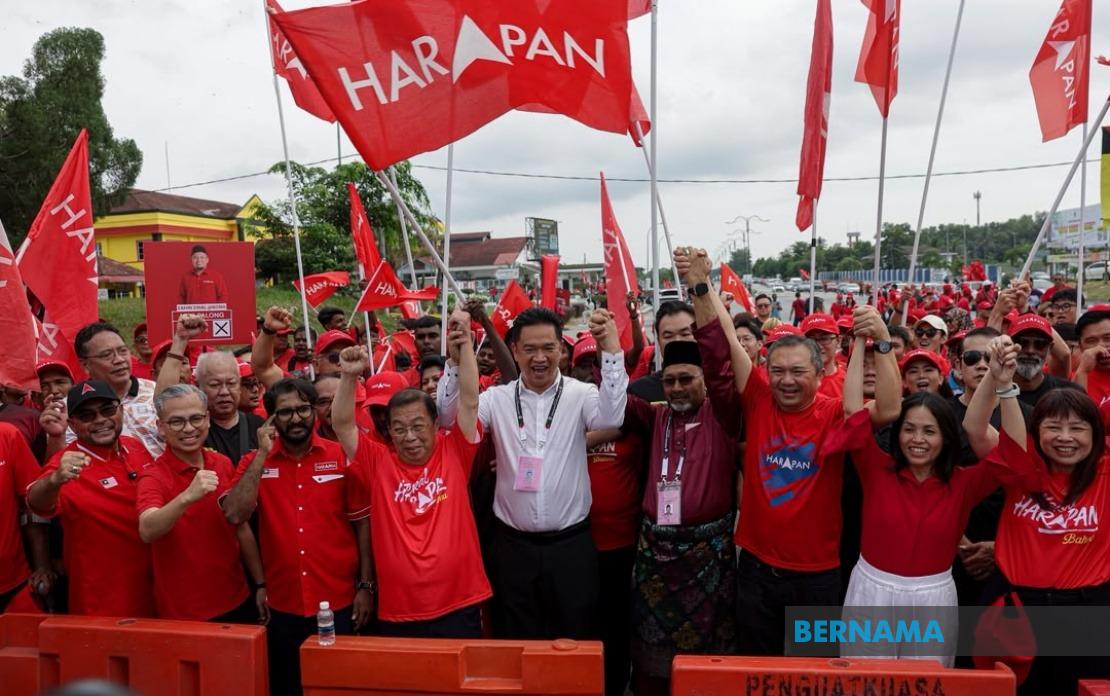
The filing sequence itself offered insights into campaign momentum and organisational readiness. Sri Sanjeevan opened proceedings at 9.09 am, followed swiftly by Dayana Dal three minutes later at 9.12 am. Manivannan, accompanied by Pakatan Harapan Communications director Datuk Seri Fahmi Fadzil, submitted his papers at 9.17 am, with the incumbent Mohd Zaidy completing the set at 9.20 am. The presence of a senior PH strategist during Manivannan's nomination signalled the coalition's commitment to contesting the seat, though the incumbent's late filing provides no clear competitive advantage in what promises to be a closely contested battle.
Beyond Jeram Padang, the broader Jempol constituency configuration reveals the uneven distribution of political competition across the state's electoral landscape. The Serting state seat is braced for a three-way contest between Pakatan Harapan's Yaacob Mahmood, Perikatan Nasional incumbent Mohd Fairuz Mohd Isa, and Bersatu's Muhammad Noraffendy Mohd Salleh, commonly known as Affendy Salleh. This triangular arrangement reflects the persistent fracturing of Malay-Muslim politics, where traditional opponents have been fragmented by Bersatu's emergence as an alternative vehicle for Bumiputera political expression, complicating opposition unity efforts.
Paralleling this three-cornered dynamic, Palong will also see three candidates contest the seat. Incumbent Datuk Mustapha Nagoor of Barisan Nasional faces pressure from both Pakatan Harapan's Muhammad Zahin Zinal Abidin and Bersatu's Rebin Birham. The multi-party nature of these contests suggests that securing electoral victory may require candidates to garner merely plurality support rather than majority endorsement, fundamentally altering campaign strategies and coalition calculations. For Negeri Sembilan particularly, this opens possibilities for surprising outcomes where opposition unity could be undermined by vote-splitting among ideologically similar candidates.
In marked contrast, Bahau presents the election's only straightforward binary matchup. Incumbent Teo Kok Seong, representing Pakatan Harapan through the Democratic Action Party, will face off against Barisan Nasional's Chong Fui Ming of the Malaysian Chinese Association. This simpler electoral configuration reflects DAP's stronghold over urban and highly Chinese-populated constituencies in Negeri Sembilan, where the party's consolidation of opposition support leaves little room for rival challengers from other coalitions or parties.
The Electoral Commission has structured the voting process methodically, designating July 28 for early polling to accommodate voters unable to participate on the main election day. August 1 has been fixed as the formal polling date for the Negeri Sembilan state election, giving candidates precisely two weeks to traverse their constituencies and mobilise support. This condensed campaign timeline intensifies the urgency for all contenders, particularly those in multi-cornered contests where name recognition and ground organisations become critical differentiators. For Malaysian voters in Negeri Sembilan, the compressed schedule requires careful evaluation of candidate credentials and party platforms without the luxury of extended deliberation periods.
The proliferation of contested seats in Jempol illustrates how Malaysia's political economy has fractured beyond traditional Pakatan Harapan-Barisan Nasional binaries. Bersatu's participation across multiple constituencies demonstrates its entrenchment within Malaysian electoral competition following its departure from Pakatan Harapan and subsequent repositioning within Perikatan Nasional frameworks. The party's presence in Jeram Padang, Serting, and Palong suggests deliberate targeting of constituencies where its Bumiputera-focused messaging might resonate, particularly in areas with substantial rural populations. This strategic deployment adds layers of complexity to opposition coordination, as Pakatan Harapan must manage relationships with former allies now positioned as electoral competitors.
The four-cornered Jeram Padang contest deserves particular analytical attention as it encapsulates contemporary Malaysian electoral fragmentation. No single candidate can assume comfortable victory even if they secure thirty percent support, fundamentally reshaping campaign narratives from triumphalism to aspiration. Manivannan's Pakatan Harapan candidacy represents urban, secular-leaning political orientations, while Mohd Zaidy embodies Barisan Nasional's establishment continuity. Sri Sanjeevan's Bersatu ticket appeals to Bumiputera constituencies seeking alternatives, and Dayana Dal's Orang Asli Malaysia platform voices indigenous representation concerns. These four distinct constituencies within a single electorate reflect the pluralised nature of contemporary Negeri Sembilan politics.
For Malaysian observers tracking broader political trends, Negeri Sembilan's electoral configuration offers microcosmic insights into post-2020 electoral realignment. The state's willingness to split voting patterns across multiple coalitions, coupled with the fragmentation visible in Jempol, suggests voter preferences are becoming increasingly sophisticated and less beholden to monolithic party allegiances. Whether this results in genuine accountability improvements or merely chaotic representation remains a central question as Malaysia continues experimenting with multi-party electoral systems.

