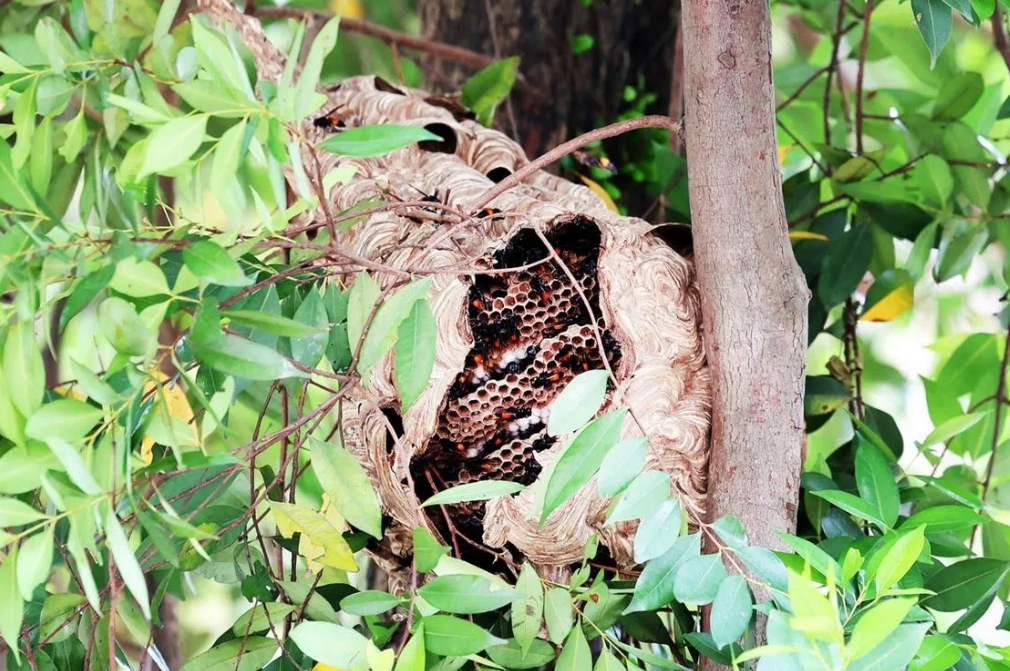
An unprovoked hornet attack near Singapore's Redhill Market sent four people to hospital on the afternoon of July 10, marking another incident in the region's recurring problems with aggressive insect swarms. The Singapore Civil Defence Force and Tanjong Pagar Town Council received emergency calls at approximately 1pm after hornets attacked residents and market visitors in the vicinity of Redhill Lane, prompting a rapid response to contain the situation and prevent further casualties.
Investigations revealed that a substantial hornet nest had established itself on a tree situated on the footpath between Block 78 Redhill Lane and an adjacent Shell service station. The location, adjacent to a busy public market and residential area, created immediate danger for foot traffic and daily commerce. Town council officers mobilised swiftly, establishing cordons around the affected zone to keep civilians at a safe distance while simultaneously contacting their pest control contractor to extract the nest professionally.
Eyewitness accounts painted a harrowing picture of the attack's intensity and chaos. An onlooker identified as Chen reported observing the incident unfold at the market, noting that he heard shouting about the hornets in the tree before seeing an elderly man being actively pursued and stung by the insects. The sudden nature of the assault meant victims had little time to react or seek shelter before being engulfed by the swarm.
Another witness, Mei Zhen, provided particularly detailed observations of one victim's condition. She discovered a woman in her seventies near a toilet facility, visibly distressed and repeatedly touching her hair. The woman's ears exhibited alarming symptoms: significant swelling, redness, and bleeding wounds. The victim reported experiencing headaches and dizziness, concerning symptoms that suggested systemic reactions to the venom. Zhen's account indicated the sheer number of attacking insects, estimating more than ten hornets had swarmed the woman's head area, with some crawling through her hair while others scattered across the surrounding environment.
Medical research from Singapore's National University Hospital underscores why such attacks prove so dangerous compared to encounters with bees or smaller wasps. Hornets deliver multiple stings during a single attack and inject substantially larger quantities of venom with each sting. This venom cocktail contains several potent chemical compounds working in combination: histamine triggers severe allergic reactions throughout the body, while melittin generates intense pain at puncture sites. Additional proteins including phospholipase and hyaluronidase present in the venom possess inherent toxicity to human tissue, causing inflammation and tissue damage that extends beyond the initial sting wound.
In the most severe cases, hornet venom can trigger life-threatening systemic responses. These catastrophic reactions include dangerous drops in blood pressure, reduced circulation to vital organs, and swelling of the airway passages that can obstruct breathing and lead to asphyxiation. Such complications explain why prompt medical intervention becomes critical for victims experiencing multiple stings or showing early warning signs of allergic escalation.
The town council's response proved effective in removing the immediate threat. The hornet nest was safely extracted from its tree location, and the footpath area underwent thorough clearing to restore safety for public use. This professional removal prevented the scenario from deteriorating into additional attacks and potential fatalities.
Official guidance from Tanjong Pagar Town Council emphasises preventive behaviour and proper emergency response. Residents encountering a hornet nest or experiencing aggressive hornet activity should remain calm and create distance from the area immediately. The advised protocol includes seeking shelter within a nearby building and explicitly avoiding any attempt to disturb, remove, or agitate the nest independently. Such amateur interventions frequently escalate attacks and result in more severe injuries. For those who sustain stings, immediate evacuation from the area takes priority, followed by calling 995 to summon ambulance services if symptoms become severe or if the victim experiences any signs of systemic reaction requiring urgent medical evaluation.
Singapore's experience with hornet incidents has escalated in recent years, reflecting broader ecological changes affecting insect populations across Southeast Asia. In 2024 alone, the region recorded multiple serious attacks. A separate incident at Sungei Buloh resulted in five hospitalisations, while a particularly tragic event at Sembawang Park Connector claimed a cyclist's life when he was attacked by hornets during his ride. These recurring incidents suggest that hornet swarms are becoming more aggressive, more frequently encountered in populated areas, or both, presenting a genuine public health consideration for urban planning and park management strategies.
For Malaysian readers and Southeast Asian observers, these Singapore incidents carry relevance beyond novelty reporting. The region shares similar tropical conditions that support hornet populations, and urban development patterns in Malaysian cities mirror those in Singapore. Communities in Kuala Lumpur, Penang, Johor Bahru, and other population centres should remain aware of hornet risks during certain seasons and adopt similar precautionary measures when encountering nests in public or residential spaces. The escalation of serious incidents across the region suggests this represents an emerging environmental challenge requiring coordinated public health awareness and professional pest management protocols across Southeast Asian jurisdictions.
Authorities have contacted the National Parks Board for additional information regarding hornet management and prevention strategies, indicating that Singapore's official agencies recognise the need for comprehensive understanding of these incidents and better frameworks for addressing them in the future.

