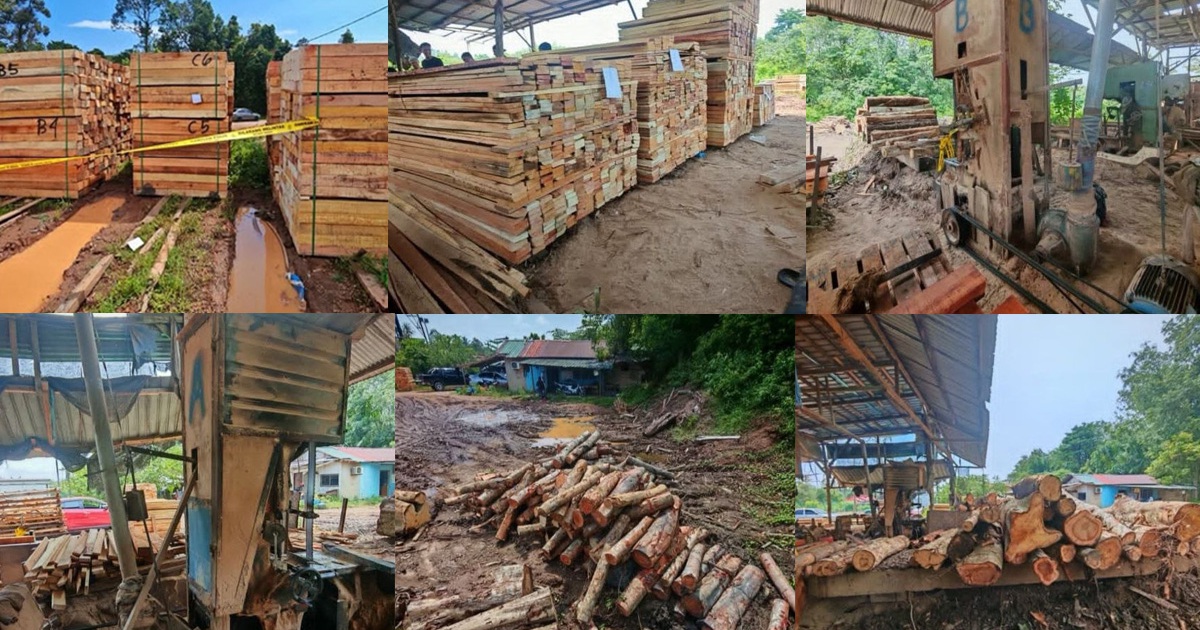
Enforcement authorities in Kelantan have dismantled an unauthorised timber processing operation in Kampung Bukit Kechik, resulting in the detention of four individuals including the facility's operator. The raid represents part of broader efforts to curtail illegal logging and unlicensed timber milling activities that continue to plague Malaysia's forestry sector, particularly in resource-rich states where enforcement challenges persist despite heightened regulatory scrutiny.
The operation led to the seizure of timber and machinery valued at RM600,000, demonstrating the scale of unregulated timber extraction and processing occurring within the state. These unlicensed sawmills typically operate with minimal oversight, skirting environmental regulations and depriving the government of licensing revenue while fuelling concerns about sustainable forest management. The Kampung Bukit Kechik facility exemplifies how processing operations can function beyond regulatory frameworks, often in areas with limited surveillance infrastructure.
Kelantan's timber industry has long faced challenges related to compliance and enforcement. The state's vast forest reserves make it an attractive target for illegal operations, which exploit gaps in monitoring and leverage the complexity of jurisdictional oversight between state and federal authorities. Such enterprises frequently source timber through questionable channels, raising questions about supply chain transparency and the origin of raw materials processed within the facility.
The seizure of such substantial assets signals intensified enforcement action by relevant authorities. Timber and processing machinery represent significant capital investment, and their confiscation can effectively dismantle illicit operations by removing the economic viability of continued illegal activity. However, enforcement successes must be sustained through consistent monitoring to prevent operators from reconstituting operations under different guises or relocating to neighbouring jurisdictions.
Illegal timber milling generates broader economic and environmental consequences for Malaysia and Southeast Asia. Unregulated operations undercut legitimate producers adhering to licensing requirements and sustainability standards, distorting market competition. Environmentally, unlicensed sawmills often operate without implementing proper waste management or forest regeneration protocols, accelerating forest degradation in regions already facing deforestation pressures from agriculture, development, and legal logging concessions.
For Malaysian stakeholders, particularly those in the legitimate timber trade, such enforcement actions help restore competitive fairness and strengthen industry reputation. International buyers increasingly scrutinise timber sourcing and sustainability credentials, making illegal operations a liability for Malaysia's forestry exports. The seizure demonstrates commitment to regulatory compliance that protects market access and brand integrity for compliant producers and exporters.
The detention of four individuals carries potential legal consequences under timber regulation and forestry laws. Penalties may include fines, imprisonment, or both, depending on the severity of violations and whether the operation involved organised illegal logging networks. Such prosecutions serve dual purposes: they punish transgressions while deterring potential operators considering unlicensed milling ventures.
The coordination required to conduct such raids underscores the multi-agency approach increasingly necessary to combat timber-related offences. Enforcement typically involves forestry department personnel, police, customs officials, and environmental regulators working in tandem. Sustained cooperation between these bodies remains critical, as illegal operators often adapt tactics and exploit institutional gaps to resume activities following individual enforcement actions.
Looking forward, addressing unlicensed timber operations demands a combination of strengthened field enforcement, improved monitoring technology, community engagement, and more rigorous supply chain tracking. Kelantan's experience reflects challenges echoed across Southeast Asia, where illegal logging remains economically attractive despite regulatory frameworks. Enhanced border controls, timber tracking systems, and cooperation with neighbouring states could reduce recidivism and make illicit milling progressively less viable.
This enforcement action, while significant, represents a single intervention within an ongoing battle against regulatory non-compliance in Malaysia's timber sector. The RM600,000 in confiscated assets and the detention of suspects provide temporary disruption to illegal operations. However, sustainable progress requires addressing underlying incentive structures driving unlicensed milling, including demand for cheaper unregulated timber and inadequate surveillance in remote processing areas. For Malaysian forest management objectives and regional conservation commitments, consistent enforcement linked with capacity building among legitimate operators offers the most promising path forward.

