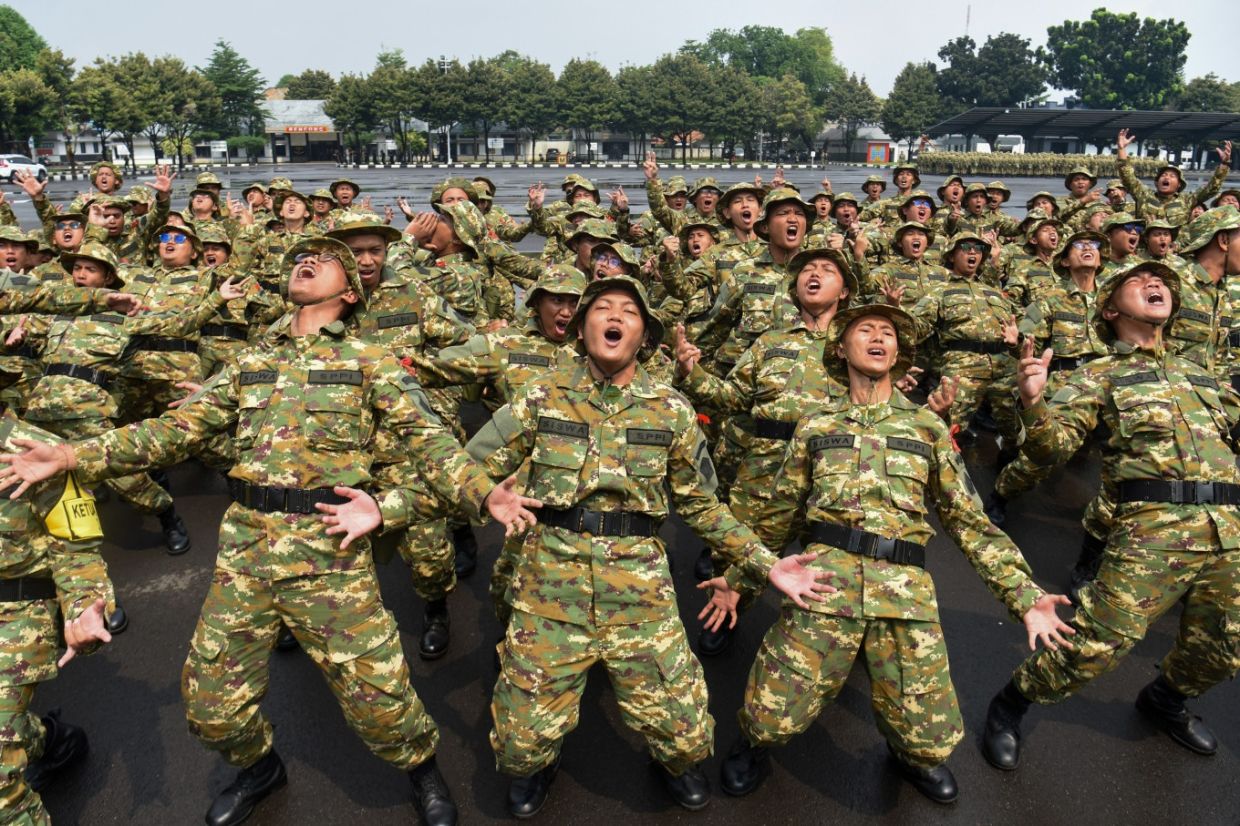
Indonesia's flagship rural development initiative has been marred by tragedy as four participants have lost their lives during mandatory military-style training, intensifying pressure on the government to fundamentally reassess the controversial programme. The deaths have occurred just days into the 30-day basic military training phase, which is being conducted under the Defence Ministry's reserve component framework and affects more than 35,000 participants tasked with managing President Prabowo Subianto's Red and White Rural Cooperatives and fishing villages initiatives.
The fatal incidents paint a troubling picture of the training's toll on participants. Anisa Muyassaroh collapsed from heat stroke during the Balikpapan programme in East Kalimantan earlier this week, while Yonanda Muhammad Taufiq succumbed to cardiac arrest following introductory activities at the Baturaja training centre in South Sumatra. In Jakarta, Novia Rahmadhani Sihotang died after developing health complications that the Defence Ministry linked to underlying tuberculosis. Most recently, Muhammad Rifqi Renaldi Gunawan experienced severe breathing difficulties during training at an Air Force facility in the capital on Thursday, requiring intensive hospitalisation before his death on Friday morning. The pattern of deaths—spanning multiple locations and various medical causes—suggests systemic issues within the training framework rather than isolated incidents.
Defence Ministry spokesperson Brigadier General Rico Ricardo Sirait announced on Friday that the department would undertake a thorough review of the programme's procedures. The examination will focus on bolstering health screening mechanisms at entry points, strengthening early detection protocols for pre-existing medical conditions, implementing more rigorous participant monitoring throughout the training period, and enhancing emergency response systems. However, the ministry's measured response has done little to quell mounting criticism from civil society and parliamentary circles who argue that more decisive action is warranted.
Amnesty International Indonesia has emerged as the most vocal critic, describing the military training component as "a fatal mistake that must be stopped immediately." Executive director Usman Hamid called for the government to dismantle the military training entirely and replace it with civilian-focused education concentrating exclusively on cooperative management principles and business competencies. Hamid has also demanded an independent investigation to examine whether procedural failures in the training directly contributed to the deaths. His critique extends beyond immediate safety concerns to encompass broader questions about the militarisation of civilian governance structures, which he characterises as reminiscent of Indonesia's controversial New Order period when the military maintained extensive control over civilian institutions.
Usman's characterisation of the programme as incompatible with cooperative principles carries particular weight for Indonesia's cooperative sector. Cooperatives are traditionally founded on democratic decision-making and collective participation models that fundamentally contrast with hierarchical military structures. The imposition of military-style discipline and command systems on cooperative managers therefore represents a conceptual mismatch with the sector's foundational values, potentially undermining the governance legitimacy of the cooperatives these trainees will subsequently manage.
Parliamentary oversight bodies have similarly expressed serious reservations about the training's current design and implementation. Commission I of the House of Representatives, which oversees defence and security matters, has initiated close monitoring of the programme. Deputy chair Dave Laksono from the Golkar Party acknowledged the government's stated intention to instil discipline, leadership qualities, and nationalist sentiment through the training, but argued that both the methodologies employed and the emergency response mechanisms require substantive refinement to guarantee participant safety. Laksono's position represents a middle ground between full programme suspension and unqualified continuation—suggesting that while the basic concept may have merit, its execution demands considerable improvement.
House Commission I member Imas Aan Ubudiyah of the National Awakening Party has articulated specific technical requirements for safer implementation. She emphasises that comprehensive health screening protocols must become integral to participant selection, ensuring that individuals with pre-existing conditions or physical limitations unsuitable for demanding physical training are identified beforehand. Imas advocates for multi-layered protective mechanisms including enhanced medical supervision during training sessions, standardised risk mitigation protocols, and objective assessments of each participant's physical capacity prior to commencement. Her recommendations suggest that the deaths may have resulted from inadequate vetting procedures rather than the training's inherent nature.
The Presidential Chief of Staff Dudung Abdurachman struck a defensive tone on Friday, asserting that preliminary government investigation has uncovered no evidence of negligence by trainers or administrators. He characterised the training as "not particularly strenuous" and suggested that the fatalities may reflect underlying health conditions rather than deficiencies in programme design or execution. However, Abdurachman acknowledged that future training iterations must prioritise safety measures more explicitly, signalling that at minimum, some procedural modifications are forthcoming. His framing appears designed to shield the presidency from responsibility while appearing responsive to public concern.
The programme's scale underscores why these deaths have generated such significant political reverberations. The government has committed to establishing 80,000 cooperative units and 5,000 fishing villages by 2029, requiring tens of thousands of trained managers to cascade through the system. The current cohort of over 35,000 trainees represents only an initial phase. Each training cycle claims lives, the political and reputational costs will mount substantially, potentially jeopardising the entire initiative's viability and public acceptance. Southeast Asian governments remain sensitive to perceptions that civilian populations are being subjected to excessive militarisation, making this controversy particularly delicate for Prabowo's administration.
The structure mandating 30 days of military training followed by 15 days of managerial instruction raises questions about pedagogical necessity. The military training phase's stated objectives of instilling discipline and leadership could potentially be achieved through alternative civilian-based mechanisms without imposing the physiological stress of military conditioning on cooperative administrators. That the training precedes actual managerial education suggests institutional priorities favouring military values over technical competence in cooperative management, a sequencing that has invited criticism regarding the government's underlying vision for these organisations.
Moving forward, Indonesia faces a critical juncture regarding the programme's future trajectory. Maintaining the current military training framework while implementing technical safety modifications may satisfy parliamentary oversight requirements but risks appearing insufficient to civil society advocates and international observers. Conversely, entirely scrapping the military component could undermine presidential prestige given that Prabowo's background is military and this training reflects his administration's governance philosophy. The deaths have nonetheless created political space for substantive reform that was previously unavailable, and whether Indonesian policymakers capitalise on this opening will reveal much about the administration's flexibility and commitment to civilian-centred governance principles.

