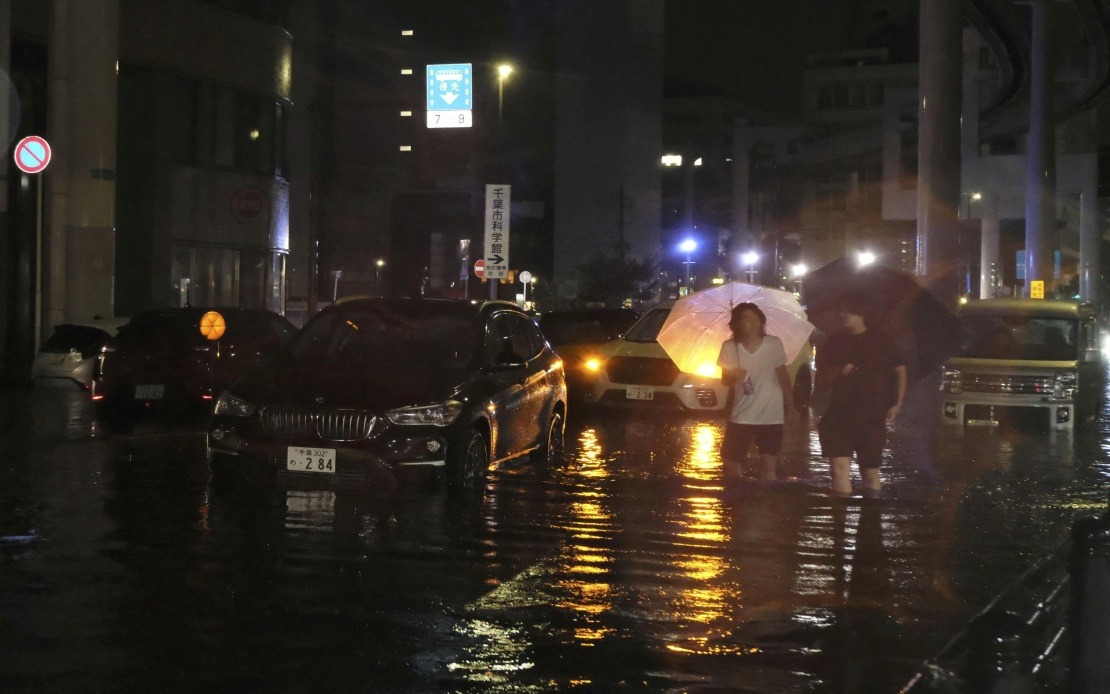
Four people have died and another remains in critical condition following unprecedented heavy rainfall that battered eastern Japan's Chiba Prefecture through Thursday and into Friday, with weather authorities deploying the maximum alert level across swathes of the densely populated region adjacent to Tokyo. The Japan Meteorological Agency activated Level 5 warnings—the most severe classification in its alert system—for intense precipitation across more than one-third of Chiba's municipalities, alongside concurrent Level 5 landslide warnings for several communities including Chiba city and nearby Ichihara. These highest-tier alerts were subsequently downgraded on Friday morning, though the damage and disruption had already mounted substantially.
The meteorological catalyst for this extreme weather event stemmed from a collision of warm, moisture-laden air flowing into eastern Japan with cold air masses positioned above, generating deeply unstable atmospheric conditions conducive to explosive rainfall. The Chuo Ward district of Chiba city experienced particularly intense precipitation, with hourly rainfall reaching 115 millimetres during Thursday night—equivalent to the region's typical monthly August rainfall under normal weather patterns. Such concentrated downpours overwhelmed urban drainage infrastructure, with water surging from underground utility access points as streets transformed into temporary waterways that forced residents to wade waist-deep through flooded neighbourhoods.
At its peak, the disaster management response proved monumental in scale. The Fire and Disaster Management Agency implemented evacuation orders encompassing more than 400,000 people across Chiba and the adjacent Ibaraki Prefecture, with approximately 126,000 individuals remaining under mandatory evacuation instructions as of early Friday morning. These figures underscore the geographical extent of the emergency and the administrative challenges confronting Japanese authorities managing one of the world's most densely settled metropolitan regions. Major urban centres including Chiba city and Ichikawa issued urgent public alerts instructing residents to implement immediate personal safety measures, while the prefectural government building itself opened its doors to accommodate around 1,800 stranded commuters unable to complete their journeys home.
The evacuation infrastructure established across affected prefectures—Chiba, Ibaraki, Saitama, and Gunma—encompassed more than 200 designated centres, reflecting substantial pre-existing disaster preparedness planning. However, the scale of displacement and the need for emergency shelter demonstrated the severity of the event and its impact on transportation networks and residential areas. Widespread flooding across multiple communities created hazardous conditions that persisted throughout the rainfall period, with municipal authorities maintaining heightened vigilance regarding secondary hazards such as debris flows and structural compromises.
Utility services experienced significant disruption across the prefecture. Tokyo Electric Power Company Holdings Inc. reported that power outages at one stage affected approximately 45,000 homes in Chiba Prefecture, cascading service interruptions that compounded challenges for residents attempting to cope with flooded properties and limited access to information. The combination of electrical failures and communications disruptions during active rainfall conditions created additional safety risks for isolated residents.
This weather event carries particular relevance for Malaysian and Southeast Asian observers monitoring climate-related disaster patterns. Japan's meteorological service and emergency management infrastructure represent among the world's most sophisticated systems, yet the intensity and velocity of this extreme precipitation event overwhelmed conventional defences. The progression from Level 5 warnings to actual fatalities and large-scale displacement illustrates how even well-resourced nations confront genuine vulnerabilities when atmospheric conditions produce exceptional rainfall concentrations. For Southeast Asian nations including Malaysia, already exposed to monsoon-driven flooding and increasingly severe weather patterns, the Japanese experience underscores the necessity for continuous enhancement of early warning systems, evacuation protocols, and municipal drainage capacity.
The meteorological phenomenon triggering this event—the interaction between tropical moisture transport and upper-level cold systems—occurs within the broader context of shifting precipitation patterns across East Asia. Climate research increasingly indicates that warming atmospheric temperatures alter the dynamics of extreme rainfall events, potentially increasing their frequency and intensity. Japan's positioning in a region vulnerable to both typhoon systems and frontal precipitation events means that recurring exposure to such hazards requires perpetual adaptation of disaster response frameworks.
For Malaysian residents and policymakers, the Chiba Prefecture flooding serves as a cautionary reminder regarding the escalating risks posed by concentrated precipitation events. Malaysia's own monsoon-dependent climate system and rapid urbanisation present analogous challenges: metropolitan expansion often outpaces infrastructure upgrade cycles, potentially creating vulnerability zones where aging drainage systems cannot accommodate intensifying rainfall. The Japanese example demonstrates that developed-nation status and technological sophistication cannot entirely eliminate disaster risk, only mitigate its consequences through effective preparation and coordinated response.
As the immediate emergency phase transitioned into recovery operations on Friday, Japanese authorities shifted focus toward damage assessment, restoration of essential services, and support for affected residents. The incident reaffirms the critical importance of maintaining functional early warning systems and community-level preparedness even in technologically advanced societies, while offering sobering lessons for developing regions confronting accelerating urbanisation amid increasingly volatile weather patterns.

