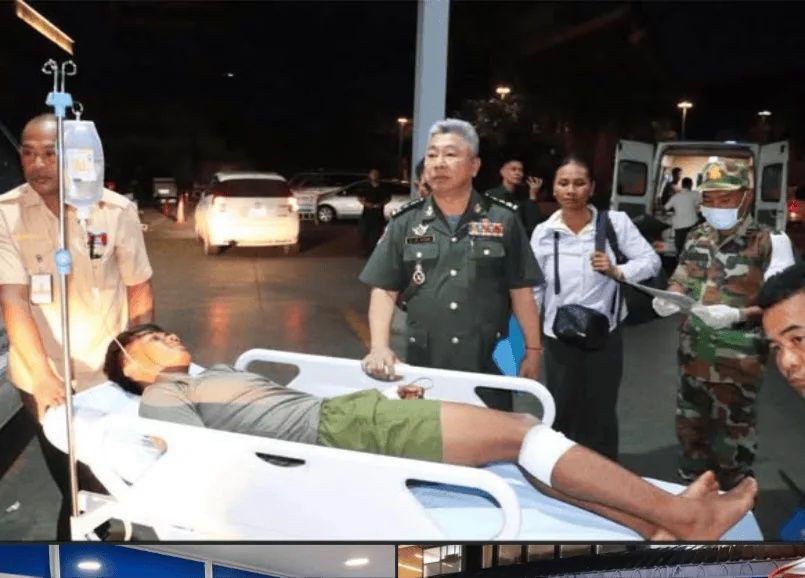
Four Cambodian soldiers sustained injuries when an explosive device detonated along the Cambodia-Thailand border on Sunday, according to an announcement made by Cambodian officials on Monday. The incident marks another security concern in a region that has experienced periodic tensions between the two neighbouring nations, underscoring the ongoing challenges faced by border enforcement personnel in Southeast Asia's complex frontier zones.
Lieutenant General Maly Socheata, serving as undersecretary of state and spokesperson for Cambodia's Ministry of National Defence, provided details of the incident, which occurred at 12:35 p.m. in a cashew plantation region spanning Chouk Kruos and Thma Don villages in Oddar Meanchey province. The soldiers were engaged in routine patrol operations when the explosion took place, an activity that has become increasingly routine along the shared frontier as both nations maintain security presence in disputed and sensitive areas.
The wounded servicemen have been evacuated and are receiving medical treatment from designated military medical teams and other health personnel responding to the emergency. The extent of injuries has not been publicly disclosed, though initial reports indicate none of the soldiers sustained fatal wounds. Medical response procedures appear to have functioned efficiently given the remote location of the incident in a plantation area away from major urban centres.
Cambodia's response to the incident reflects standard diplomatic protocol in cross-border incidents. The Ministry of National Defence's public acknowledgement of the explosion, rather than remaining silent, suggests a commitment to transparency regarding security matters that could otherwise fuel speculation or misunderstandings between the two nations. This approach contrasts with historical periods when border incidents received minimal official comment.
Thailand's military establishment swiftly issued its own assessment through Army spokesperson Winthai Suvaree on the same day as the explosion. Thai forces stationed near the border heard the detonation and immediately conducted investigative procedures to determine the source and cause of the blast. The rapid official response from Bangkok indicates a coordinated crisis management protocol exists between the two militaries regarding border security incidents.
The Royal Thai Army emphasised in its formal statement that Thai forces neither discharged any weapons nor deployed grenades at the time of the explosion. This explicit denial addresses potential concerns that cross-border weapons fire might have triggered the incident—a scenario that could have escalated tensions significantly. Such clarifications are crucial in border regions where accidental escalation remains a realistic concern, particularly given the historical sensitivity of Thai-Cambodian relations.
Following a thorough investigation involving responsible Thai military units, Thai officials concluded that the explosion originated entirely within Cambodian territory. This determination suggests that either the explosive device was deployed or detonated on the Cambodian side, or that ammunition or mines left over from earlier conflicts activated spontaneously. The region has a significant legacy of unexploded ordnance and landmines from decades of conflict, a factor that complicates border patrol operations throughout Southeast Asia.
The incident illuminates the hazardous working conditions endured by border patrol personnel in both nations. Military units conducting routine security sweeps in frontier regions face constant risks from ordnance left by previous conflicts, accidents during routine operations, or deliberate hostile action. The Cambodia-Thailand border, stretching over 800 kilometres, encompasses challenging terrain and multiple zones where control and security presence remain contested or ambiguous.
Oddar Meanchey province, where Sunday's incident occurred, has historically served as a significant flashpoint in Cambodia-Thailand relations. The province's proximity to Thailand and its porous borders have made it a focus of military operations, humanitarian concerns, and diplomatic negotiations. Cashew plantations in the area represent both economic development and potential security vulnerabilities, as large agricultural zones can obscure military movements and complicate surveillance efforts.
For Malaysia and other Southeast Asian nations, the incident serves as a reminder that despite regional progress toward stability and economic integration, border security challenges persist and can generate friction between neighbouring states. The quick official responses from both Cambodia and Thailand, combined with apparent coordination in investigating the incident, demonstrate that established protocols may help prevent misunderstandings from escalating into larger conflicts. However, the vulnerability of soldiers to explosive hazards highlights the ongoing humanitarian cost of regional tensions and the legacy of previous conflicts.
The cooperation displayed by both militaries in this instance reflects broader regional security architecture that has evolved considerably since the height of tensions in previous decades. Joint investigations, rapid official statements, and coordinated explanations represent improvements in bilateral military relations, though underlying disputes over maritime boundaries, territorial claims, and resource access remain unresolved. Regular incidents like Sunday's blast perpetually test these diplomatic and military relationships.
Moving forward, the incident underscores the necessity for comprehensive mine-clearing initiatives, enhanced intelligence sharing regarding unexploded ordnance, and continued investment in military-to-military dialogue mechanisms. Without addressing the underlying causes—abandoned weapons, unclear demarcation, and limited resources for border management—similar incidents will likely recur, perpetuating risks for personnel and complicating diplomatic relationships across the region.

