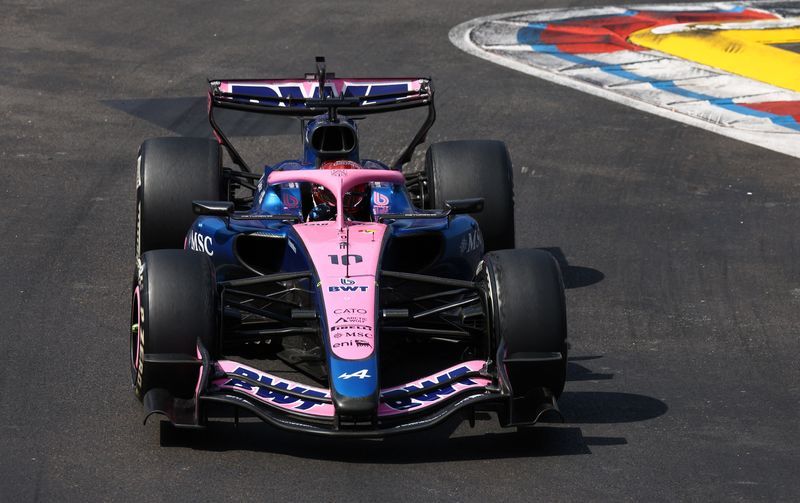
Formula One's highest appellate body is set to render final judgment on one of the sport's most contentious decisions this season, with the FIA international court of appeal convening in Paris on Tuesday to settle the disputed podium finish at the Monaco Grand Prix. The case centres on Pierre Gasly's third-place result from the June 7 race in the Mediterranean principality, a finish that has been subsequently demoted, reinstated, and appealed—creating uncertainty nearly three months after the chequered flag fell.
Gasly's initial third-place classification at Monaco was overturned by race stewards who imposed two five-second penalties for pit-lane speeding violations. The penalties demoted the Alpine driver to seventh place, elevating Red Bull's Isack Hadjar to the podium position, where the latter celebrated with champagne on the podium. However, the reversal proved short-lived when Alpine presented evidence of a timekeeping error to stewards on June 12, prompting officials to rescind both penalties and restore Gasly to third position, forcing Hadjar to relinquish the trophy and podium honour.
The successive reversals triggered immediate concern within Formula One's competitive circles, with observers warning that the stewards' willingness to overturn post-race penalties on appeal set a troubling precedent for future disputes. This alarm prompted McLaren and Red Bull to escalate the matter to the international court on June 16, refusing to accept the stewards' reinstatement of Gasly. The appeal demonstrates the high stakes involved and the deep disagreement among top teams about how such technical matters should be adjudicated.
McLaren's grievance extends beyond Gasly's case and reflects the broader competitive implications of the penalty handling. Oscar Piastri, who drove for McLaren, initially finished fourth but was pushed to fifth when Gasly was reinstated. However, Piastri's complaint runs deeper: he received and served identical pit-lane speeding penalties during the race itself, accepting the time loss without appeal because he believed the infraction to be unavoidable—a conclusion later undermined by Gasly's successful challenge to identical charges. Unlike Gasly, who had penalties applied post-race and thus had time added that could be mathematically removed during appeal, Piastri had already lost physical time in the pit lane with no recourse, and that lost time rippled through his subsequent race strategy and performance.
The structural inequality embedded in this situation troubled McLaren leadership. Team principal Andrea Stella articulated the team's position following the Dutch Grand Prix, which McLaren's Lando Norris won, emphasizing that the appeal carried dual significance. Stella contended that the post-race procedural handling required fundamental review from the standpoint of competitive fairness across all competitors, arguing that permitting one driver's penalty to be removed while another's identical infraction remained served created unjustifiable inconsistency. He noted that the asymmetry extended beyond mere principle, translating into tangible championship points lost by McLaren through a penalty deemed non-appealable at the time of application.
Stella's remarks underscored McLaren's dual motivation: a principled objection to the precedent being set for Formula One's sporting integrity and competitive fairness, alongside a material concern for his team's championship prospects. The loss of points to Piastri from an infraction later deemed contestable represented a competitive disadvantage that could influence the season's final standings. This combination of systemic and parochial interests explains why McLaren pursued the appeal despite the reputational risk of appearing to relitigate settled matters.
The international court will conduct its hearing at FIA headquarters under confidentiality provisions, with neither public nor media access permitted to the proceedings. This closed-door approach reflects the sensitivity of the case and the FIA's desire to maintain control over how sport-defining decisions are communicated. The court has indicated that a formal decision will be published as expeditiously as circumstances permit, though no timeline for that release has been specified.
The outcome carries implications beyond the three drivers directly involved. A decision upholding Gasly's reinstatement would vindicate Alpine's technical challenge and the stewards' initial reversal, potentially establishing that post-race penalty reviews remain viable recourse for teams with credible evidence. Conversely, a finding that the penalties should stand would validate McLaren and Red Bull's contention that consistency demands identical infractions receive identical treatment, regardless of when they are discovered or appealed. Either outcome will establish precedent for how future technical disputes are resolved and whether procedural flexibility should characterise Formula One's regulatory framework.
For Malaysian and Southeast Asian motorsport enthusiasts, this dispute illustrates the complexity governing modern Formula One, where technical precision and competitive fairness frequently collide. The case demonstrates that even sport's highest levels operate within systems vulnerable to procedural inconsistencies and the challenging task of administering justice retroactively. As the international court prepares to deliver its ruling, the verdict will likely echo through the remainder of the season and beyond, shaping how teams approach penalty disputes and how governing bodies balance competitive integrity against procedural flexibility in sport's most technologically advanced and heavily scrutinised championship.

